
To view this content from @KenDuffyNews on X, click here.
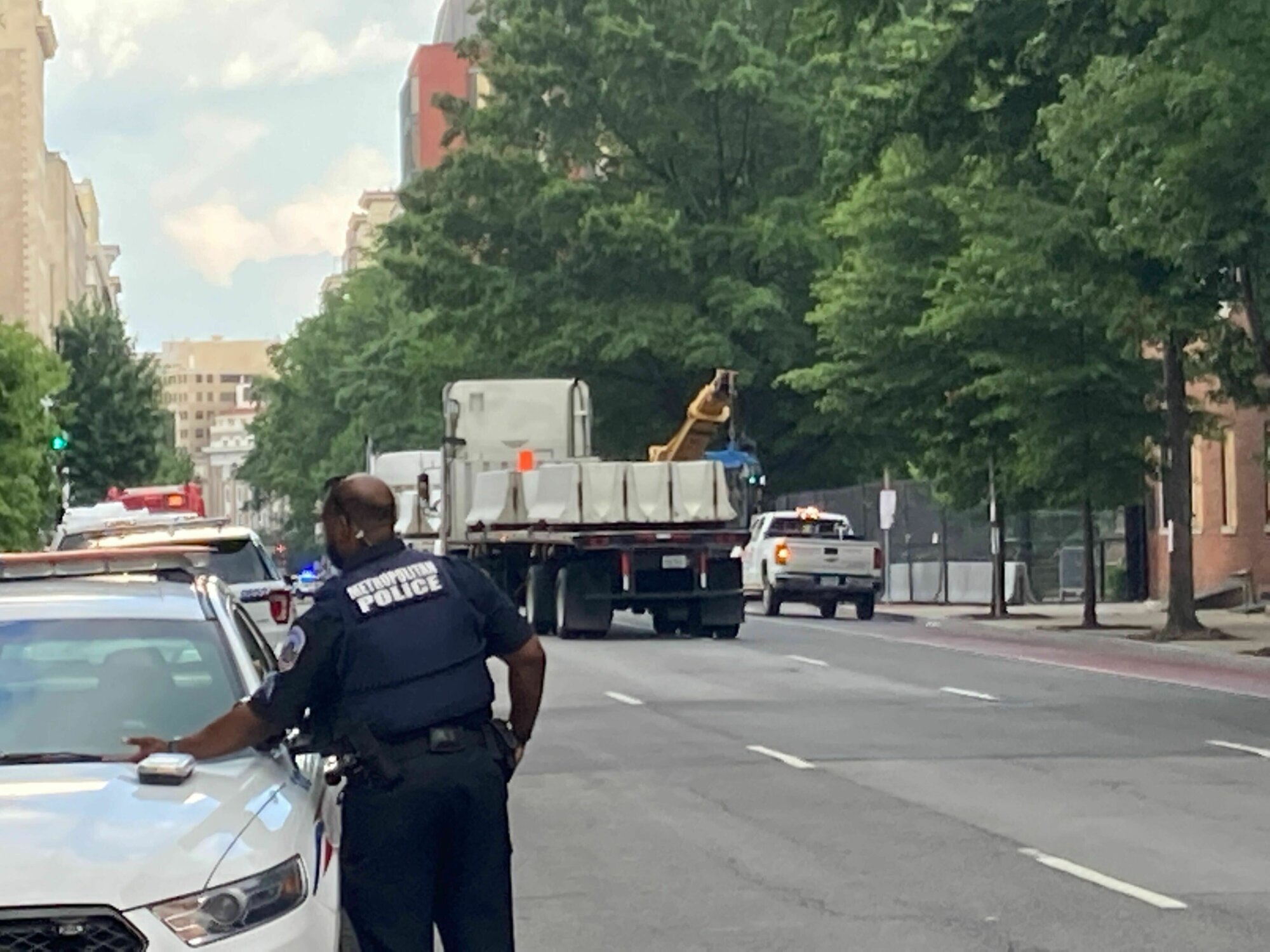
D.C. Del. Eleanor Holmes Norton said she plans to introduce legislation to remove the Emancipation Memorial from Lincoln Park. She said the statue, which is nearly 150 years old, is “problematic” and needs to be taken down. There were several law enforcement officers at Lincoln Park on Tuesday night.
To view this content from @KenDuffyNews on X, click here.
Glen Foster led the protest to Lincoln Park, and he said the statue represents something that is not the embodiment of the American dream. Foster said the statue carries the message that “our freedom and liberation are only given by way of white people.” Lincoln looking down at black people “relegates us to being second-class citizens; that not right,” Foster said. In order to move forward, the statue needs to be taken down, and Foster said that protesters will be demonstrating daily. “And we’re not going to be here for feel-good marches or peaceful chants; we’re going to be here for change by any means necessary.” Elsewhere, visitors to the Lafayette Square area Tuesday also panned the statue removal effort, The Associated Press reported. Wenola Wade, a white resident of the District of Columbia, said she is frustrated that “we’re not far enough along” in dealing with systemic racism but added that “we can’t take down every single statue. That’s stupid.” “To me, that takes away from what the real message is,” said Wade, 75, who was walking near Lafayette Square around midday hoping to see some of the protesters’ posters. Daryl Colter, an African American who lives in a Maryland suburb, brought his 5-year-old daughter to a street near the White House that the city has renamed as Black Lives Matter Plaza as an educational moment. He said he wants leaders from the government and the protest movement to get together and have discussions about the Jackson statue and others, but “you can’t just go around taking it into your own hands and just tear something down.” “Defacing, tearing it down, it’s going against the cause,” Colter said. American University history professor Alan Kraut said he and some of his colleagues have used the statues as teaching tools but that a more appropriate question amid the renewed scrutiny is whether their physical destruction makes society better. “Do you enrich society and social opportunity and social justice by tearing down these statues or is this just a feel-good moment?” Kraut asked. Meanwhile, President Donald Trump promised executive action to protect monuments after some statues of Confederates and other historical figures with checkered life stories were angrily brought down from parks and other places of public prominence. Trump said he wants the maximum punishment available under federal law — up to a decade in prison — for those who destroy or tamper with statues on public property that commemorate anyone who served in the U.S. military. He said the executive order would “reinforce” existing law. “We are looking at long-term jail sentences for these vandals and these hoodlums and these anarchists and agitators,” Trump said, referring to protesters who have vented their anger over racial injustice by toppling statues of figures tied to America’s racist history. WTOP’s Alejandro Alvarez, Ken Duffy, Mitchell Miller and The Associated Press contributed to this report.