
WASHINGTON — ‘Tis the season of package deliveries and internet scams trying to lure cash or personal information from unsuspecting consumers.
Manassas City Police last week issued a warning to residents about a DHL package delivery scam. Customers receive an email asking them to click on a link, make a payment or take another action in order to complete their package’s delivery.
However most shipping companies don’t contact customers before a delivery, police said, and consumers should delete such emails immediately.
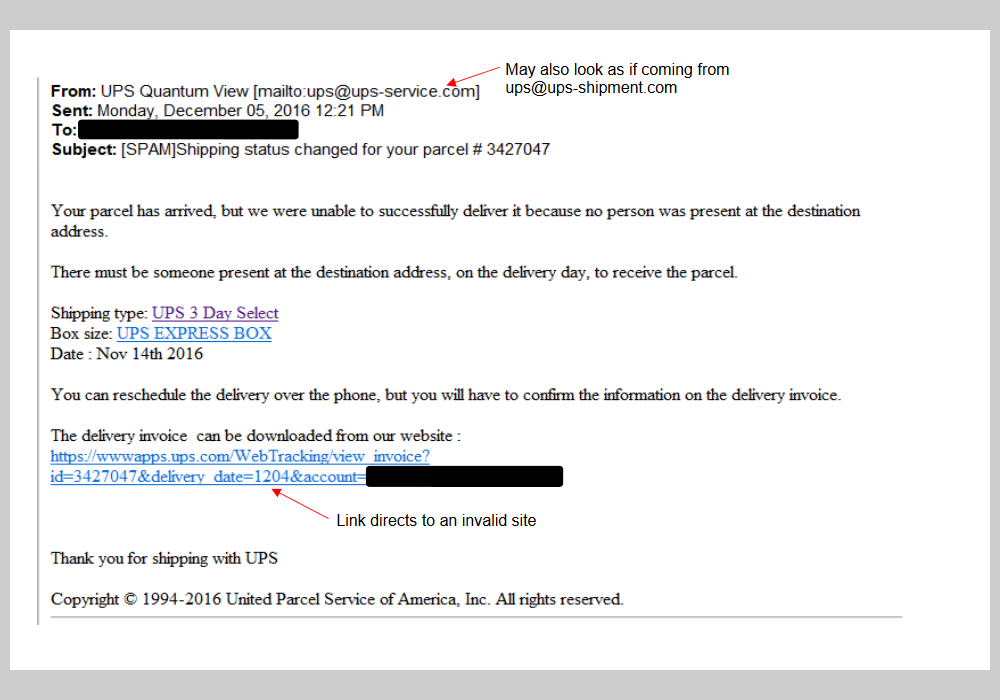
Crooks also are spoofing Amazon, Fed Ex and UPS.
The fraudulent emails might display realistic-looking company logos or legitimate legal disclaimers. They deploy various strategies to try to get consumers to download or click on something that can infect a computer with malware of ransomware.
Warning signs an email might not be legitimate:
- The message includes typos or bad grammar
- It requires consumers to update logon or other information
- Email addresses have a company name with another word separated by a dash (-) or underscore (_)
- It asks for date of birth, part of a social security number, or tax ID number.
- It requests money via methods such as a wire transfer, Western Union or PayPal.
The Better Business Bureau also warns about holiday-related scams.
An online greeting card, or an ecard, might be a scam if it is unclear who sent the card or consumers have to share information to receive it, according to the bureau.
Social media gift exchanges claim that one gift will provide 36 in return, but it’s just a new version of a pyramid scheme and it is illegal, the bureau said.
Looking for a temporary holiday job? Applying online could just be a way to grab personal information. Go to the retailer’s official website to check whether they’re hiring or apply in person.
Steer clear of phony charities, and check out the organization at give.org, which is operated by the Better Business Bureau, before donating.
Pop-up ads or emails that offer free gift cards can also be ploys to obtain personal information.
UPS provided 78 pages of examples of fraudulent emails with notes pointing out fake hyperlinks, webpages, emails, logos and more — all cues that the email is suspect. See the examples here.
Report internet crimes to the FBI.