A statue of President Abraham Lincoln standing over a freed slave in D.C. is under renewed scrutiny, with protesters announcing their intention to tear down the monument Thursday.
Calls for the removal of the nearly 150-year-old Emancipation Memorial at Lincoln Park near Capitol Hill have intensified this week. D.C. Del. Eleanor Holmes Norton said Tuesday that she plans to introduce legislation in Congress to remove the statue.
“This statue has been controversial from the start,” Norton said Tuesday. “It is time it was placed in a museum.”
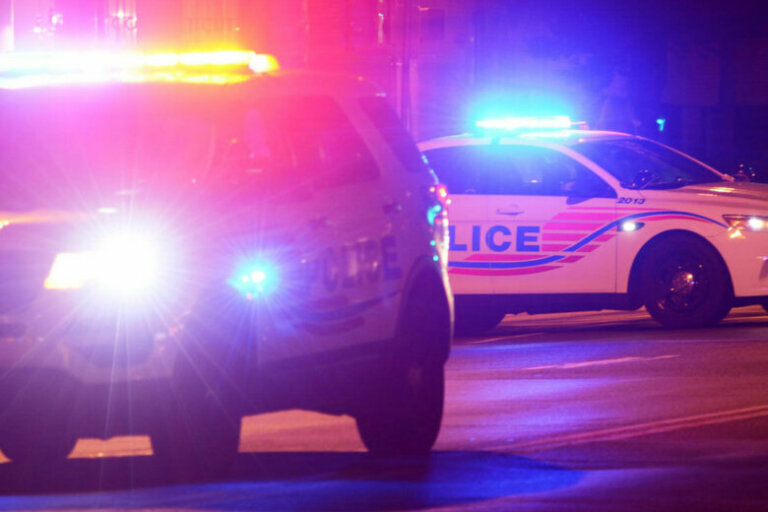
On Thursday night, there were concrete barriers and fencing surrounding the memorial, as well as the presence of U.S. Park Police, WTOP’s Ken Duffy reported from the Capitol Hill neighborhood. The increase security thwarted an effort to take down the statue, which protesters said they were going to do Thursday night.
A number of historical monuments across the U.S., particularly those honoring Confederate figures, have been targeted following the May 25 death of George Floyd in Minneapolis police custody.
In D.C., the statue of Albert Pike, a Confederate brigadier general, was pulled down last week. And, earlier this week, protesters tried to take down the statue of President Andrew Jackson, who was a slaveholder and oversaw the forcible removal of Native Americans from the South.
Nearly 400 unarmed National Guardsmen were put on standby Wednesday to protect monuments and memorials throughout D.C.
Though the Emancipation Memorial was paid for by freed slaves as recognition for Lincoln’s role in their emancipation, they had no say in the statue’s design. As Norton noted earlier, abolitionist Frederick Douglass “expressed his displeasure” with the statue during his keynote address at its unveiling.
Mayor Muriel Bowser said Thursday that there needs to be a larger conversation about what to do with controversial statues in D.C., and the city is “working on some ideas.”
However, she said, the city needs to maintain safety around the statues in the meantime.
“We all need to … have a reasonable conversation on statues and other references to historical figures, not have a mob decide that they want to pull it down and certainly not destroy anything in the District or set anything on fire,” Bowser said.
All roads lead to Black Lives Matter Plaza
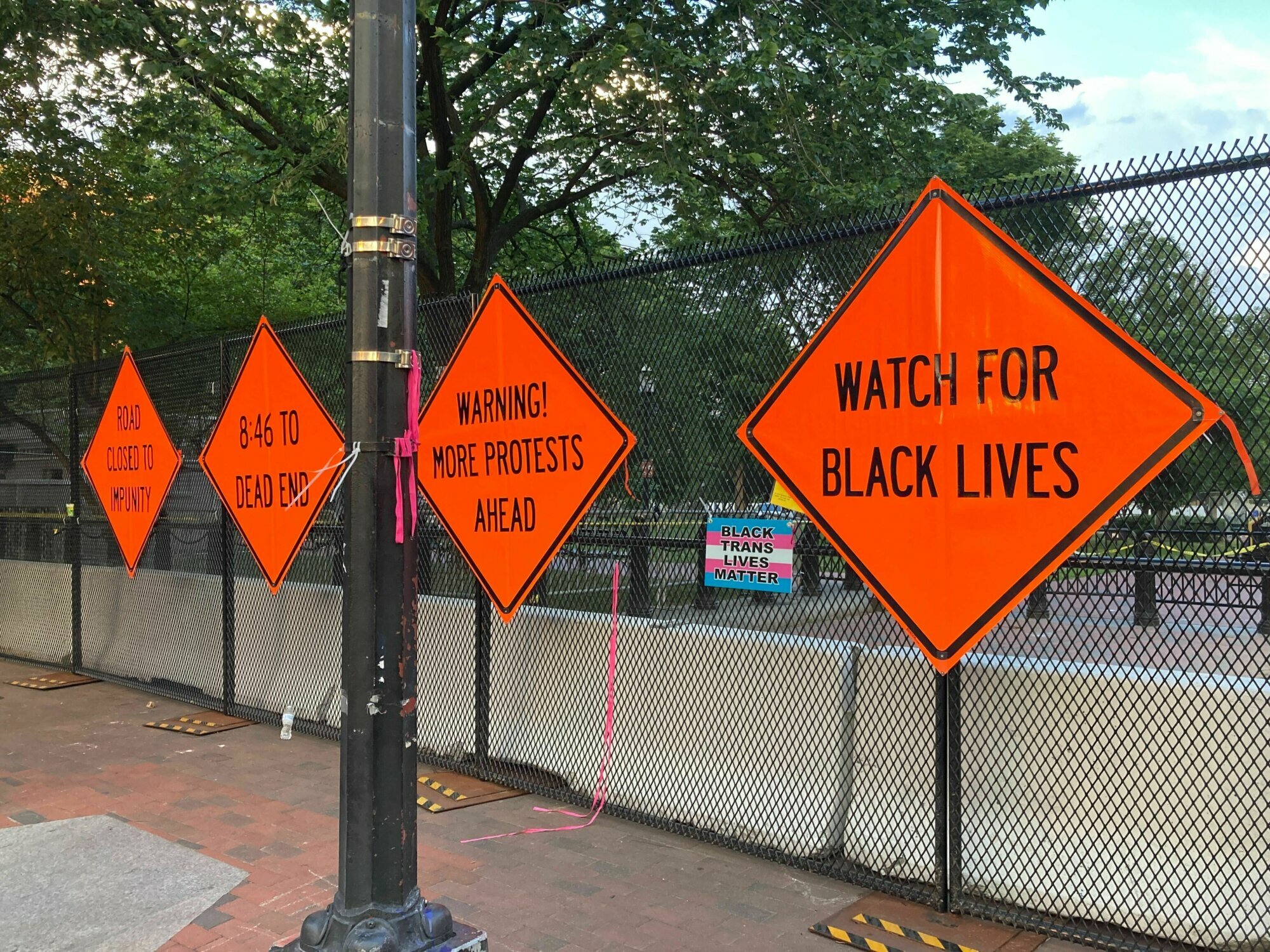
In the area of Lafayette Square near the White House at Black Lives Matter Plaza, traffic was briefly opened on H Street. Protesters have placed signs that mimic road signs on the fencing and barricade with messages, such as “Warning! More Protests Ahead” and “Watch for Black Lives.”
As marchers chanted while facing the White House, there was also a moment of silence for George Floyd and other victims of police violence.
WTOP’s Ken Duffy, Abigail Constantino and Megan Cloherty contributed to this report.