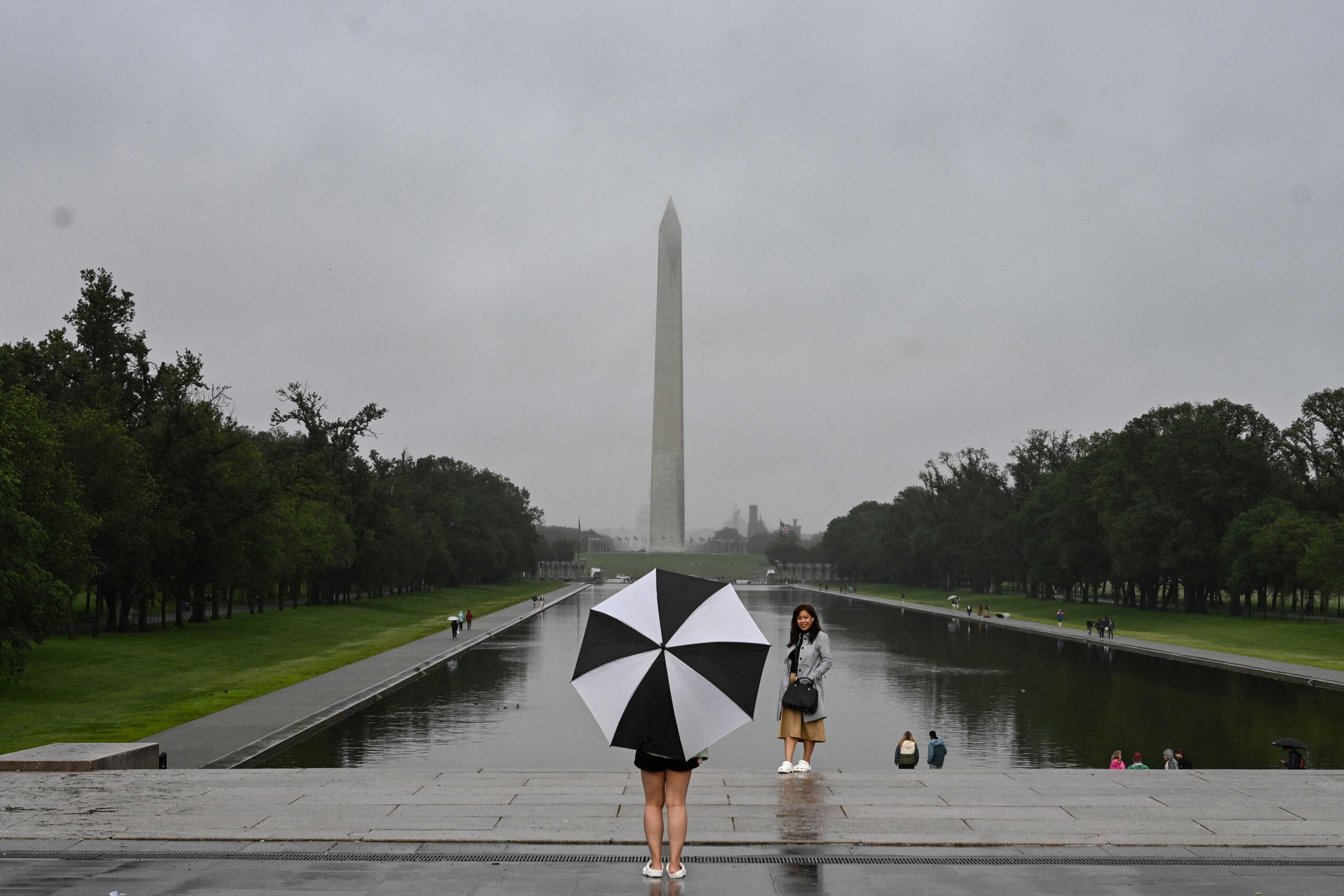
WASHINGTON — As D.C. gets ready to host its first MLB All-Star Game since 1969, a lot of people will have their eyes on the skies. Rain is in the forecast.
To view this content from @ChuckBell4 on X, click here.
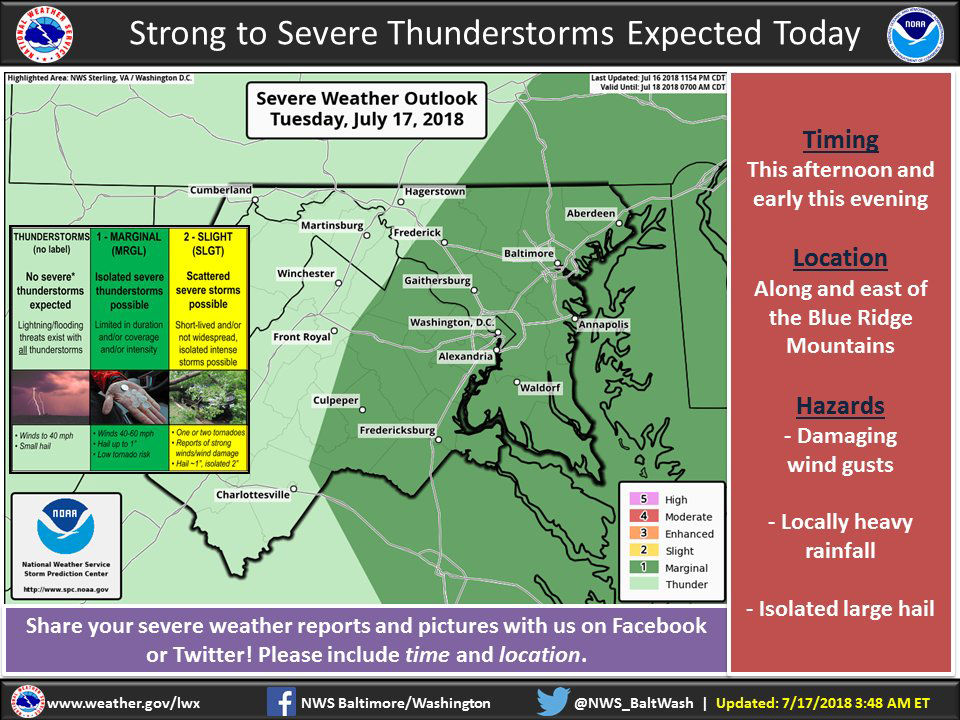
Storm Team 4 meteorologist Chuck Bell said there is an 80 percent chance for showers and thunderstorms between 2 p.m. and 8 p.m. That could, at the very least, threaten to push back the start of the All-Star Game. The National Weather Service said the chance for isolated severe thunderstorms is greatest along and east of the Blue Ridge Mountains, but rain is very possible in the D.C. area during the afternoon and early this evening. (Courtesy National Weather Service) Of course a rain delay, or even a rainout, is not that uncommon in baseball.
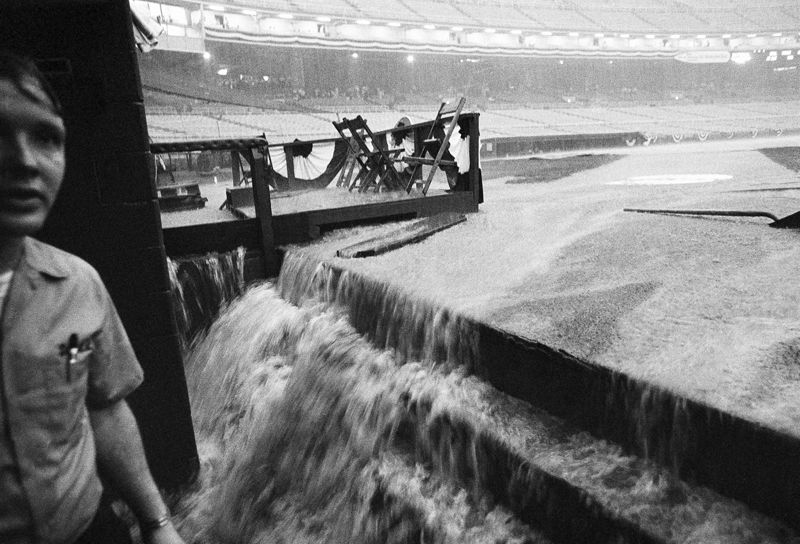
There’s a whole set of rules that have been around for a long time about what happens when a game is delayed, suspended or canceled. Before the game starts, the home team decides whether a game starts on time or is delayed. After the game starts, it’s all up to the umpires, although MLB rules encourage the umpires to do everything they can to try and make sure the game is completed. Of course, the All-Star Game isn’t just any other baseball game. It’s one of the biggest events of the season and a chance for MLB to showcase the very best players in the game. But MLB is still subject to the whims of mother nature. When D.C. last hosted the All-Star Game in 1969, it was supposed to be a night game played on Tuesday, July 22, 1969. But there was one problem: It rained. A lot. Rains pour down on RFK Stadium on July 22, 1969 in Washington, forcing postponement of the All-Star game. (AP photo) There was so much rain that it started pouring off the field into the dugouts and made the steps down to the dugout look like a small waterfall. [related_gallery align=”right”]The game had to be postponed, the first and last time an All-Star Game was postponed because of rain. The game was played during the next day and baseball-reference.com said this was the last time the All-Star Game was played during the day rather than prime-time. Rain has also shortened some All-Star Games. When the Philadelphia Phillies hosted the All-Star Game in 1952 at old Shibe Park, the game had to be called after just five innings because of rain. The second All-Star Game of the 1961 season (From 1959 to 1962, two All-Star Games were played each season) at Fenway Park in Boston ended in a 1-1 tie after nine innings because of rain. More recently, the 1990 All-Star Game at Wrigley Field saw a rain delay that was a little bit longer than one hour, but the game was still played. The good news for MLB and baseball fans everywhere is that even with the threat of rain, it doesn’t look like it will have that much of an impact on the game.
To view this content from @ChuckBell4 on X, click here.
“The weather will be much improved by the start of the All-Star Game,” Storm Team 4 meteorologist Sheena Parveen said. “We can’t rule out a lingering shower by 8 p.m., but it wouldn’t be anything substantial.”
1 tornado confirmed in Anne Arundel County during Tuesday’s storms
At least one tornado was confirmed by the National Weather Service in Anne Arundel County, Maryland, during Tuesday's storms in the D.C. region.
An EF-1 tornado landed in Lake Shore near Patapsco Road at 6:15 p.m. NWS officials determined that the estimated peak winds of the tornado was 100 mph. The twister was on the ground for two minutes as it was around three-quarters of mile long and 160 yards wide.