
Marian Croak can clearly picture sharing her family’s landline phone when she was growing up.
“I definitely remember the days where we all used to have a telephone that was hard-wired to the wall, so we had to stay still,” Croak said. “We graduated to having jacks, where we could actually pick up a phone and put into a jack in the wall.”
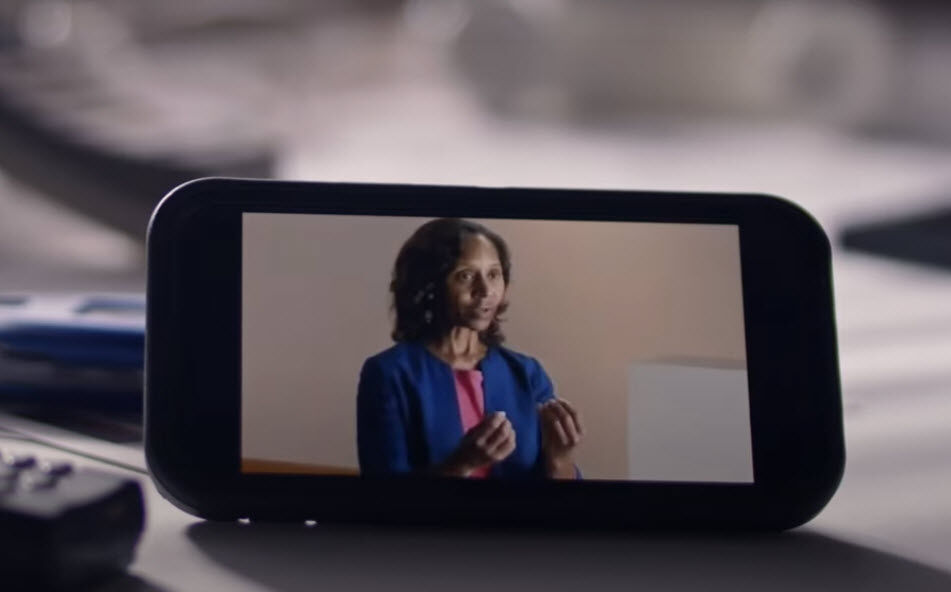
Croak was inducted earlier this month into the National Inventors Hall of Fame for her work with Voice over Internet Protocol technology, or VoIP. The hall of fame museum reopens to the public for the first time in two years.
One of the items on display at the National Inventors Hall of Fame museum, located at the U.S. Patent and Trademark Office campus in Alexandria, is Croak’s U.S. Patent No. 7,599,359.
VoIP converts voice data into digital signals that can be easily transmitted over the internet, rather than using traditional lines.
Of course, clear-sounding digital audio, paired with video, has become ubiquitous during the COVID-19 pandemic, with people around the world working and socializing remotely with audio and video conferencing.
“I like to say that people’s knowledge of VoIP became ubiquitous in 2020, but it’s been in use in a pretty large way for quite a number of years now,” Croak said. “Most calls that you make with a mobile phone are using VoIP.”
Croak began her career in 1982 at Bell Labs (later AT&T) with a position in the Human Factors research division, which looks at how technology could be used to positively affect people’s lives. Rather than use a traditional phone line for voice communication, along with a digital method for internet data, she and her team thought both could be done digitally with the internet.
“When we first started experimenting with VoIP, calls would be dropped and they would be muddy,” Croak said. “You couldn’t really understand what a person was saying, so it wasn’t well-designed, and we had to put a lot of effort into the reliability.”
Croak joined Google in 2014, where she’s now vice president of engineering and leads the Research Center for Responsible AI and Human Centered Technology.
With more than 200 patents to her name, Croak isn’t fazed that it took two decades to be inducted into the hall of fame.
”There’s often a long lag, between the invention of something and when people start to recognize it,” Croak said. “Sometimes you’re fortunate enough to have it happen in your lifetime, but many times you’re not.”
Croak acknowledges the induction comes at a time when audio and video conferencing has never been more prevalent — and needed.
”I was thrilled in the last couple of years to play a small part in helping people be able to communicate with each other, even though we were in this very isolated, solitary confinement, around the world.”