The Washington Chorus is celebrating its 60th anniversary in the 2020-2021 season.
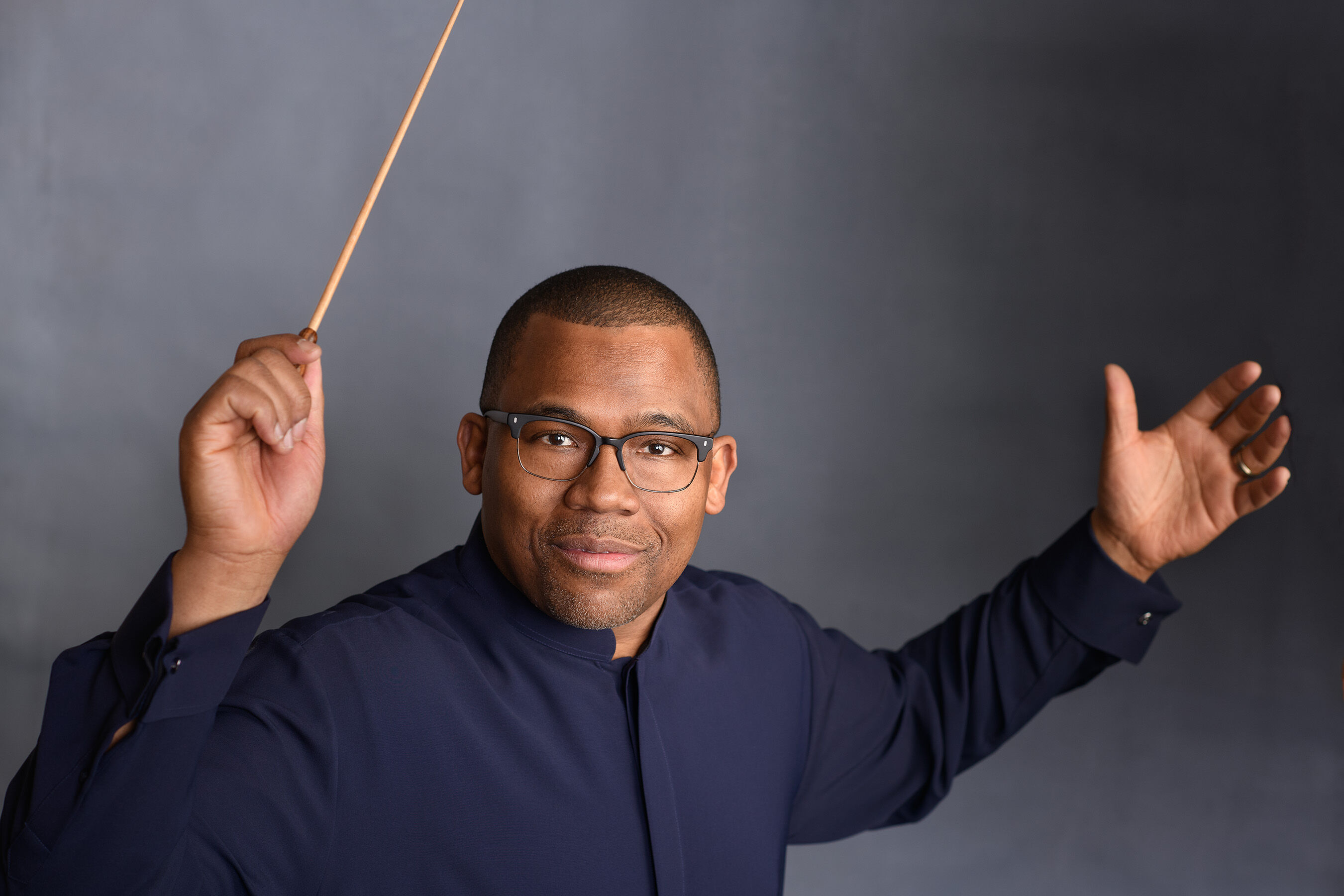
Leading the way is Dr. Eugene Rogers, the organization’s first Black artistic director.
“The announcement in February of me becoming the new artistic director happened, so we had all these plans of launching that season — and March happened and we all got sent home and shut down,” Rogers told WTOP. “It was about the end of March, maybe mid-April that we immediately knew this is probably not going to come back so quickly.”
While the 160-voice Washington Chorus typically performs live on stage at the Kennedy Center, Strathmore and Wolf Trap, this new season is shifting to a unique virtual slate.
“We pivoted and began to think about ways to launch our season virtually, commissioning composers and still staying true to our mission, as well as some innovative ways to go through digital platforms,” Rogers said. “Innovation and inclusive excellence is where we are, so we have decided to definitely have all of our programs be virtual platforms.”
Highlights include the 60th Birthday Bash, hoping that 60 homes participate on Oct. 3.
“We are so excited to celebrate our 60 years,” Rogers said. “It’ll be a virtual birthday bash where we’ll have surprise performances. We’ll still have our online silent and live auction, as well as various celebrations and a retrospective as we look back and think about The Washington Chorus in the 60 years and how we have connected to the D.C. community.”
Nov. 14 brings the digital world premiere of “Cantata for a More Hopeful Tomorrow.”
“It’s a new piece of music by Damien Geter that will feature D.C.’s own Aundi Moore, a soprano and a cello soloist,” Rogers said. “It will be presented actually through a new film by Bob Berg, who is an Emmy Award-winning filmmaker. The chorus will come together to record that, obviously in a safe way. … They will record all of that virtually.”
Of course, December brings the annual favorite “Candlelight Christmas.”
“Our main event is our ‘Candlelight Christmas,’ obviously through virtual choir,” Rogers said. “We’ll also have eight chamber singers that will record themselves at Strathmore with our guest organist, Paul Byssainthe Jr., and myself conducting. It’ll be presented in a virtual package for folks to see right at home to still celebrate their Christmas holiday.”
Throughout the season, you can enjoy the “Virtual Open Sings” educational series.
“The first one will happen Sept. 4 where we’ll sing Durufle’s amazing ‘Requiem,'” Rogers said. “In October, my colleague Dr. Katherine FitzGibbon will be featuring three East Coast African American composers: Rollo Dilworth, Adolphus Hailstork and Bernice Johnson. … Then we’ll end December with Rob Istad; that will be Handel’s ‘Messiah.'”
He’s also promoting diversity through the Mahogany Series, a new initiative created by Rogers to highlight voices and composers of color, which will launch in spring of 2021.
“It’s something that I wanted to bring to the chorus to really give more of a platform to voices that often are not in the concert hall or that can get stereotyped,” Rogers said. “There’s no better opportunity than through this series that will highlight the artistic contributions of Black, Latinx, as well as American Indian communities.”
For Rogers, he’s coming full circle after growing up in Southern Virginia, studying at the University of Illinois and the University of Michigan and working with the Boys Choir of Harlem, Macalester College in Minnesota and Sphinx Organization in Detroit.
“I’m very honored to be the first [Black artistic director] of the Washington Chorus,” Rogers said. “I hope to just open the door for many more individuals and women. I’m hoping the classical music world will begin to think even more out of the box and broaden this conversation. I’m humbled and honored to be a part of this long, long history.”