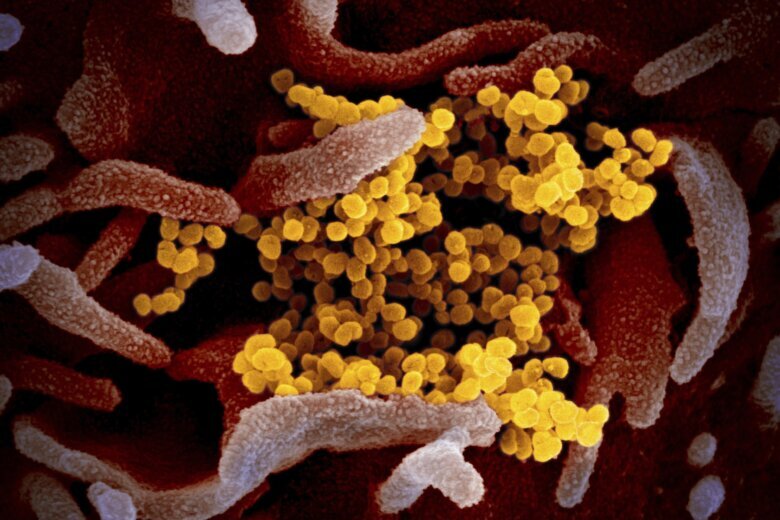
Cases of COVID-19 are on the rise. BA. 5, the latest mutation of the SARS-CoV-2 omicron variant, makes people with the disease more contagious than previous strains. But how contagious?
“The virus variant BA. 5 has spread quite rapidly throughout the world,” said Dr. Matthew Laurens, a professor of pediatrics and medicine at the University Of Maryland School Of Medicine.
- It’s time to start paying more attention to COVID-19 again
- Why the Omicron offshoot BA. 5 is a big deal
- More Coronavirus News
So exactly how much more contagious is BA. 5 compared to what’s come before?
Laurens said it’s hard to quantify the degree of elevated transmissibility, because conditions have changed. There now are vaccines, as well as antibody protection from previous exposures.
“But it is several orders of magnitude in terms of ease of transmissibility compared to the previous variants,” he said.
Laurens said almost 80% of the virus currently diagnosed and sequenced in the U.S. is of the BA. 5 lineage.
When examining a Centers for Disease Control and Prevention map of U.S. COVID-19 infection rates on Thursday afternoon, it shows 35.46% of the U.S. had high COVID-19 community levels, reflecting an increase of 14.74% over seven days.
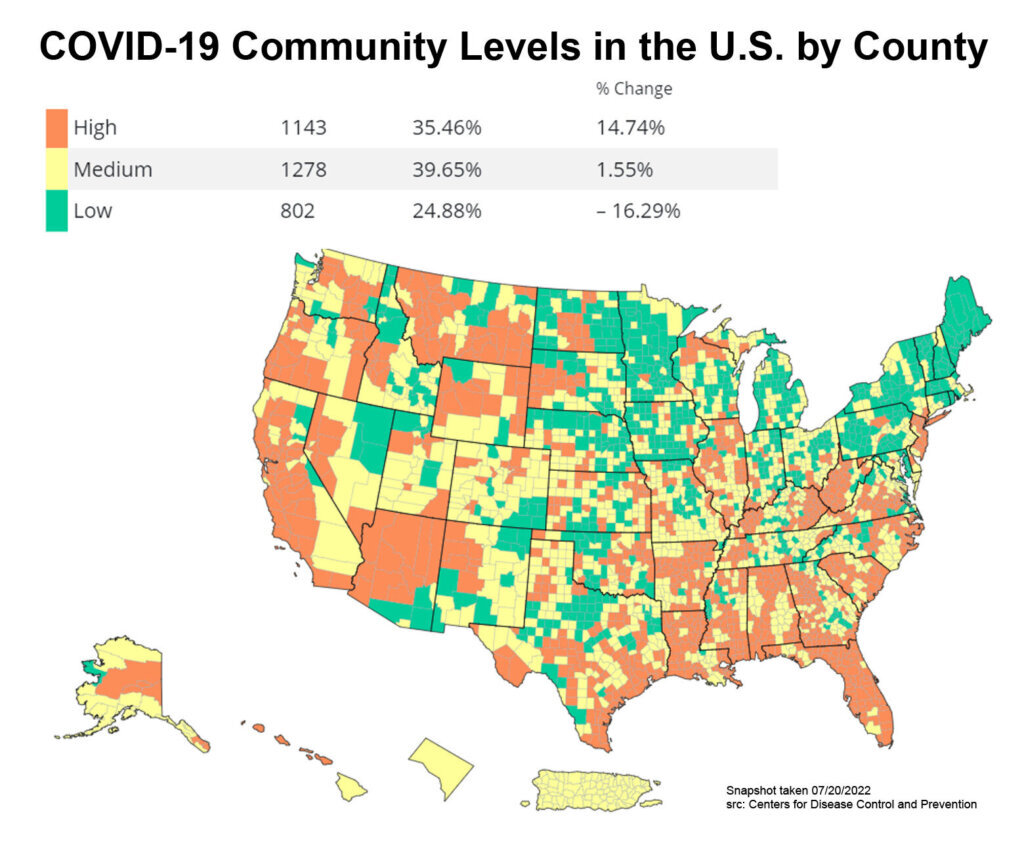
While most of the D.C. metro area has a “medium” ranking for COVID-19 community levels, Howard County, Maryland, is ranked “high” with a 227.52 case rate per 100,000 in population, and 4.5% of hospital beds are occupied with confirmed COVID-19 cases.
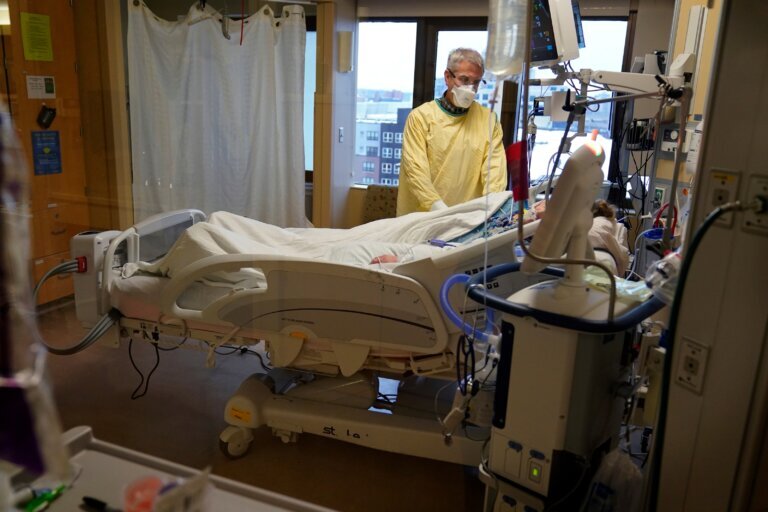
Numbers of hospitalizations are rising
“Here in the U.S., in terms of hospitalization due to COVID-19, we’re seeing increased numbers, and there is a slow but steady uptick over the past couple of weeks,” said Laurens. “But we’re nowhere near the surges that we saw earlier this year in January with the omicron variant.”
The BA. 5 variant is evading immune responses from vaccinations and previous infections that have previously offered protection from infection. However, vaccine immune responses that prevent serious outcomes are working.
“Those who are vaccinated are still avoiding the most serious consequences of COVID-19, if they are infected with this BA. 5 variant. So we still have some protection from vaccination and other means of protection from BA. 5,” Laurens said.
Noting that the sole constant of the pandemic has been its unpredictability, Laurens wants people to remember we’re still in a pandemic.
“We still have precautions that we need to take to stop the spread of virus and to save lives. And we continue to need to take this pandemic seriously,” he cautioned.
Laurens urges people to continue pursuing the most appropriate measures to prevent COVID-19 infection, including social distancing, continuing to wear masks, avoiding large indoor gatherings and to vaccinate and maintain vaccination booster schedules as recommended.