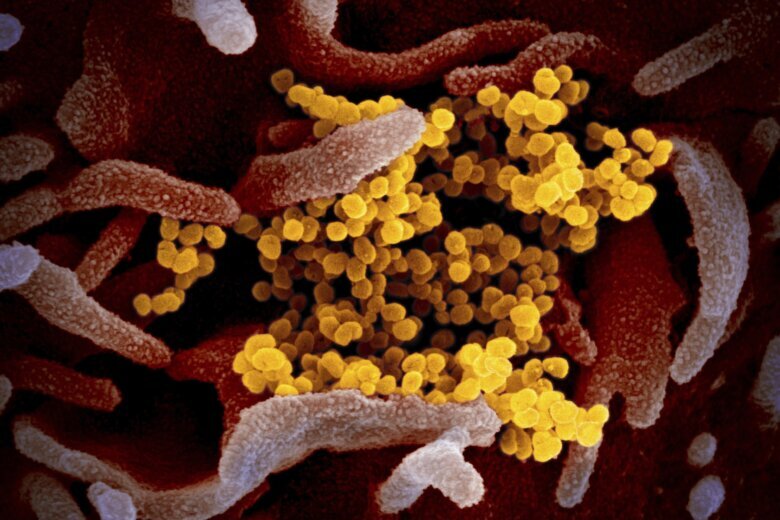
Thousands of people have had and then recovered from the new coronavirus, but experts said it’s unclear whether surviving the ailment builds immunity.
Doctors aren’t able to tell whether coronavirus survivors are immune because current tests don’t look for the virus itself. Instead, they search for the immune system’s response to it, which involves creating antibodies.
One factor complicating matters: The antibodies aren’t always found in recovered COVID-19 patients.
“Once recovered, the antibodies aren’t necessarily staying around,” or they may be so low that they’re undetectable, said Gwendolyn Francavillo of the Malek School of Health Professions at Marymount University.
“That’s been a very interesting discovery that they’re looking into further at the CDC (Centers for Disease Control and Prevention) to determine how that’s possible.”
- Sign up for news alerts from WTOP
- Northern Va. hospitals could be overwhelmed by late summer, latest state models project
- Where to get tested for COVID-19 in the DC region
- Coronavirus test results in D.C., Maryland and Virginia
- Coronavirus FAQ: What you need to know
Some people who’ve seemed to have recovered from the coronavirus became sick again, but Francavillo said that actually may not be the case. In some of those cases, the first instance of the infection might not have completely gone away, prompting someone to relapse.
“There’s a lot of susceptibility factors that may influence if the virus has completely gone away, such as stress or sleep deprivation or just their immune response,” Francavillo said.
It’s unclear how any vaccine eventually developed for COVID-19 may work. It could be a one-and-done treatment or require a once-a-decade dose. Nonetheless, a vaccine would need to be altered if the virus mutates, which is what happens with influenza.
Because of all the unknown factors related to COVID-19 and the known fact that even asymptomatic carriers could be contagious, Francavillo advises people not to let their guards down prematurely.
“Everyone should act as if they’re positive and contagious just to protect one another,” she said.