
A whooping crane hatched last month and is thriving at the Smithsonian Conservation Biology Institute.
The institute said in a statement Friday that the new arrival has already had a long journey to the Smithsonian in Front Royal, Virginia: The egg was found in a wild nest in a refuge in Wisconsin and was brought to the institute May 18 to be cared for by surrogate parents Tehya, a 16-year-old female, and Goliath, a 25-year-old male.
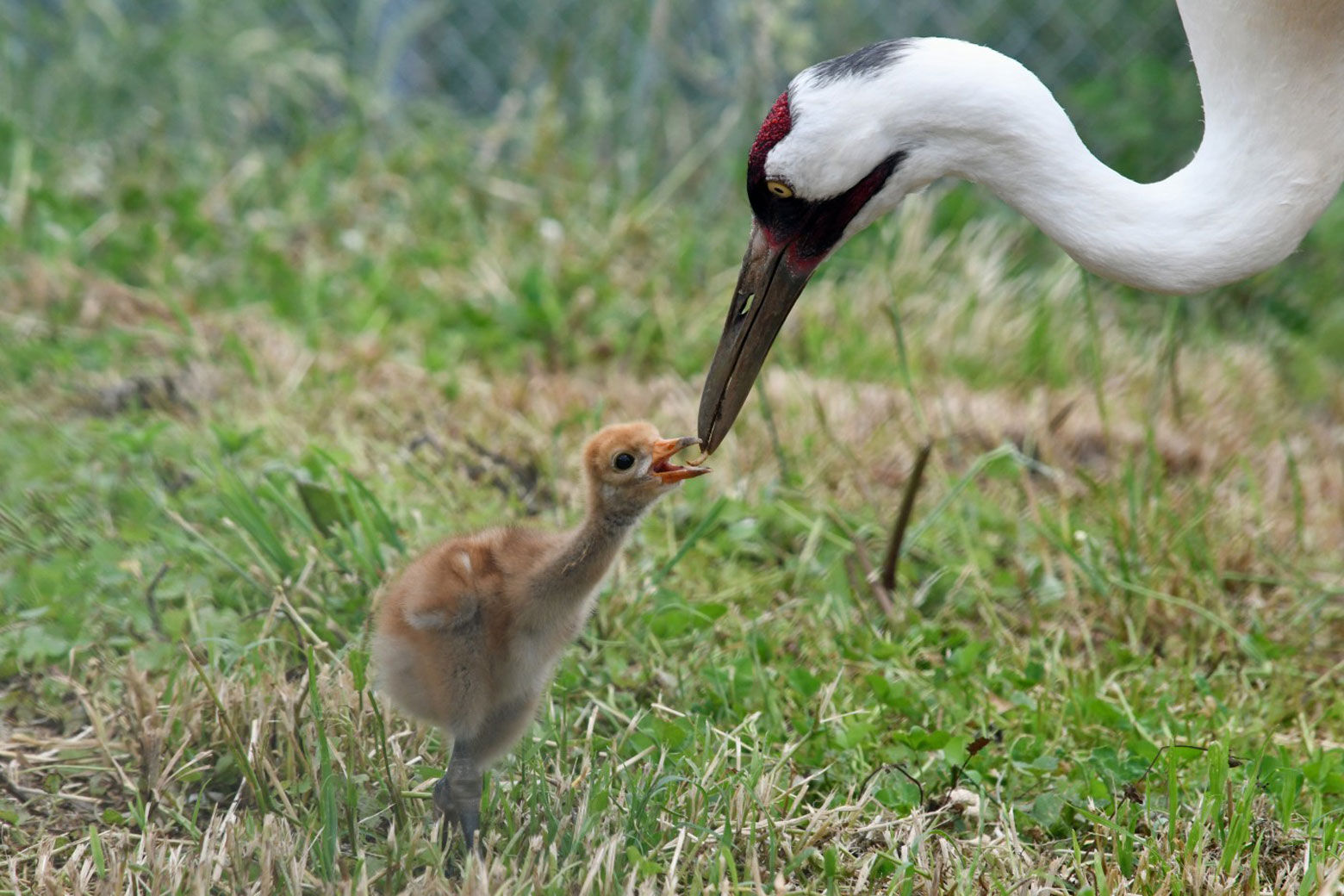
This required a bit of subterfuge, the institute said in the statement: While Theya and Goliath have raised colts (that’s what they call little whooping cranes) with previous mates at other facilities before coming to the Smithsonian, their eggs this year were infertile. Keepers took their infertile eggs and replaced them with a fake egg, so the pair could stay on the usual whooping crane parenting schedule.
When the egg arrived, keepers pulled the switch again, putting the real, fertilized egg in for the fake one. When the egg hatched May 26, Tehya and Goliath started caring for the colt as if it were their own.
The institute said they’re letting the trio have family time, but they say the colt “appears healthy, alert and curious about its surroundings.” They’ll do a veterinary exam at five weeks, and confirm its sex then.
Whooping cranes generally fledge at between 80 and 100 days old, and stay near their parents for about nine months, the institute said. The crane will be a candidate to be reintroduced into the wild.
The institute said whooping cranes are one of the most endangered species of crane in the world. In 1941, only about 22 were left in the wild; now, there are about 700 in the wild and 140 in human care.
This is the first whooping crane to thrive at the institute; a colt hatched a few years ago but died shortly afterward.