WASHINGTON — On a sticky Friday night, performers dripping in sparkles and bright colors light up a darkened dance floor. Lip-syncing hits from Rihanna to Whitney Houston, the drag queens at Town Danceboutique command the room. The dance floor, normally thrumming with a crush of dancing bodies, is focused on the stars, at least for the next few hours. “Even being here for the first time tonight, the drag show was amazing. So many people were there. There was so much positive energy and so much affirmation for the people on stage and also just for the people in the crowd,” said Stephanie Olsu, making her first Town visit. She and her friends took over benches outside on the spacious patio. As a pop song thumped behind them, she added, “It’s sad to be here and already know that we’re losing this space.” Back in June, the popular D.C. spot, which bills itself as the “city’s largest and most well-known LGBTQ nightclub,” announced that it will close its doors for good on July 1, 2018.
A special and unfortunate announcement from Town Danceboutique. pic.twitter.com/yc6Z3yA2bV
— Town Danceboutique (@WhatsUpAtTown) June 28, 2017
The property, sold to a developer in 2016, will be turned into an apartment complex in the future, the statement revealed. The announcement was quickly shared and retweeted on Facebook and Twitter, receiving a spectrum of reactions, from devastated to combative.
This is DEVASTATING. I didn’t think I could dance any harder at your club but now I MUST!!!
— Joanna Lohman (@JoannaLohman) June 28, 2017
Who are the developers? I need names! 😭😭 pic.twitter.com/QrerROo9py
— Zachary Jones (@zackj94) June 28, 2017
This is heartbreaking!! Town is my favorite gay club in DC. I’m hoping you guys open another venue. Please!
— AUGUST 9 🎉 (@AyoGrigioBoy) June 28, 2017
At Town, tucked away on a section of Eighth Street NW in D.C.’s Shaw neighborhood, people expressed similar reactions. “I was disappointed. I live in North Carolina, so Town is the only place in D.C. that I know that’s a queer space. So this is where I come when I come to visit D.C. So I guess I’m going to have to go look for a new place,” said Justin Hart, who had come with Olsu. The pair was in D.C. reuniting with their college friends. [related_gallery align=”right”] “What’s going to happen to the big drag, local acts that come here? How are we going to support the community that really thrives in these kinds of clubs?” asked J.J. Vera, of D.C.’s Columbia Heights neighborhood. As a resident, Vera came to appreciate Town. “I go to clubs on 14th Street. I go to H Street. I go to different places than this kind of realm of a gay club. But I still really respect and love what it does for the community on a more mainstream platform.” Last year, a D.C.-area developer purchased parcels between V Street and Florida Avenue that included Town, the Washington Business Journal reported. When the sale was first announced, Town initially released a statement that the nightclub expected “to be throwing parties in our current location for years to come.”
Brushed aside in the name of ‘progress’
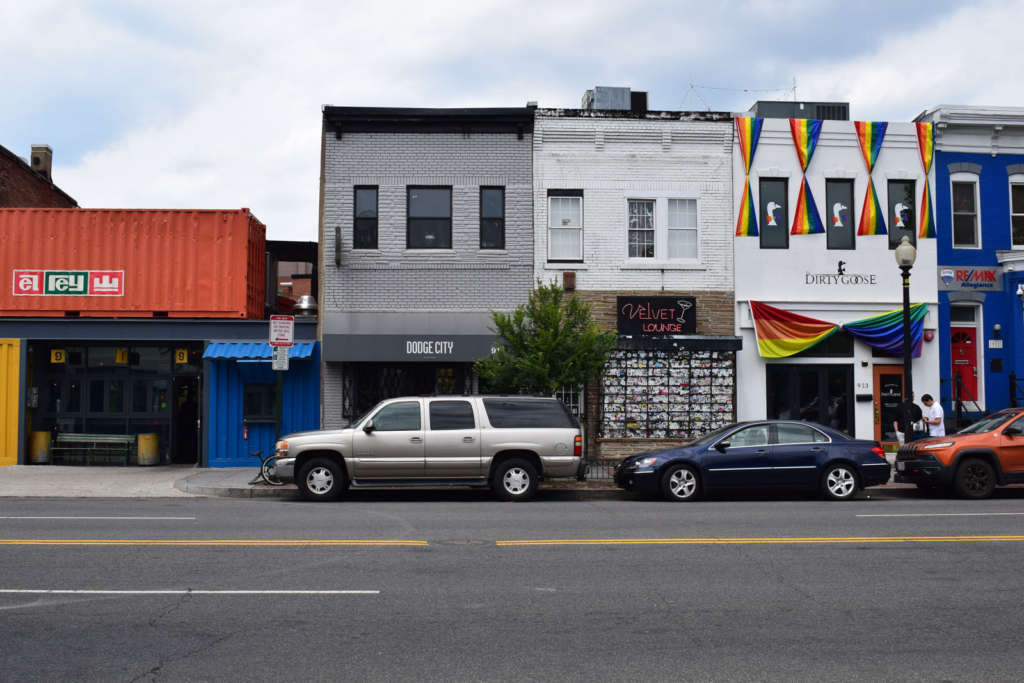
For D.C. resident Brock Thompson, the club’s closure was inevitable but still a loss. In losing such a space, he said, he’s asking himself what progress really means. “Sadly, spaces for gay people and, overall, spaces for minorities in general … get brushed aside in the name of ‘progress’ sometimes,” Thompson said. Thompson is a contributing writer to Washington Blade, an LGBT news outlet. In a recent article, he wrote, “As Town announced its impending closure, making way for condos, many in the gay community were openly wondering if we’ve effectively out-gentrified ourselves.” 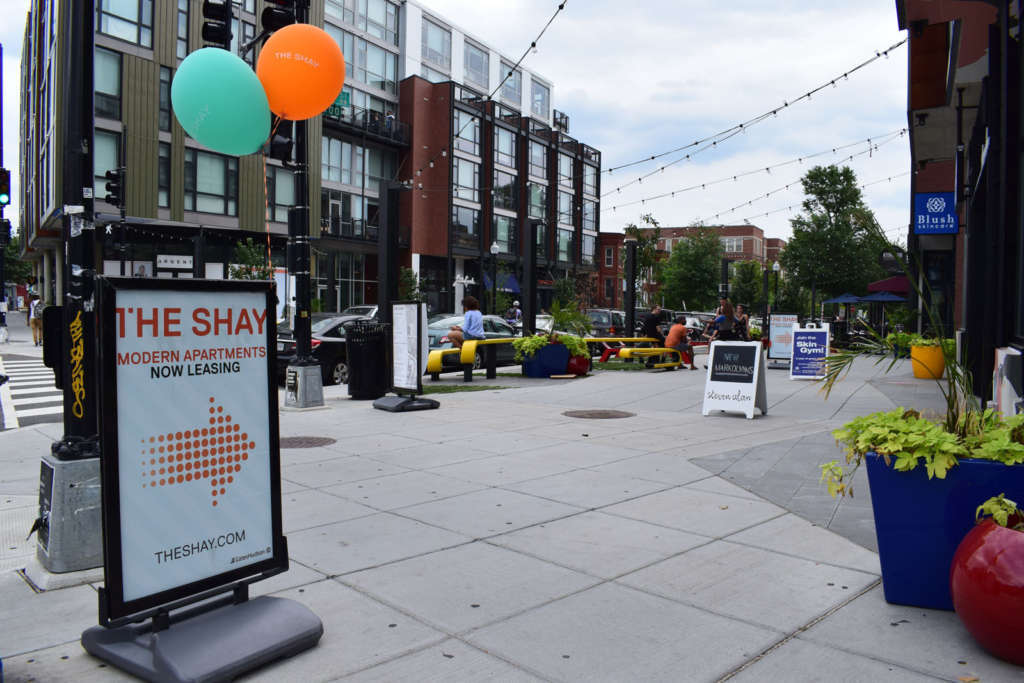
Memories of D.C.’s gay nightlife scene
For Mark Lee, a small-business advocate and former executive director of the D.C. Nightlife Hospitality Association, his memories of D.C.’s gay nightlife scene go back even further. “My memories go back to Tracks — I was at opening night at Tracks. As was the avant fashion at the time … I wore black Converse high-tops, those big scrunchy workout socks that you shove down in them, a black tube skirt with a big wide belt and a gray oversized sweatshirt with suspenders. When Tracks opened, I was just a regular guy, going out with my friends, and there was a long line stretching two blocks.” Tracks opened in the 1980s and closed in 1999, making way for the Navy Yard development. The Rainbow History Project has compiled a database that includes former and current LGBT spaces around D.C. Lee went on from customer to curator and worked in the nightlife industry. He became familiar with Town owners Ed Bailey, John Guggenmos and Chachi Boyle, and said the secret to the loyalty that surrounds them is that they remember “what it felt like to be the guy that nobody knew going to the door.” That loyalty wasn’t built overnight: Bailey had been involved in previous gay nightclubs, such as Tracks and then Nation, Lee recalled. “That’s one thing that hasn’t changed. These guys have, for really three decades, have been leaders in the community, providing critical community social amenities through every generation or every group of us, men and women, gay men and lesbians, coming up through the ranks, and some of the most diverse [crowds] — welcoming the full breadth of our community,” Lee said. It was more than just a nightclub, Thompson added. 
Staff shock
While the owners of Town declined to comment for this article, DJs Adam Koussari-Amin and Devon Trotter, who throw the CTRL party at the nightclub, said they learned about the closing at a staff meeting. “A lot of people were just upset and sad because it’s such a staple in our community and there’s no other place like it. So there’s definitely going to be a hole that’s going to need to be filled,” Trotter said. CTRL first started in 2012 as a small dance party at a restaurant. Known for its inventive themes and fun decorations, attendees could always expect something more at these parties. CTRL’s popularity brought it to Town two years ago, and Koussari-Amin said it was a “dream come true.” “I think one of the best things Ed ever told us was like: ‘Yeah, you guys definitely have a different sound, and the staff likes it when you come in. It’s a different night for them versus what else is always going on here,'” Koussari-Amin said. Another DJ, Shea Van Horn, became involved with Town around 2009 — first as a producer of a variety show that involved his drag persona Summer Camp. “I think it’s fair to say that Town has been very instrumental in providing a platform to a variety of artists and performers and DJs. It’s a pretty eclectic mix. I think a lot of the evolution of nightlife in D.C. is directly related to Town’s openness and support of that eclectic variety of performers and DJs and artists,” he said.
Need for more ‘welcoming’ places
For some Town customers, their personal memories of the nightclub, and LGBT spaces like it, weigh a little differently. “I think we need to do a better job of making the spaces welcoming and inclusive to all kinds of queer people,” said Lex Loro, a Richmond-based writer who spent time in D.C. for college. Loro went to Town for the first time as a college sophomore and had mostly positive experiences, but also some negative ones. “Queer women, I often feel, myself included, feel out of place at gay bars more frequently than going to one ladies night of the month,” Loro said. “Toxic masculinity pervades every space, even gay men spaces. It’s hard to feel safe and welcomed in any environment.” Anna Mei Benoit, a George Washington University student, echoed that sentiment. “So let’s get this thing straight about Town — it is not an LGBT space, it is a gay white man space. That is one of the drawbacks of Town and why I don’t feel completely safe but, rather, safer. … It’s very hard for me to find a place in the city that is a dance club that I’m going to feel completely safe in, but at Town, I feel safer,” Benoit said. 
Is the era coming to a close?
With D.C.’s history of shuttering LGBT-centered spaces and recent Pew Research Center polls showing 62 percent of Americans support gay marriage, is the era for such spaces coming to a close? “I love genuine integration as much as the next person and I want to see spaces kind of melt into each other. But any minority deserves a safe space, and LGBT people are a lot of minorities crammed into one beautiful acronym. We not only built these spaces up, but we thrive in them,” J.J. Vera said. “I’m never going to really feel like I can be myself at a straight club even though I’ve grown up doing that.” While the “boundaries are a bit blurrier,” DJ Van Horn said, he doesn’t “necessarily have to go to a space or want to go to a space just because it’s a gay bar.” If a space isn’t specifically LGBT, he said, it’s still important that the venue’s staff and management ensure that the space is safe for all patrons. “As a white gay guy, I may not have had as many experiences where I feel uncomfortable as others in our community, but I think that even with that in mind, I don’t want to feel threatened,” Van Horn said.