WASHINGTON (AP) — The Senate took the first steps toward passage of a sweeping Russian sanctions bill on Tuesday with Ukrainian President Volodymyr Zelenskyy in the Capitol, moving forward on the legislation to penalize countries that continue to buy Russian oil, gas and other exports after more than a year of negotiations.
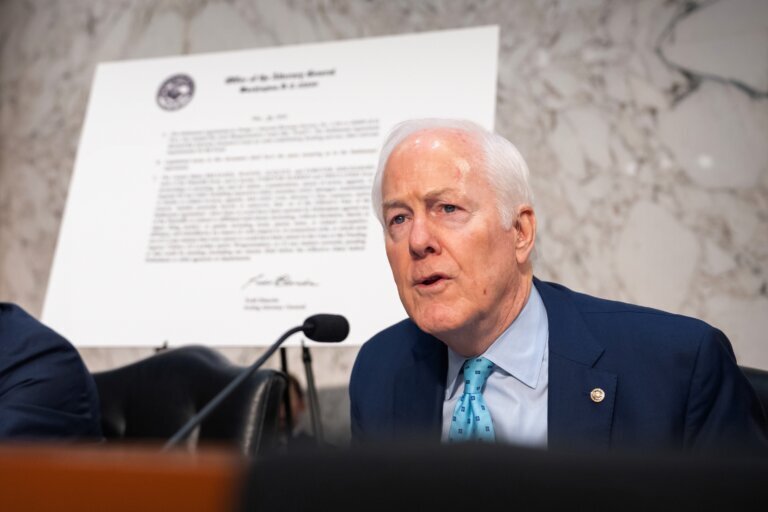
The bipartisan 86-12 procedural vote came hours after a funeral for Republican Sen. Lindsey Graham of South Carolina, the bill’s chief negotiator. Zelenskyy, who was in Washington to attend the service for Graham, met with senators beforehand and told them Ukraine is making gains in its war with Russia, but still needs more help from the U.S.
Zelenskyy then went to the Senate gallery to watch the vote, waving in support at the senators down below.
At the meeting, Zelenskyy told senators that the sanctions legislation “is important as a moral signal to a country that is weary and tired, though holding its own and then some against Russia,” Republican Sen. Todd Young of Indiana said as he left the meeting.
In a post on X, Zelenskyy wrote, “We discussed many issues, first and foremost, anti-ballistic defense.”
“It was an honor to be present as the votes were counted,” he said, adding, “This is the first step toward implementing Lindsey’s plans, and certainly a step toward peace.”
Graham and Sen. Richard Blumenthal, D-Conn., announced a deal with the White House on the sanctions legislation on July 10, a day before his sudden death, likely from an aortic tear. Graham had just returned from a trip to Ukraine, where he met with Zelenskyy.
Blumenthal said Graham told him that the deal they had struck was a “big effing deal” in the last conversation they had just before he died.
“It’s a significant part of his legacy,” Blumenthal said.
He said the bill has momentum partly because Ukraine is turning the tide in the war, because the bill was carefully negotiated and “there’s feeling about Senator Graham.”
Zelenskyy’s presence also helps, Blumenthal said, and “watching his face when he was in the gallery as we were voting was truly a moment of joy.”
Zelenskyy visits the Capitol
In Zelenskyy’s latest visit to the Capitol, his message was “positive,” Young said, and he talked about how the Ukrainians are making good progress against Russia in different areas of the war.
The bill is a “keystone in that overall effort” to handicap the Russian economy and drive Russian President Vladimir Putin to the negotiating table, Young said.
Zelenskyy told them that “they are winning the war now,” said Sen. Jim Justice, R-W.Va.
“In the first year it was survival. The next three years was getting your feet under you. But now they are winning,” Justice said.
Sen. Mike Rounds, R-S.D., said Zelenskyy told the senators that “Putin would think a little bit more about trying to negotiate a settlement if the sanctions were in place and actually creating more irritation.”
The bill will “send Putin a bipartisan message in a language he understands,” said New Hampshire Sen. Jeanne Shaheen, a Democrat. “This is our best opportunity to support Ukraine. We are defending not just their country but the rest of Europe from an increasingly aggressive Russia.”
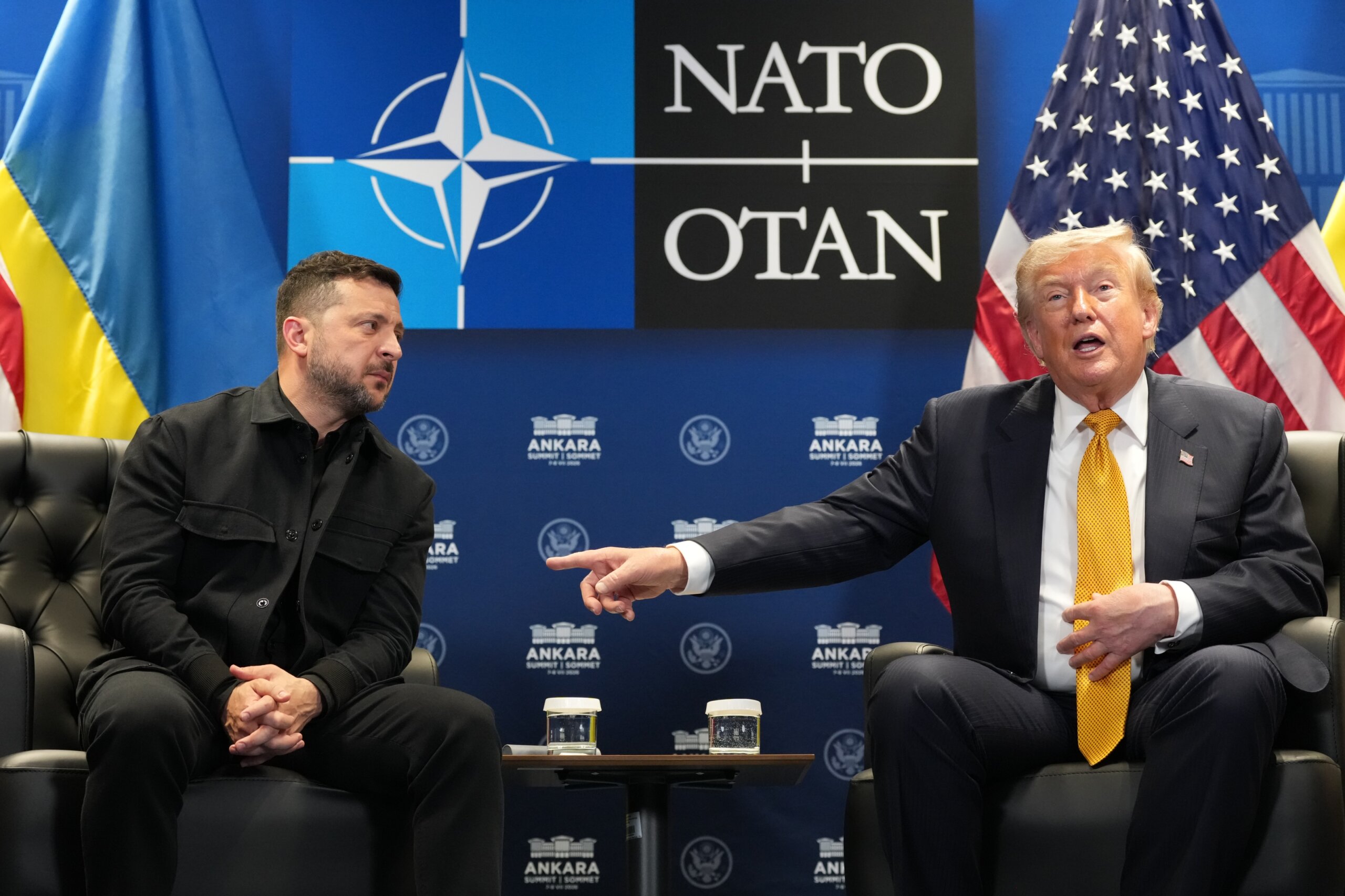
Zelenskyy met with President Donald Trump earlier in the day, and the two discussed ways that the U.S. could help in its war with Russia.
A long-sought deal on Russian sanctions
Graham, Blumenthal and other supporters of Ukraine had been working for more than a year to negotiate legislation that would win approval from both the White House and a majority of senators.
The bill allows the president to impose tariffs on the world’s top five purchasers of Russia oil or natural gas — with China and India at the top of that list. It provides exceptions for countries that import less than 15% of their natural gas from Russia and are taking steps to reduce those imports.
The legislation also includes sanctions on Putin, senior Russian political and military leaders, Russian financial institutions and Russian energy projects. It would expand U.S. sanctions to target older, reflagged oil tankers that Russia uses to circumvent existing U.S. sanctions on Russian oil and energy revenues.
The negotiated bill also includes waiver authority for the president, allowing the White House to waive sanctions or restrictions if the president certifies to Congress that the waiver is in the national interest.
Negotiators also added an extension of certain sanctions on Iran after Trump asked the Senate to add Iran to the bill.
Some Democrats are skeptical about tariff authority
While the president’s authority was narrowed in the final negotiations, the latest version still met with some skepticism from Democrats who did not want to give Trump additional powers to impose tariffs.
“It is extremely dangerous to give Trump massive new tariff powers, particularly after we’ve seen the disastrous impacts of his corrupt, chaotic, and inflationary tariff spree,” said Sen. Ron Wyden, D-Ore., in a statement with Rep. Richard Neal, D-Mass.
Wyden said he plans to offer an amendment to change some of the tariff provisions in the bill as the Senate debates the measure this week.
Arizona Sen. Ruben Gallego, a Democrat, said before the meeting he was still undecided on his final vote because of the tariff issue. He said he would listen to Zelenskyy’s appeal and then make “a game-time decision.”