Years after skull fracture, Mexico’s Raúl Jiménez has his long-awaited World Cup star moment

MEXICO CITY (AP) — Raúl Jiménez finally has his star moment in a World Cup for Mexico.

The 35-year-old striker burst into tears after scoring El Tri’s second goal against South Africa as Mexico opened the 2026 World Cup with a 2-0 win.

It was the first World Cup goal for Jiménez, who suffered a skull fracture while playing for Wolverhampton on Nov. 29, 2020 and had to undergo lifesaving surgery.

Within two weeks, Jiménez was back at training. He fully recovered several months later, but the injury forced him to wear protective headgear for the rest of his career.

Jiménez has suffered other injuries and dips in form in the years since, including a poor 2022 World Cup. He failed to score as Mexico failed to reach the knockout stage for the first time since 1978.

His biggest moment for Mexico may have been a bicycle kick in a victory against Panama in qualifying for the 2014 World Cup, which was honored as the CONCACAF goal of the year. He was a reserve player for El Tri during that tournament in Brazil.

“I read an interview where he said this has to be his World Cup,” Mexico coach Javier Aguirre said. “I think he got off to a flying start. He had always been in someone else’s shadow, but today he is a starter for this team — and he has truly earned it.”

In March, Jiménez lost his biggest supporter when his father, Raúl Jiménez Vega, died at 62. Jiménez wept after scoring for Fulham on March 21 against Burnley.

“On top of that, he was dealing with a personal situation that may have given him extra motivation,” Aguirre said. “And he even scored a goal. It was a perfect day for him.”

___

AP World Cup coverage: https://apnews.com/hub/fifa-world-cup
Iran attacks Bahrain and Kuwait following US strikes, threatens to end talks to end the war

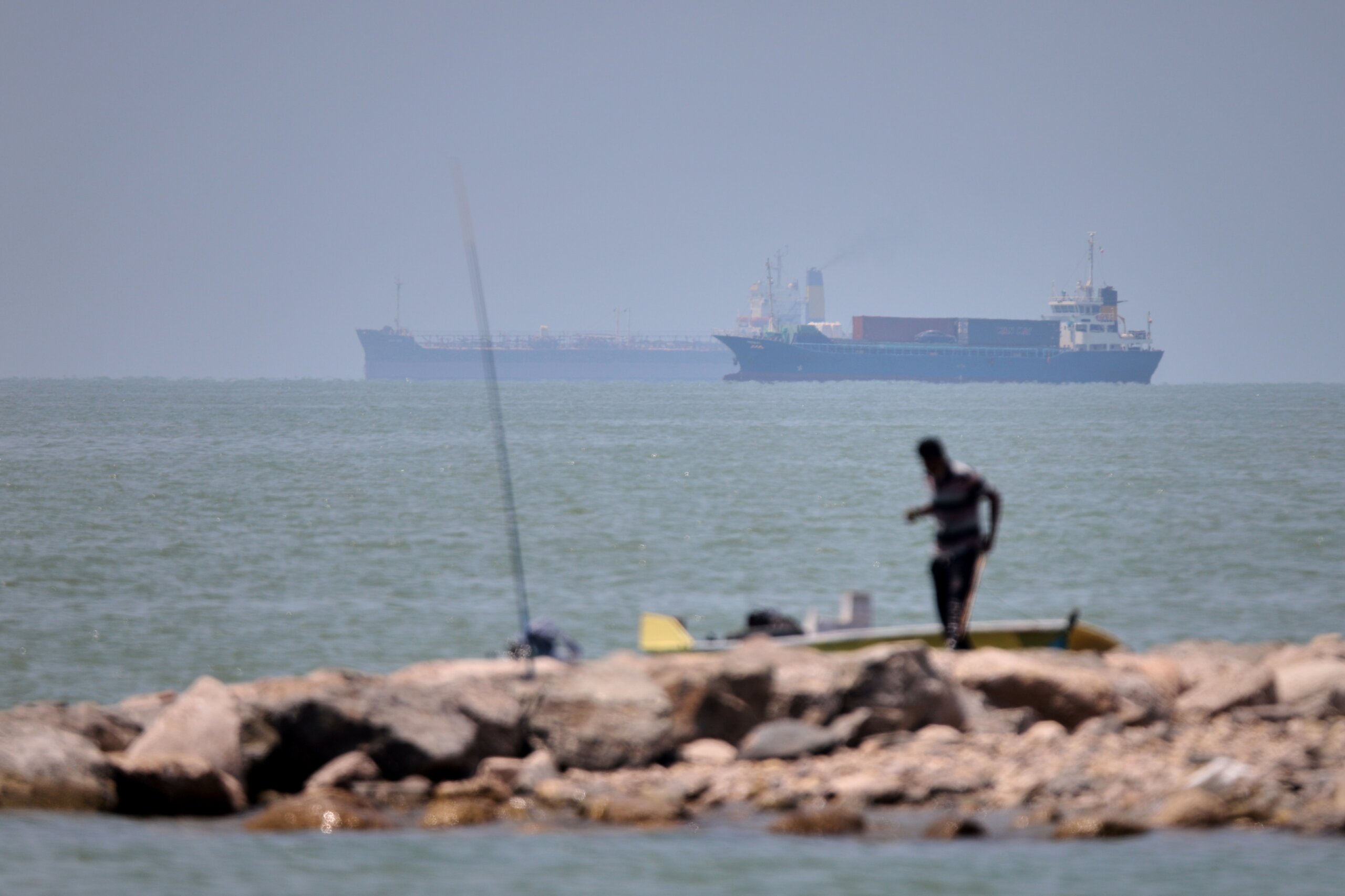
DUBAI, United Arab Emirates (AP) — Iran's paramilitary Revolutionary Guard launched drone and missile attacks Sunday targeting Bahrain and Kuwait in response to U.S. airstrikes that hit the Islamic Republic, and threatened a “complete halt” could come to negotiations to end the war if Washington continues its attacks. Efforts to reopen the Strait of Hormuz, the narrow mouth of the Persian Gulf that once carried a fifth of the world's oil and natural gas, without Iran's direct oversight sparked the crossfire now gripping the region. A multinational maritime body overseen by the U.S. Navy said Saturday that it would expand a route near Oman in the Strait of Hormuz to allow for both inbound and outbound traffic — setting up a new flashpoint with Tehran. Iran insists it alone must govern the strait after the war, upending decades of the world considering that the strait was international waters free for all, despite its sitting in Iran and Oman's territorial waters. Tehran has twice attacked vessels going through the Oman route, backed by a United Nations agency, in recent days. Early Sunday, the U.S. military’s Central Command said it struck Iranian military “surveillance infrastructure, communication systems, air defense sites, drone storage facilities and minelayer capabilities” following an attack on a ship at sea early Saturday morning. That ship, the Panamanian-flagged tanker Kiku, carried crude oil for the state-run energy company of Qatar, a key negotiator between Iran and the United States.
Read Next Story