
A long-shuttered Iraq-Syria border crossing reopens for the first time in more than a decade

BAGHDAD (AP) — A key border crossing between Iraq and Syria reopened on Monday for the first time in more than a decade, with officials highlighting its potential for trade and oil exports. Syria touted the crossing as a safe overland route for oil exports and an alternative to the Strait of Hormuz at the focus of the Iran war.

The crossing — known as Rabia in Iraq and Yarubiyah in Syria — was closed after the Syrian civil war began in 2011. Then in 2014, militants from the Islamic State group seized the area. Iraqi Kurdish forces later retook it.

Syria’s state-run SANA news agency said that Syrian and Iraqi officials at the crossing discussed how to improve coordination and ease transit and trade “in line with shared interests.”

Nadia al-Jubouri, a member of Iraq’s provincial council of Nineveh, said at the ceremony that the reopening will allow for “trade exchange and oil transportation toward this great gate.”

Still, transporting oil over land is far inferior — in capacity — to pipelines and oil tankers at sea.

Iraq relies heavily on oil revenues for roughly 90% of its budget, and most of its oil is exported through the Strait of Hormuz, the narrow mouth of the Persian Gulf and a critical chokepoint through which 20% of the world’s oil normally flows.
Iran attacks Bahrain and Kuwait following US strikes, threatens to end talks to end the war

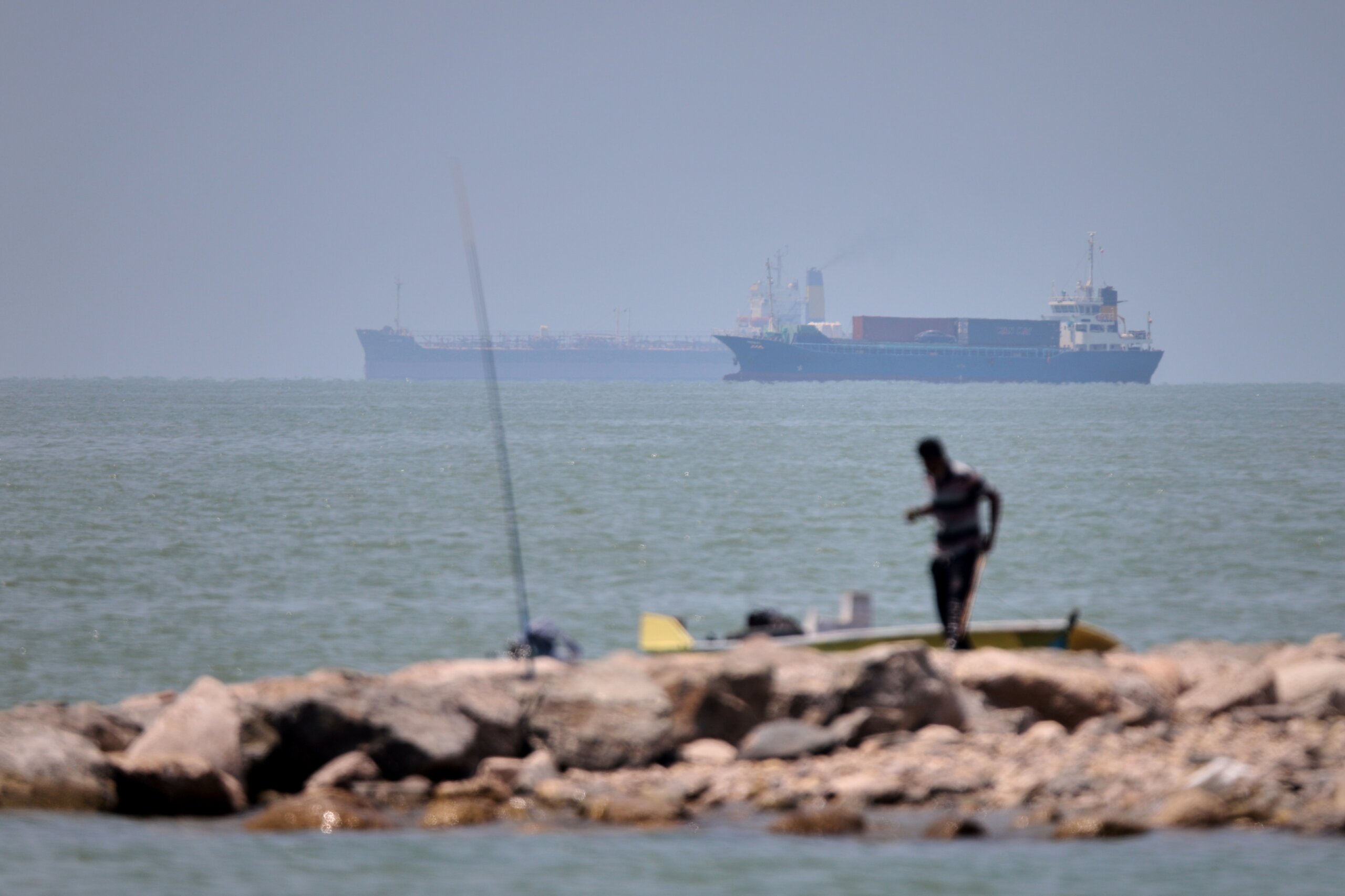
DUBAI, United Arab Emirates (AP) — Iran's paramilitary Revolutionary Guard launched drone and missile attacks Sunday targeting Bahrain and Kuwait in response to U.S. airstrikes that hit the Islamic Republic, and threatened a “complete halt” could come to negotiations to end the war if Washington continues its attacks. Efforts to reopen the Strait of Hormuz, the narrow mouth of the Persian Gulf that once carried a fifth of the world's oil and natural gas, without Iran's direct oversight sparked the crossfire now gripping the region. A multinational maritime body overseen by the U.S. Navy said Saturday that it would expand a route near Oman in the Strait of Hormuz to allow for both inbound and outbound traffic — setting up a new flashpoint with Tehran. Iran insists it alone must govern the strait after the war, upending decades of the world considering that the strait was international waters free for all, despite its sitting in Iran and Oman's territorial waters. Tehran has twice attacked vessels going through the Oman route, backed by a United Nations agency, in recent days. Early Sunday, the U.S. military’s Central Command said it struck Iranian military “surveillance infrastructure, communication systems, air defense sites, drone storage facilities and minelayer capabilities” following an attack on a ship at sea early Saturday morning. That ship, the Panamanian-flagged tanker Kiku, carried crude oil for the state-run energy company of Qatar, a key negotiator between Iran and the United States.
Read Next Story