ANTALYA, Turkey (AP) — Iran is not yet ready to hold a new round of face-to-face talks with U.S. officials, a senior Iranian official said Saturday, citing Washington’s refusal to abandon “maximalist” demands on key issues.
In an interview with The Associated Press on the margins of a diplomacy forum in Turkey, Iranian Deputy Foreign Minister Saeed Khatibzadeh also said his country will not hand over its enriched uranium to the United States, rejecting claims made by U.S. President Donald Trump.
“I can tell you that no enriched material is going to be shipped to United States,” Khatibzadeh said. “This is non-starter and I can assure you that while we are ready to address any concerns that we do have, we’re not going to accept things that are nonstarters.”
On Friday, Trump said that the U.S. will go into Iran and “get all the nuclear dust,” referring to the 970 pounds (440 kilograms) of enriched uranium believed to be buried under nuclear sites badly damaged by U.S. military strikes last year.
Khatibzadeh said there have been many exchanges of messages between the sides but accused the United States of holding firm on demands Iran deems to be excessive.
“We are still not there yet to move on to an actual meeting because there are issues that the Americans have not yet abandoned their maximalist position,” Khatibzadeh said. Iran was seeking the finalization of a “framework agreement” before moving to an in-person meeting, he added.
The Iranian official would not go into specifics of the negotiations with the United States or say which issues remain unresolved but called on Washington to address Iran’s concerns, including sanctions imposed on Iran.
“The other sides also should understand and address our main concerns, which are illegal unilateral sanctions that Americans have imposed on Iranians and this economic terrorism which has targeted Iranian people to suffocate them and make them to revolt against the political structure inside Iran,” Khatibzadeh said.
Asked whether Iran would respond to renewed attacks by Israel on Lebanon despite the ceasefire, Khatibzadeh said: “Iran has no option, just to stop aggressors once and forever.”
Trump said that Israel is “prohibited” by the U.S. from further strikes on Lebanon and that “enough is enough” in the Israel-Hezbollah war.
The State Department said the prohibition applies only to offensive attacks and not to actions taken in self-defense.
The Iranian official renewed Iran’s position that Tehran’s actions were defensive and in response to unprovoked aggression occurring in the middle of negotiations.
He also reiterated Iran’s position that the ceasefire must extend to Lebanon, where Israel had been fighting with the Iran-backed militant group Hezbollah.
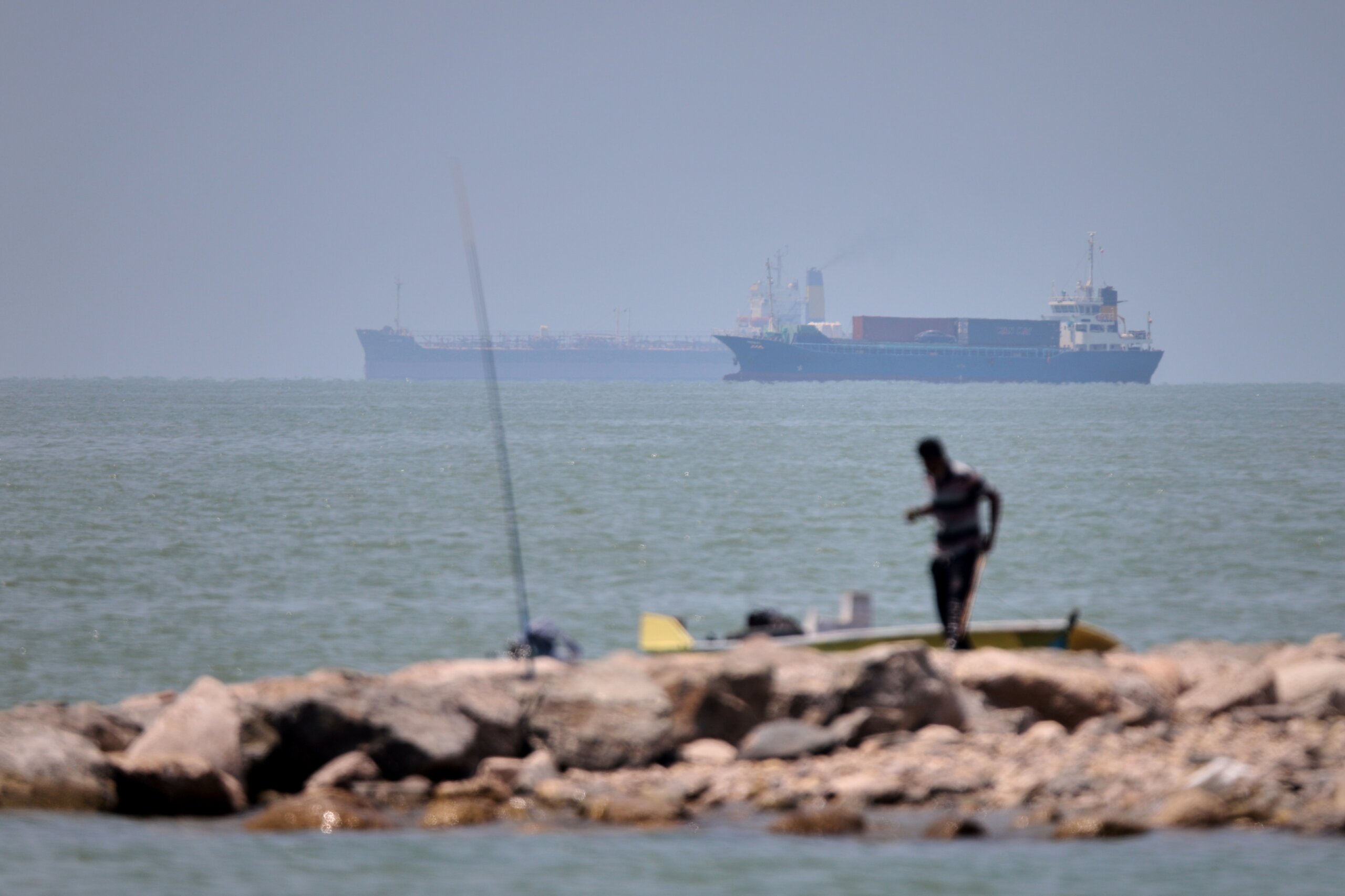
When the U.S. and Iran declared a temporary truce last week, Pakistan and Iran said it extended to Lebanon, but Israel — and later the U.S. — denied this. Israel then launched a series of airstrikes on central Beirut, prompting Iran to announce it was once again closing the Strait of Hormuz. Following implementation of a truce in Lebanon Friday, Iran said it had reopened the strait.
“Iran negotiated with good faith, accepted a ceasefire and told everybody that this ceasefire should include all countries, including Lebanon,” Khatibzadeh said. “Then the other side said that, it is not committed to this and then started atrocities.”
He said that a “new protocol” would be put in place for the Strait of Hormuz as part of the negotiations with the U.S. and it would “remain open and safe for all civilian passage.”
Trump has said a U.S. blockade of the Strait of Hormuz will remain and attacks will resume if no agreement is reached with Iran.
___
The Associated Press receives support for nuclear security coverage from the Outrider Foundation. The AP is solely responsible for all content.
___
Additional AP coverage of the nuclear landscape: https://apnews.com/projects/the-new-nuclear-landscape/