
Dominican Republic and Haiti to reopen airspace in May, restoring flights after more than 2 years

SANTO DOMINGO, Dominican Republic (AP) — The governments of the Dominican Republic and Haiti have agreed to reopen their airspace starting in May, allowing flights between their countries for the first time in more than two years.

The decision, announced Friday in a joint statement, clears the way for connections between three Dominican airports and one serving Haiti’s northern port city of Cap-Haïtien.

The Dominican Republic closed its airspace with Haiti in March 2024, citing the high levels of insecurity in the neighboring nation following the assassination of Haitian President Jovenel Moïse in 2021. It only permitted humanitarian flights.

The countries share the Caribbean island of Hispaniola. In the months before the airspace closure, bilateral relations had been severely strained due to the conflict sparked by the construction of an irrigation canal by Haitian businessmen, fed by the Massacre River, which is shared by both countries. The Dominican Republic opposed the project, arguing that the construction would have negative environmental impacts and harm agricultural producers in both nations.

Friday’s decision followed bilateral talks focused primarily on border control and surveillance, migration and trade.

“This measure seeks to facilitate mobility, boost economic ties and strengthen relations between both countries,” according to the joint statement issued after a meeting between foreign ministers Roberto Álvarez of Dominican Republic and Raina Forbin of Haiti.

The statement also thanked the international community, particularly the United Nations, for supporting Haitian authorities in their efforts to pacify the country.

Iran attacks Bahrain and Kuwait following US strikes, threatens to end talks to end the war

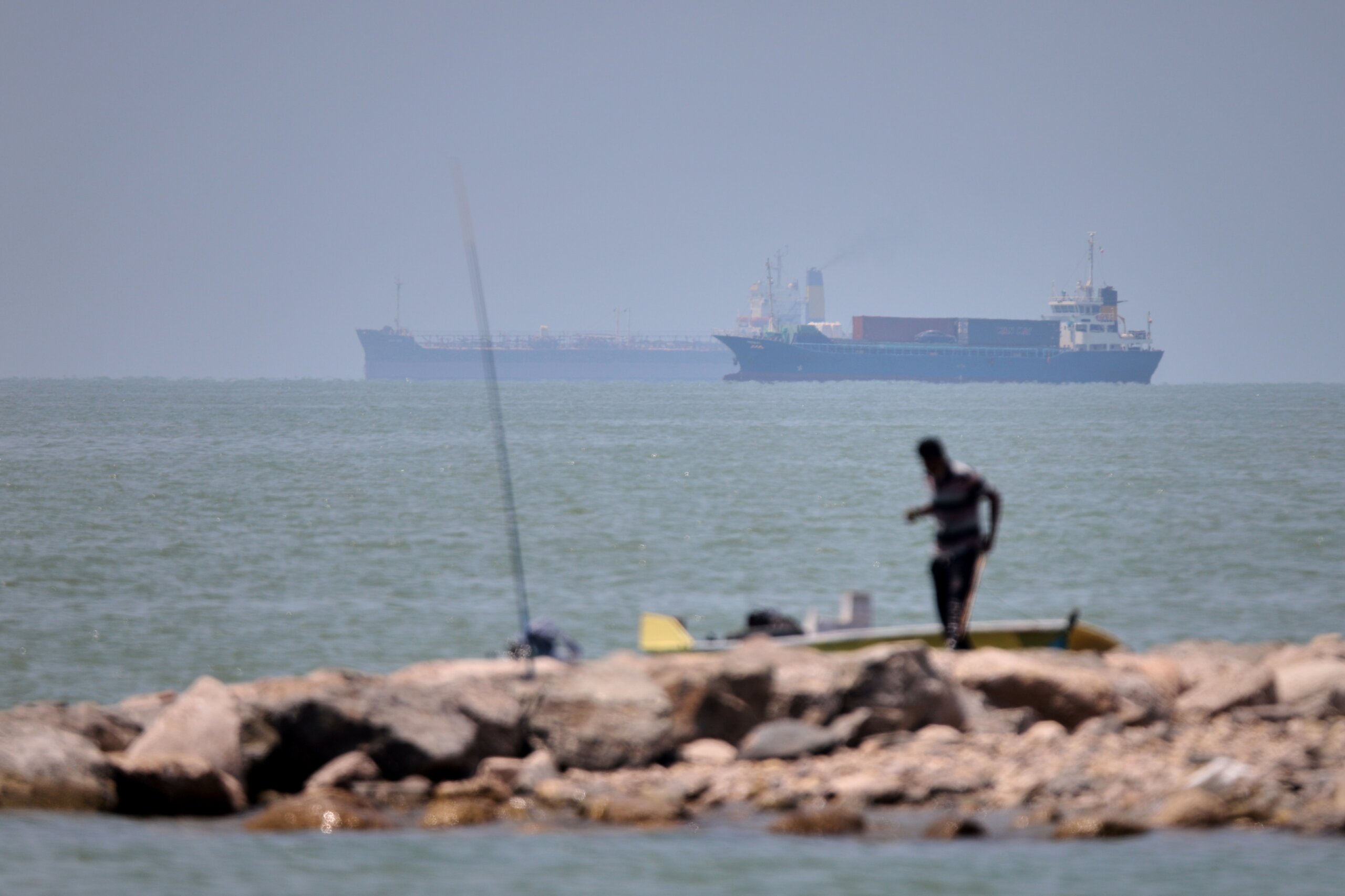
DUBAI, United Arab Emirates (AP) — Iran's paramilitary Revolutionary Guard launched drone and missile attacks Sunday targeting Bahrain and Kuwait in response to U.S. airstrikes that hit the Islamic Republic, and threatened a “complete halt” could come to negotiations to end the war if Washington continues its attacks. Efforts to reopen the Strait of Hormuz, the narrow mouth of the Persian Gulf that once carried a fifth of the world's oil and natural gas, without Iran's direct oversight sparked the crossfire now gripping the region. A multinational maritime body overseen by the U.S. Navy said Saturday that it would expand a route near Oman in the Strait of Hormuz to allow for both inbound and outbound traffic — setting up a new flashpoint with Tehran. Iran insists it alone must govern the strait after the war, upending decades of the world considering that the strait was international waters free for all, despite its sitting in Iran and Oman's territorial waters. Tehran has twice attacked vessels going through the Oman route, backed by a United Nations agency, in recent days. Early Sunday, the U.S. military’s Central Command said it struck Iranian military “surveillance infrastructure, communication systems, air defense sites, drone storage facilities and minelayer capabilities” following an attack on a ship at sea early Saturday morning. That ship, the Panamanian-flagged tanker Kiku, carried crude oil for the state-run energy company of Qatar, a key negotiator between Iran and the United States.
Read Next Story