
Chinese Embassy in Japan says authorities fail to act on threats

TOKYO (AP) — The Chinese Embassy in Japan said Thursday it has received multiple threats and accused Japanese authorities of failing to take effective measures despite its repeated reporting to police, as tensions between the two sides rise.

Shi Yong, acting Chinese ambassador to Japan, said the embassy on March 5 received a letter from a group claiming to comprise former police and military members and threatening attacks on China’s diplomatic missions in Japan and “wiping out all Chinese” in the country.

The embassy said on X that it immediately reported to Japanese police and criticized they did not take the matter seriously, implement effective steps or establish the facts.

Japan’s Foreign Ministry declined to comment.

Tensions have escalated since Prime Minister Sanae Takaichi’s comment in November that any Chinese military action against self-ruled Taiwan could be grounds for a Japanese military response. China imposed diplomatic and economic measures against Japan.

In late March, a Japanese army officer was arrested after he trespassed at the Chinese Embassy compound carrying a knife. China protested to Japan, and Japanese police have since stepped up security around the embassy.

A week after the incident, the embassy received a bomb threat on social media by another individual claiming to be a Self-Defense Force reserve personnel, triggering a two-hour bomb hunt, Shi said. He did not say if any bomb was found.

Shi acknowledged that Japanese police had stepped up security around the embassy, but that the diplomatic mission is still “exposed to threats.”
Iran attacks Bahrain and Kuwait following US strikes, threatens to end talks to end the war

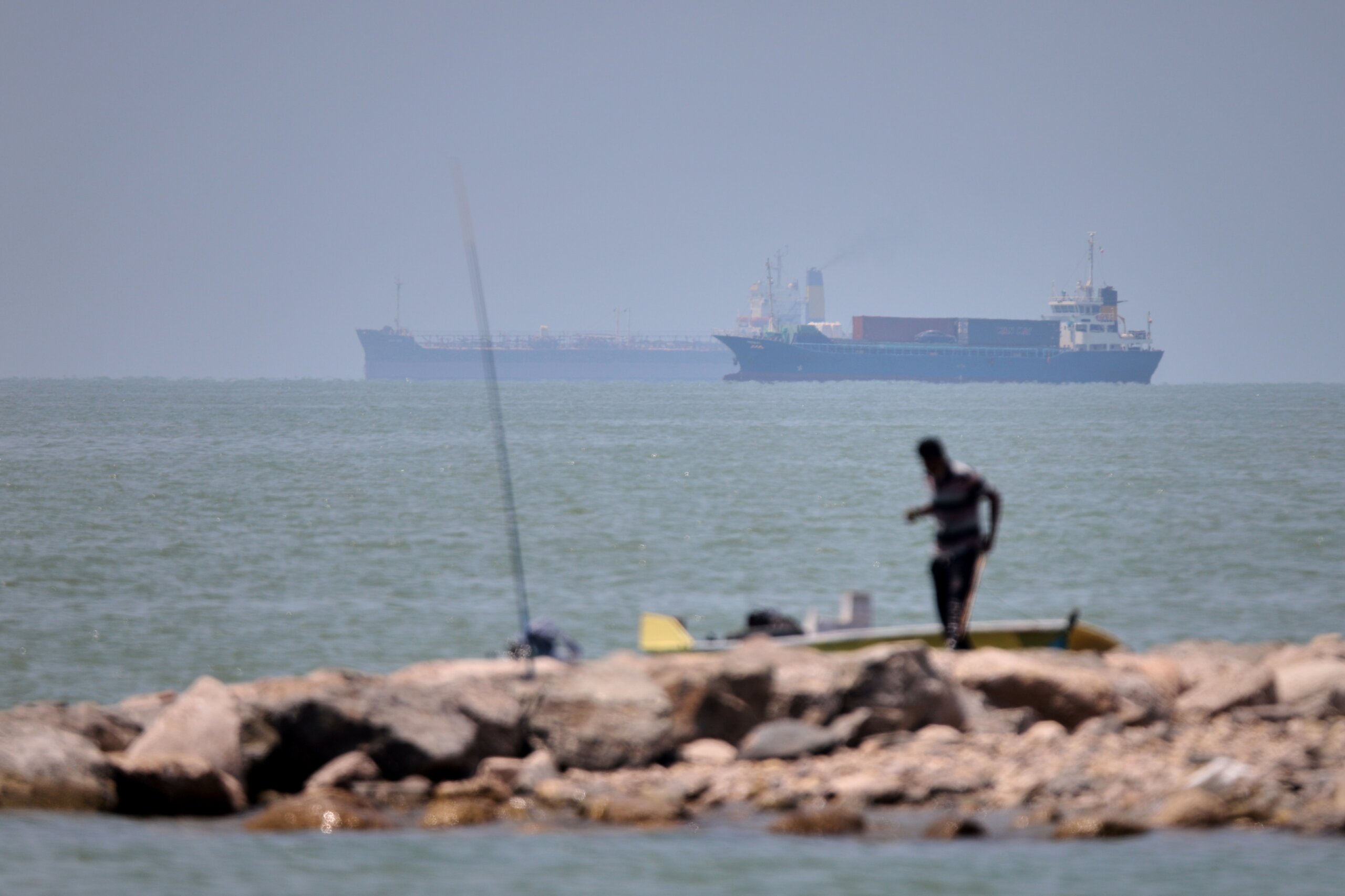
DUBAI, United Arab Emirates (AP) — Iran's paramilitary Revolutionary Guard launched drone and missile attacks Sunday targeting Bahrain and Kuwait in response to U.S. airstrikes that hit the Islamic Republic, and threatened a “complete halt” could come to negotiations to end the war if Washington continues its attacks. Efforts to reopen the Strait of Hormuz, the narrow mouth of the Persian Gulf that once carried a fifth of the world's oil and natural gas, without Iran's direct oversight sparked the crossfire now gripping the region. A multinational maritime body overseen by the U.S. Navy said Saturday that it would expand a route near Oman in the Strait of Hormuz to allow for both inbound and outbound traffic — setting up a new flashpoint with Tehran. Iran insists it alone must govern the strait after the war, upending decades of the world considering that the strait was international waters free for all, despite its sitting in Iran and Oman's territorial waters. Tehran has twice attacked vessels going through the Oman route, backed by a United Nations agency, in recent days. Early Sunday, the U.S. military’s Central Command said it struck Iranian military “surveillance infrastructure, communication systems, air defense sites, drone storage facilities and minelayer capabilities” following an attack on a ship at sea early Saturday morning. That ship, the Panamanian-flagged tanker Kiku, carried crude oil for the state-run energy company of Qatar, a key negotiator between Iran and the United States.
Read Next Story