
American YouTuber sentenced to 6 months in South Korean prison for offensive stunts

SEOUL, South Korea (AP) — An American YouTuber who sparked national outrage in South Korea for provocative stunts, including dancing on a statue honoring victims of wartime sexual slavery, was sentenced to six months in prison Wednesday.

The Seoul Western District Court found Ramsey Khalid Ismael, a self-proclaimed internet “troll” known online as Johnny Somali, guilty of multiple charges, including obstruction of business and distributing fabricated sexually explicit content.

Prosecutors had sought a three-year term for Ismael, who also faced accusations of harassing staff and visitors at an amusement park, disrupting a convenience store by blasting music and upending noodles onto a table, causing similar scenes on a bus and subway, and distributing non-consensual deepfake videos.

The court said the 25-year-old displayed “severe” disrespect for South Korean law, noting that he offended countless people with livestreamed stunts aimed at generating YouTube revenue. The court ordered his immediate detention following the verdict, citing him as a flight risk.

In October 2024, Somali sparked public outrage in South Korea after posting a video of himself kissing and performing a lap dance on a statue commemorating victims of the Japanese military’s sexual slavery during World War II. He later apologized, claiming he was unaware of the monument’s significance.

Ismael, who was barred from leaving the country pending his trial, earlier told local reporters that he regretted his actions and wished to apologize to the South Korean public.
Iran attacks Bahrain and Kuwait following US strikes, threatens to end talks to end the war

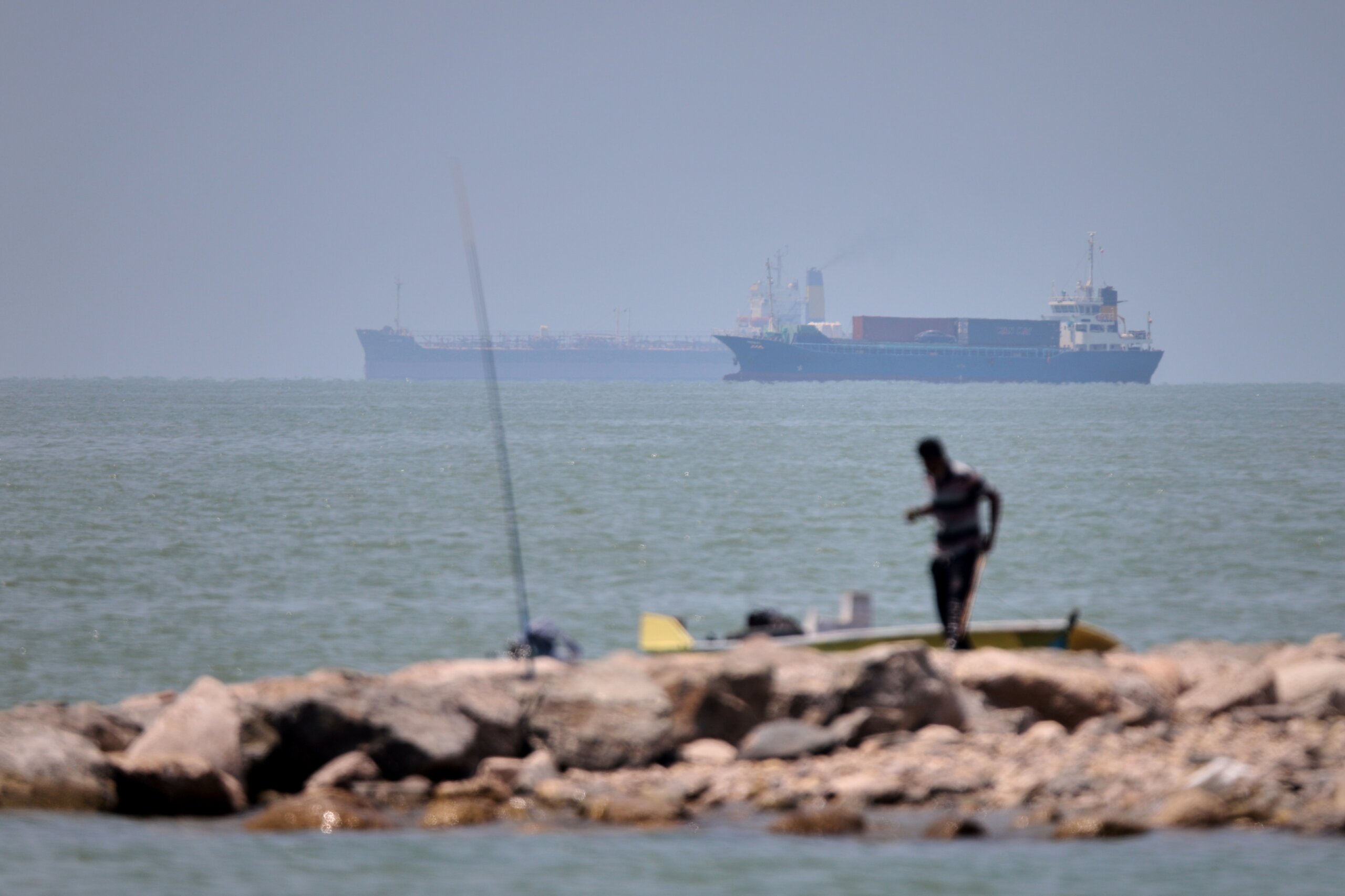
DUBAI, United Arab Emirates (AP) — Iran's paramilitary Revolutionary Guard launched drone and missile attacks Sunday targeting Bahrain and Kuwait in response to U.S. airstrikes that hit the Islamic Republic, and threatened a “complete halt” could come to negotiations to end the war if Washington continues its attacks. Efforts to reopen the Strait of Hormuz, the narrow mouth of the Persian Gulf that once carried a fifth of the world's oil and natural gas, without Iran's direct oversight sparked the crossfire now gripping the region. A multinational maritime body overseen by the U.S. Navy said Saturday that it would expand a route near Oman in the Strait of Hormuz to allow for both inbound and outbound traffic — setting up a new flashpoint with Tehran. Iran insists it alone must govern the strait after the war, upending decades of the world considering that the strait was international waters free for all, despite its sitting in Iran and Oman's territorial waters. Tehran has twice attacked vessels going through the Oman route, backed by a United Nations agency, in recent days. Early Sunday, the U.S. military’s Central Command said it struck Iranian military “surveillance infrastructure, communication systems, air defense sites, drone storage facilities and minelayer capabilities” following an attack on a ship at sea early Saturday morning. That ship, the Panamanian-flagged tanker Kiku, carried crude oil for the state-run energy company of Qatar, a key negotiator between Iran and the United States.
Read Next Story