
Brazil’s Lula defends Pope Leo in message to Catholics after Trump’s criticism

SAO PAULO (AP) — Brazil’s President Luiz Inácio Lula da Silva said on Wednesday that Pope Leo XIV should be defended from “powerful people” who have recently criticized him. The leftist leader’s comments come amid a tense exchange of attacks between the pontiff and U.S. President Donald Trump.

Earlier Wednesday, during his trip to Cameroon, the first U.S.-born pope insisted that “the message the world needs to hear today” is one of peace and dialogue. In recent days, Trump has doubled down on his criticism of Leo’s comments against the war in Iran.

The 80-year-old Lula, who is running for reelection in October, spoke in a video message sent to a gathering of Brazil’s national conference of bishops.

“My deepest solidarity to Pope Leo XIV. Throughout mankind’s history, advocates for peace and for the oppressed have been attacked by powerful people who think they are deities to be adored,” Lula said. “It’s better to have a heart full of love than the power of weapons and money.”

The spat between Leo and the U.S. president erupted after the pope said God doesn’t bless those who drop bombs. The pontiff also called Trump’s threat to annihilate Iranian civilization “truly unacceptable.” The U.S. president then argued Leo is weak on crime and a captive to the left, and claimed the pontiff owed his position to him.

___

Follow the AP’s coverage of Latin America and the Caribbean at https://apnews.com/hub/latin-america
Iran attacks Bahrain and Kuwait following US strikes, threatens to end talks to end the war

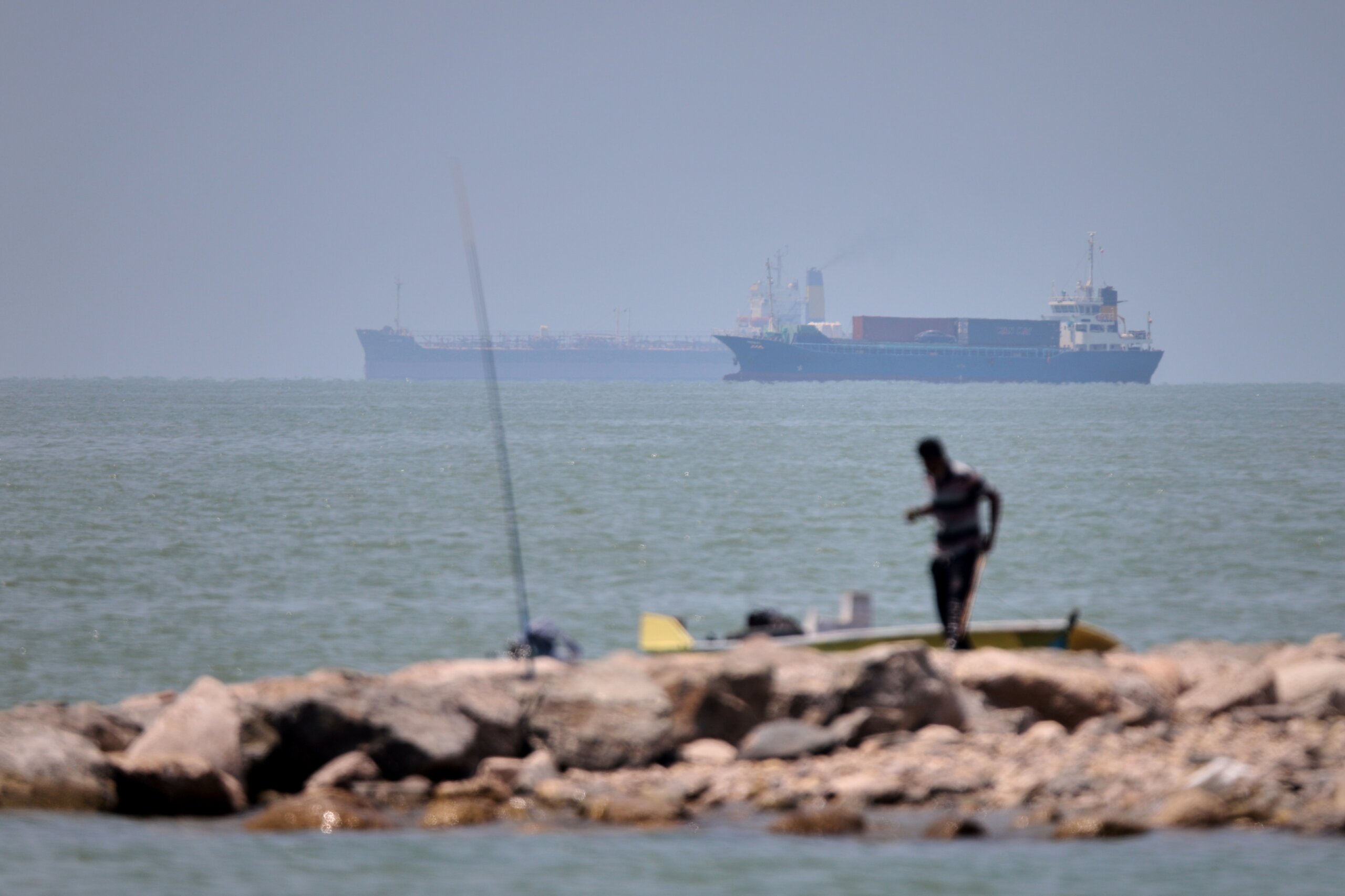
DUBAI, United Arab Emirates (AP) — Iran's paramilitary Revolutionary Guard launched drone and missile attacks Sunday targeting Bahrain and Kuwait in response to U.S. airstrikes that hit the Islamic Republic, and threatened a “complete halt” could come to negotiations to end the war if Washington continues its attacks. Efforts to reopen the Strait of Hormuz, the narrow mouth of the Persian Gulf that once carried a fifth of the world's oil and natural gas, without Iran's direct oversight sparked the crossfire now gripping the region. A multinational maritime body overseen by the U.S. Navy said Saturday that it would expand a route near Oman in the Strait of Hormuz to allow for both inbound and outbound traffic — setting up a new flashpoint with Tehran. Iran insists it alone must govern the strait after the war, upending decades of the world considering that the strait was international waters free for all, despite its sitting in Iran and Oman's territorial waters. Tehran has twice attacked vessels going through the Oman route, backed by a United Nations agency, in recent days. Early Sunday, the U.S. military’s Central Command said it struck Iranian military “surveillance infrastructure, communication systems, air defense sites, drone storage facilities and minelayer capabilities” following an attack on a ship at sea early Saturday morning. That ship, the Panamanian-flagged tanker Kiku, carried crude oil for the state-run energy company of Qatar, a key negotiator between Iran and the United States.
Read Next Story