
Haiti’s culture ministry dismisses 2 officials after stampede that killed 25

PORT-AU-PRINCE, Haiti (AP) — Two state officials in Haiti were dismissed from their posts on Tuesday following a stampede at a mountaintop fortress that killed 25 people over the weekend.

The Ministry of Culture and Communication said in a statement that it fired a director with Haiti’s Institute for the Preservation of National Heritage, accusing him of “serious negligence.” Also dismissed was a director with the ministry, which officials accused of “biased passivity.”

The stampede occurred on Saturday at La Citadelle, a historic fortress and tourist site in northern Haiti, where an event organized by a local DJ on social media was held. The event was also promoted via loudspeakers on a vehicle driven through neighborhoods.

“The Ministry of Culture and Communication, without going into the details of the criminal investigation, believes that the tragedy at La Citadelle is the result of administrative negligence,” the department said in a statement, adding that the state “will fully assume its responsibilities.”

Dozens of people were injured in the stampede. Officials said late Monday that 30 of those who were hospitalized had since been released.

Nine suspects have been arrested in connection with the incident, including five police officers.

Eno Zephirin, a prosecutor in the city of Cap-Haitien, told Radiotélévision Caraïbes on Tuesday that authorities are investigating what caused the stampede. He declined to identify two of the nine suspects arrested. Two others were identified late Monday as employees of Haiti’s Institute for the Preservation of National Heritage, which oversees La Citadelle.

Iran attacks Bahrain and Kuwait following US strikes, threatens to end talks to end the war

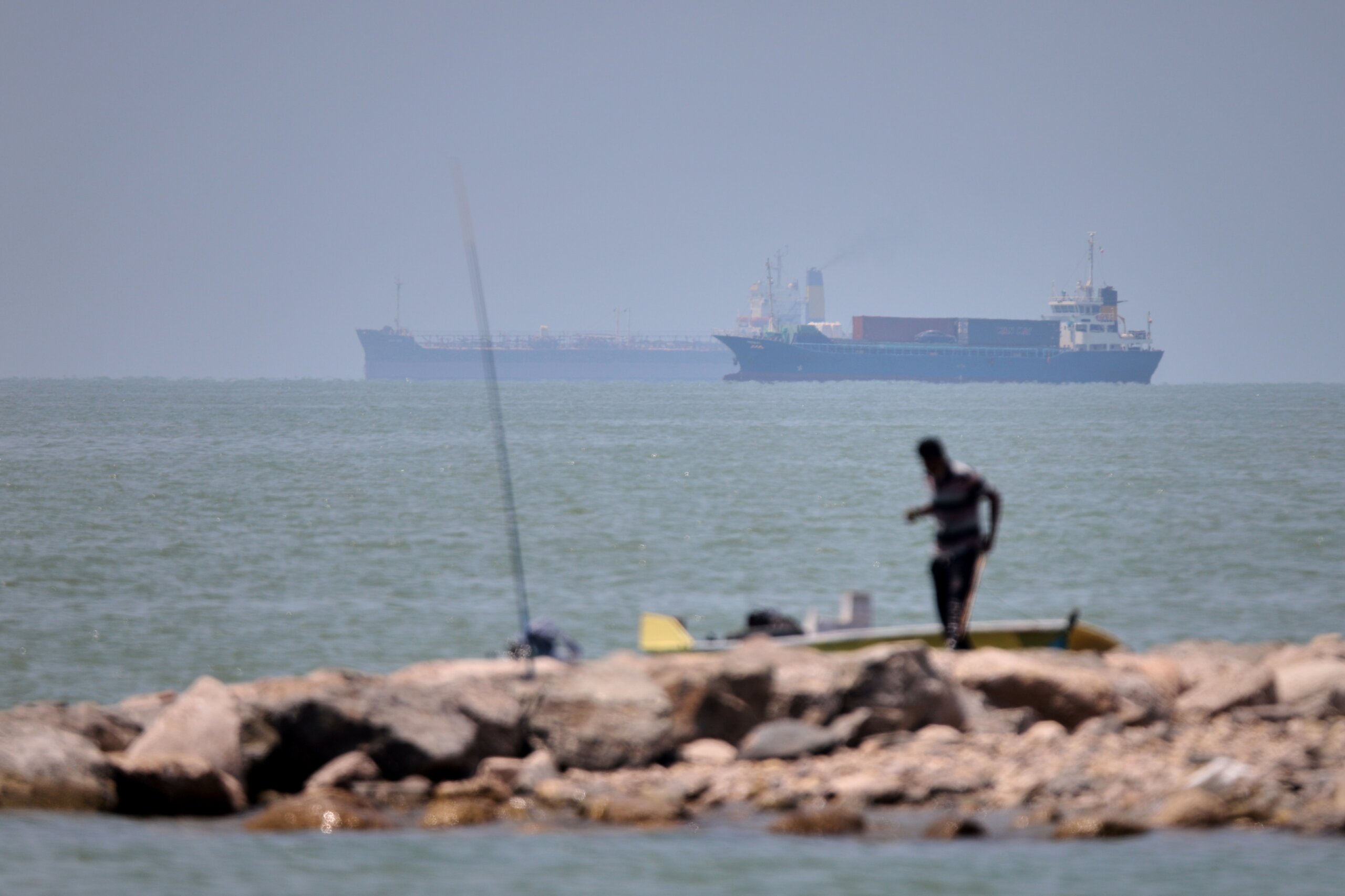
DUBAI, United Arab Emirates (AP) — Iran's paramilitary Revolutionary Guard launched drone and missile attacks Sunday targeting Bahrain and Kuwait in response to U.S. airstrikes that hit the Islamic Republic, and threatened a “complete halt” could come to negotiations to end the war if Washington continues its attacks. Efforts to reopen the Strait of Hormuz, the narrow mouth of the Persian Gulf that once carried a fifth of the world's oil and natural gas, without Iran's direct oversight sparked the crossfire now gripping the region. A multinational maritime body overseen by the U.S. Navy said Saturday that it would expand a route near Oman in the Strait of Hormuz to allow for both inbound and outbound traffic — setting up a new flashpoint with Tehran. Iran insists it alone must govern the strait after the war, upending decades of the world considering that the strait was international waters free for all, despite its sitting in Iran and Oman's territorial waters. Tehran has twice attacked vessels going through the Oman route, backed by a United Nations agency, in recent days. Early Sunday, the U.S. military’s Central Command said it struck Iranian military “surveillance infrastructure, communication systems, air defense sites, drone storage facilities and minelayer capabilities” following an attack on a ship at sea early Saturday morning. That ship, the Panamanian-flagged tanker Kiku, carried crude oil for the state-run energy company of Qatar, a key negotiator between Iran and the United States.
Read Next Story