
London police arrest more than 200 at protest backing banned group Palestine Action

LONDON (AP) — London police arrested more than 200 people on Saturday during a protest against a ban on the group Palestine Action that the government has labeled a terrorist organization.

Metropolitan Police said they had detained 212 protesters between the ages of 27 and 82 for supporting the group.

Britain’s High Court ruled in February that the government’s decision to outlaw the protest group as a terrorist organization was unlawful, but it kept the ban in place while the government appeals.

Police had warned in advance of the protest organized by the group Defend Our Juries that it would make arrests.

Hundreds gathered in Trafalgar Square to show their support for the group, with some holding signs reading, “I oppose genocide. I support Palestine Action.”

Musician Robert Del Naja of the trip hop group Massive Attack said he held a sign in support of the group despite the possibility that an arrest could jeopardize his ability to travel.

“I thought this is ridiculous and then the police making that U-turn to arrest people again, I thought that is even more ridiculous,” he said. “So I’m going to hold a sign today.”

Protesters yelled “shame on you” at police carrying away protesters and mocked them for arresting the elderly.

“Yeah, she looks like a terrorist, doesn’t she mate?” a woman yelled as police led a protester with a walking stick to a police van.
Iran attacks Bahrain and Kuwait following US strikes, threatens to end talks to end the war

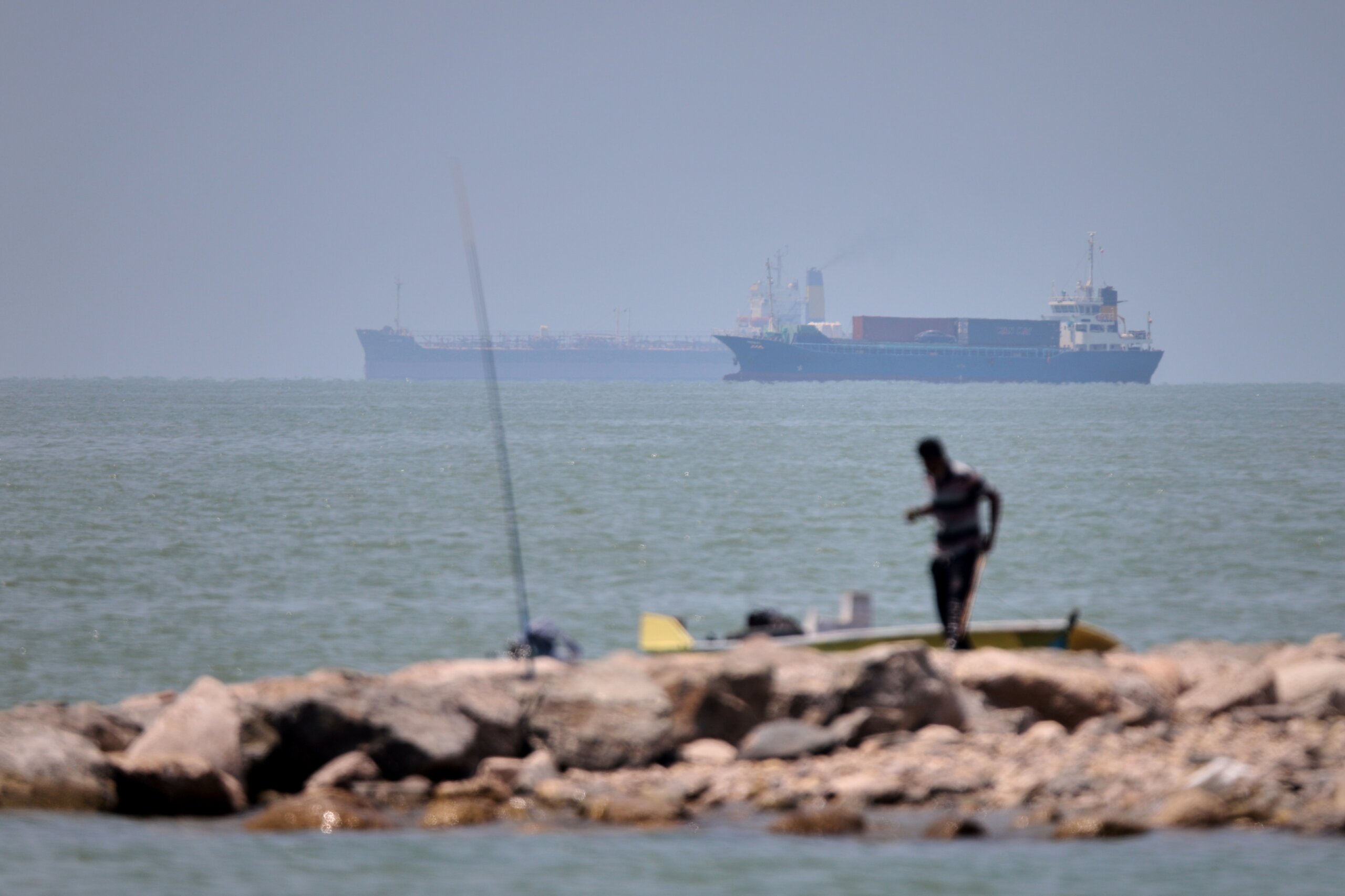
DUBAI, United Arab Emirates (AP) — Iran's paramilitary Revolutionary Guard launched drone and missile attacks Sunday targeting Bahrain and Kuwait in response to U.S. airstrikes that hit the Islamic Republic, and threatened a “complete halt” could come to negotiations to end the war if Washington continues its attacks. Efforts to reopen the Strait of Hormuz, the narrow mouth of the Persian Gulf that once carried a fifth of the world's oil and natural gas, without Iran's direct oversight sparked the crossfire now gripping the region. A multinational maritime body overseen by the U.S. Navy said Saturday that it would expand a route near Oman in the Strait of Hormuz to allow for both inbound and outbound traffic — setting up a new flashpoint with Tehran. Iran insists it alone must govern the strait after the war, upending decades of the world considering that the strait was international waters free for all, despite its sitting in Iran and Oman's territorial waters. Tehran has twice attacked vessels going through the Oman route, backed by a United Nations agency, in recent days. Early Sunday, the U.S. military’s Central Command said it struck Iranian military “surveillance infrastructure, communication systems, air defense sites, drone storage facilities and minelayer capabilities” following an attack on a ship at sea early Saturday morning. That ship, the Panamanian-flagged tanker Kiku, carried crude oil for the state-run energy company of Qatar, a key negotiator between Iran and the United States.
Read Next Story