
Djibouti President Ismaïl Omar Guelleh is reelected for a sixth term

MOGADISHU, Somalia (AP) — Djibouti President Ismaïl Omar Guelleh was reelected for a sixth term after official results showed him winning 97.81% of the vote in Friday’s election.

Guelleh, 78, has ruled the small Horn of Africa nation of about 1 million for more than two decades. Last year, the country’s lawmakers scrapped presidential age limits.

Election officials said the vote was peaceful. At the presidential palace, supporters on Saturday celebrated and offered congratulations.

Guelleh faced a single challenger, Mohamed Farah Samatar, a former ruling party member, in a race analysts say offered little genuine competition. Opposition groups frequently boycott elections, citing restrictions on political freedoms.

Guelleh succeeded his uncle, former President Hassan Gouled Aptidon, in 1999, extending a family-led system that has shaped the country’s politics for decades.

Djibouti hosts multiple foreign military bases, including those of the U.S., China, France and Japan, underscoring its strategic importance along a key global shipping route linking the Red Sea and the Gulf of Aden. Revenues from these arrangements, along with port services for neighboring Ethiopia, underpin the economy.
Iran attacks Bahrain and Kuwait following US strikes, threatens to end talks to end the war

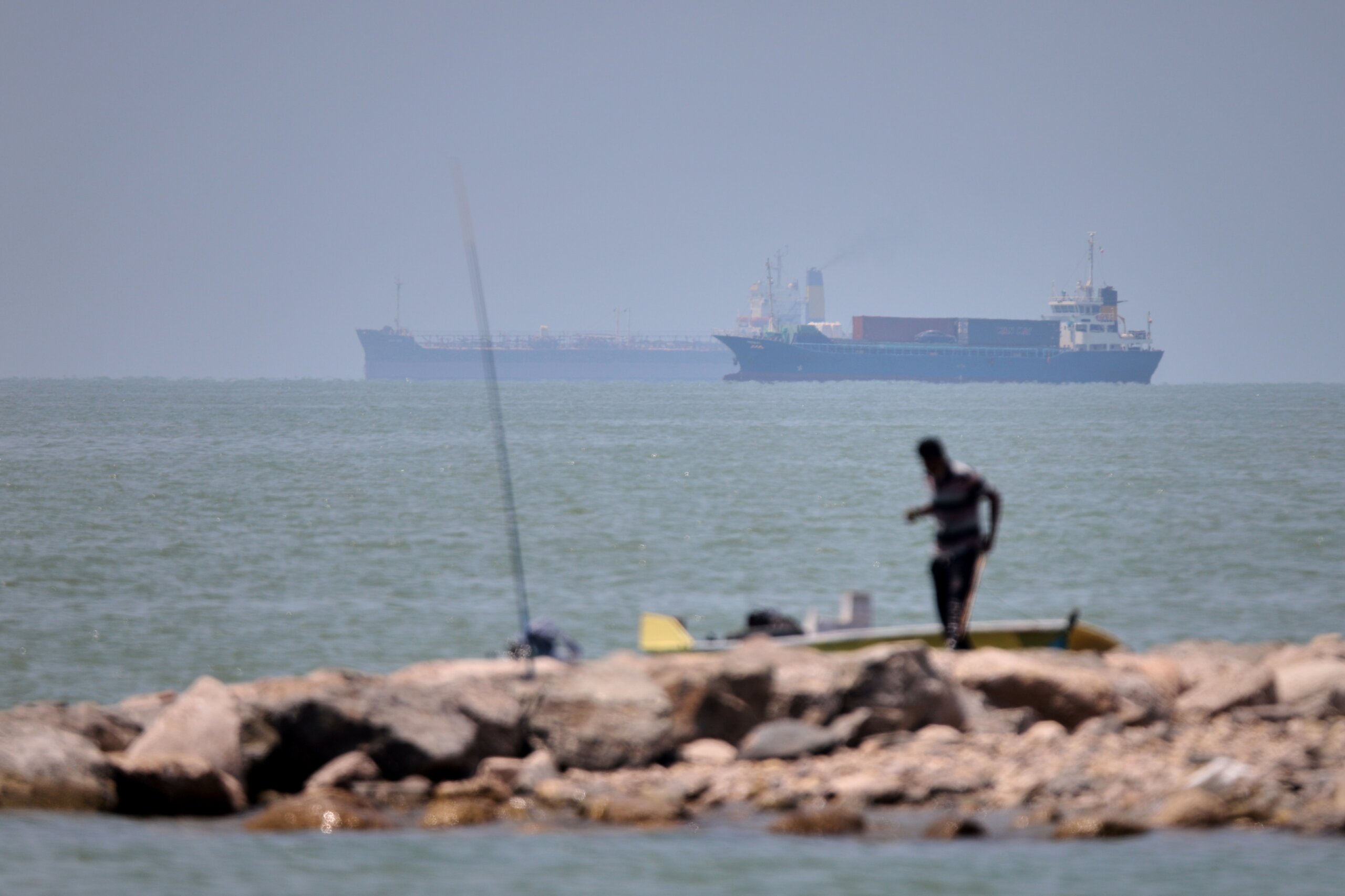
DUBAI, United Arab Emirates (AP) — Iran's paramilitary Revolutionary Guard launched drone and missile attacks Sunday targeting Bahrain and Kuwait in response to U.S. airstrikes that hit the Islamic Republic, and threatened a “complete halt” could come to negotiations to end the war if Washington continues its attacks. Efforts to reopen the Strait of Hormuz, the narrow mouth of the Persian Gulf that once carried a fifth of the world's oil and natural gas, without Iran's direct oversight sparked the crossfire now gripping the region. A multinational maritime body overseen by the U.S. Navy said Saturday that it would expand a route near Oman in the Strait of Hormuz to allow for both inbound and outbound traffic — setting up a new flashpoint with Tehran. Iran insists it alone must govern the strait after the war, upending decades of the world considering that the strait was international waters free for all, despite its sitting in Iran and Oman's territorial waters. Tehran has twice attacked vessels going through the Oman route, backed by a United Nations agency, in recent days. Early Sunday, the U.S. military’s Central Command said it struck Iranian military “surveillance infrastructure, communication systems, air defense sites, drone storage facilities and minelayer capabilities” following an attack on a ship at sea early Saturday morning. That ship, the Panamanian-flagged tanker Kiku, carried crude oil for the state-run energy company of Qatar, a key negotiator between Iran and the United States.
Read Next Story