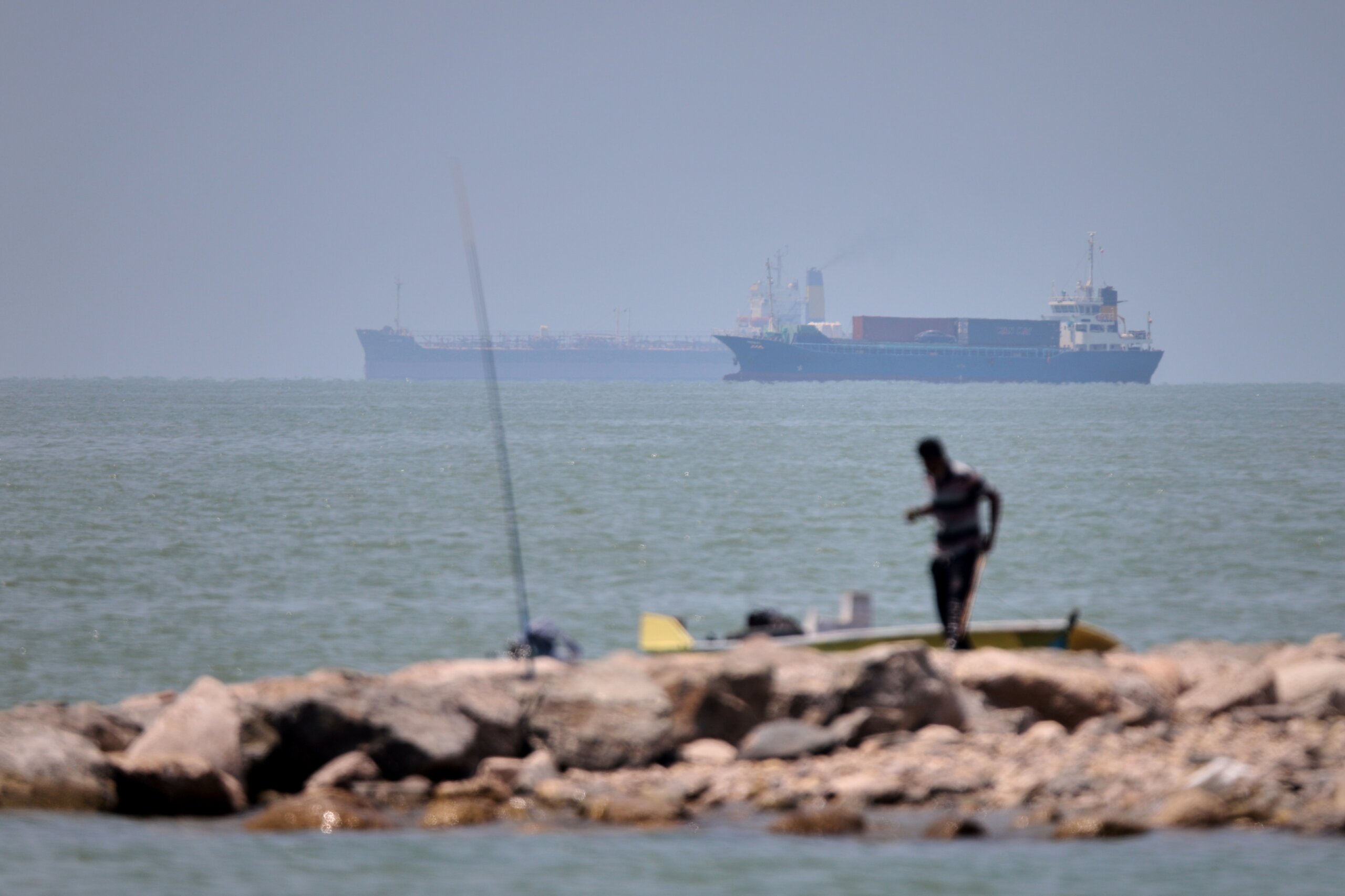
MANILA, Philippines (AP) — The Philippines unveiled a major coast guard base Thursday on an island in the South China Sea to serve as a “steadfast sentinel of our sovereignty” in a disputed region closely guarded by China’s forces.
Chinese officials did not immediately react to the Philippines’ opening of its coast guard district command on Thitu Island, which has been occupied by Filipino forces and civilians for decades but is also claimed by Beijing.
Chinese coast guard and other government-linked ships frequently patrol outlying waters off the island, which is also claimed by Vietnam and Taiwan. Chinese and Filipino forces have had tense but mostly minor confrontations in outlying waters in the past.
In new incidents on Thursday afternoon, the Philippine coast guard accused Chinese forces of firing flares toward its patrol aircraft in what it said was “a clear and deliberate act of bullying” that endangered Filipino personnel over the disputed Subi Reef and Mischief Reef, which are occupied by China.
Philippine coast guard Rear Adm. Jay Tarriela did not immediately provide other details. There was also no immediate reaction from Chinese officials.
China claims virtually the entire South China Sea, a key trade route, despite a 2016 arbitration ruling that invalidated its expansive claims under the 1982 U.N. Convention on the Law of the Sea. Beijing did not participate in the arbitration, rejected its outcome and continues to defy it.
Philippine Transport Secretary Giovanni Lopez, Sen. Erwin Tulfo and coast guard commander Adm. Ronnie Gil Gavan flew to Thitu to unveil the command in a brief ceremony, which was held to coincide with the country’s Day of Valor commemoration.
“This is a permanent step for us to show that our coast guard is ready to defend our interest in the waters, our fishermen, their livelihood and, most importantly, our sovereignty,” Lopez said.
A marker in the new coast guard building said it was “established as the vanguard and steadfast sentinel of our sovereignty, sovereign rights and maritime jurisdiction.”
The coast guard command will be led by a commodore and backed up by an unspecified number of personnel, patrol ships and aircraft for law enforcement, monitoring, environmental protection and search and rescue. Smaller coast guard outposts would be built on smaller Philippine-occupied outcrops, the coast guard said.
Surrounded by white beaches, the tadpole-shaped Thitu Island is called Pag-asa — Tagalog for hope — by about 400 Filipino villagers. It’s one of nine islands, islets and atolls which have been held by Philippine forces since the 1970s.
More than a decade ago, China started transforming seven disputed reefs into island bases in the Spratlys. Those included Subi Reef, now a major island base with a military-grade runway about 24 kilometers (15 miles) southeast of Thitu island.
“Everyday, our villagers see Chinese coast guard and militia ships all around the island,” MP Albayda, who serves as the vice mayor of the island municipality, told The Associated Press. “This new coast guard district command is a big morale booster for them.”
The Philippines claims the region as its most remote offshore township, under its western island province of Palawan. It encouraged fishing families to relocate there decades ago with incentives such as free rice, to underscore its control over the area.
The 37-hectare (91-acre) island now boasts internet and cellphone connections, a more stable power and water supply, a newly cemented runway, a wharf, grade school, gymnasium and even an evacuation center in times of typhoons. However, Thitu remains a meagre frontier settlement compared to the Chinese-built Subi island.