
Turkey detains 9 over attack outside the Israeli Consulate in Istanbul

ISTANBUL (AP) — Turkish authorities have detained nine people as part of an investigation into an attack on police outside a building housing the Israeli Consulate in Istanbul that left one assailant dead, Turkey’s state-run news agency reported Wednesday.

Two other assailants were wounded and captured during Tuesday’s shootout in the city’s financial and business district, while two police officers sustained slight injuries, officials said.

Israel had withdrawn its diplomats from Turkey over security concerns and deteriorating relations with Ankara shortly after the start of the war in Gaza, and officials said the consulate was closed at the time of the attack.

Interior Minister Mustafa Ciftci said one of the assailants had links to a group that he said “exploits religion,” without naming the organization.

The Islamic State group has carried out deadly attacks in Turkey in the past.

Anadolu Agency reported that security forces detained nine suspects in operations conducted in Istanbul as well as in the provinces of Konya and Kocaeli. They were being questioned along with the two injured assailants, the agency reported, without providing further details.

Cifti said the attackers had traveled from the city of Izmit, in Kocaeli province, in a rented car. The two wounded assailants are brothers, identified as Onur C. and Enes C. The first has a criminal record related to drugs.

Israel’s Foreign Ministry on Tuesday condemned the attack and praised the Turkish authorities for preventing further violence.
Iran attacks Bahrain and Kuwait following US strikes, threatens to end talks to end the war

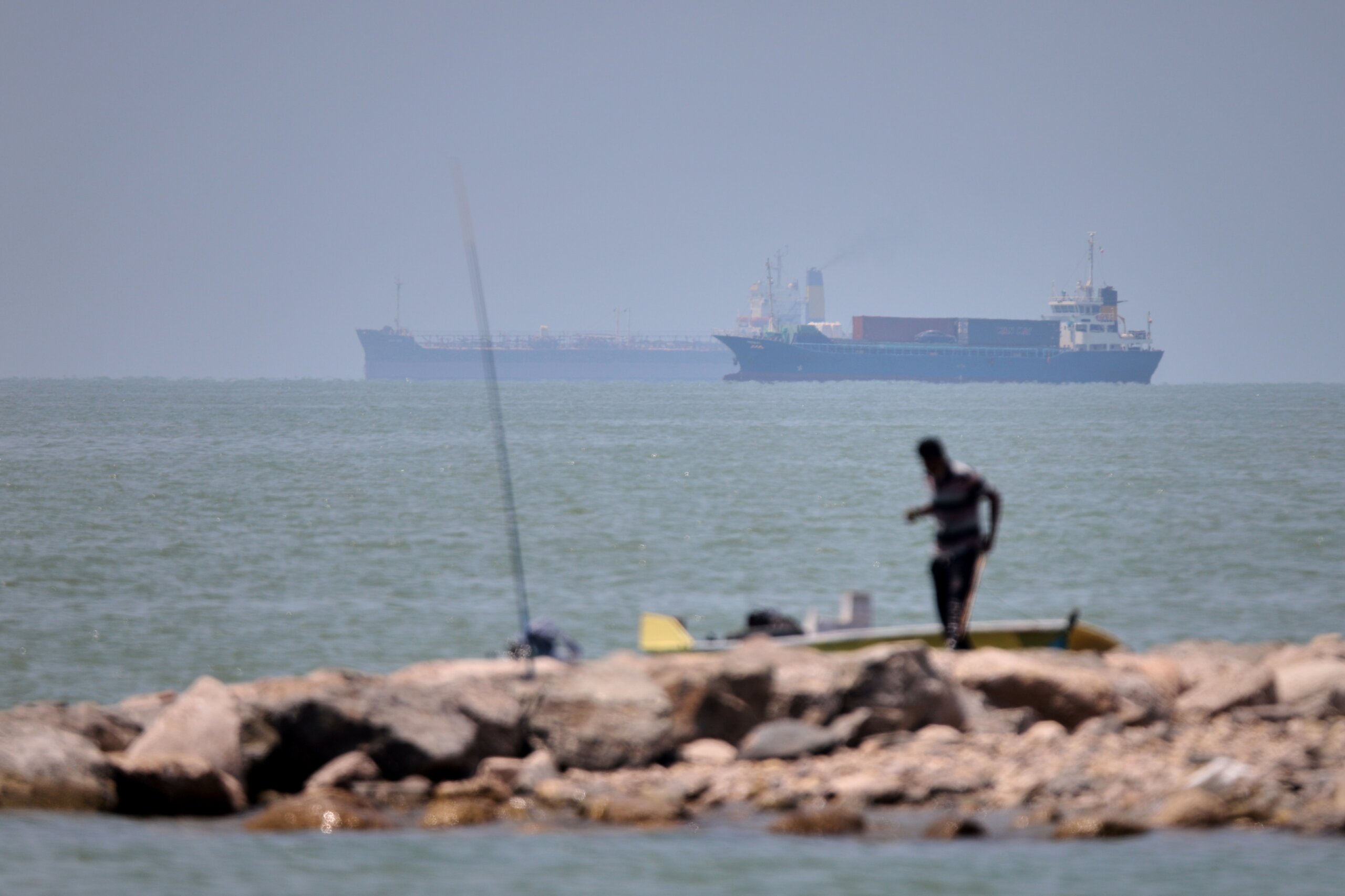
DUBAI, United Arab Emirates (AP) — Iran's paramilitary Revolutionary Guard launched drone and missile attacks Sunday targeting Bahrain and Kuwait in response to U.S. airstrikes that hit the Islamic Republic, and threatened a “complete halt” could come to negotiations to end the war if Washington continues its attacks. Efforts to reopen the Strait of Hormuz, the narrow mouth of the Persian Gulf that once carried a fifth of the world's oil and natural gas, without Iran's direct oversight sparked the crossfire now gripping the region. A multinational maritime body overseen by the U.S. Navy said Saturday that it would expand a route near Oman in the Strait of Hormuz to allow for both inbound and outbound traffic — setting up a new flashpoint with Tehran. Iran insists it alone must govern the strait after the war, upending decades of the world considering that the strait was international waters free for all, despite its sitting in Iran and Oman's territorial waters. Tehran has twice attacked vessels going through the Oman route, backed by a United Nations agency, in recent days. Early Sunday, the U.S. military’s Central Command said it struck Iranian military “surveillance infrastructure, communication systems, air defense sites, drone storage facilities and minelayer capabilities” following an attack on a ship at sea early Saturday morning. That ship, the Panamanian-flagged tanker Kiku, carried crude oil for the state-run energy company of Qatar, a key negotiator between Iran and the United States.
Read Next Story