Step aside, children: A Chilean zoo stages an Easter egg hunt with treats for the animals

SANTIAGO, Chile (AP) — Step aside, children — this Easter egg hunt is for zoo animals only.

At the largest private zoo in Chile, several of its animal residents — meerkats, monkeys, lemurs and others — searched on Sunday for their food packaged as Easter egg-themed treats.

The “egg hunt” is an annual event at Bioparque Buinzoo in the country’s capital, Santiago, meant to both entertain visitors and stimulate natural food-hunting behavior in various species.

Zookeepers placed small bags decorated like Easter eggs but packed with meat in the enclosures of small felines, such as caracals, who leapt up tree branches to get their snacks.

A meerkat had a basket with eggs placed in between some rocks in its enclosure. Monkeys and lemurs were treated to fruits hidden in brown paper bags decorated with bunny years.

Ignacio Idalsoaga, the zoo’s director, said that “in nature, these animals spend much of their life looking for food” so the zoo wanted to recreate that behavior.

The treats and snacks were “not chocolate eggs,” he added reassuringly but foods the animals would eat in their natural habitat.

The annual even has been held for the past 16 years, Idalsoaga said. This year, sheep also had to forage for their food pellets inside a colorful sphere with holes in it.

“Our creative team has been very imaginative this year” Idalsoaga said.
Iran attacks Bahrain and Kuwait following US strikes, threatens to end talks to end the war

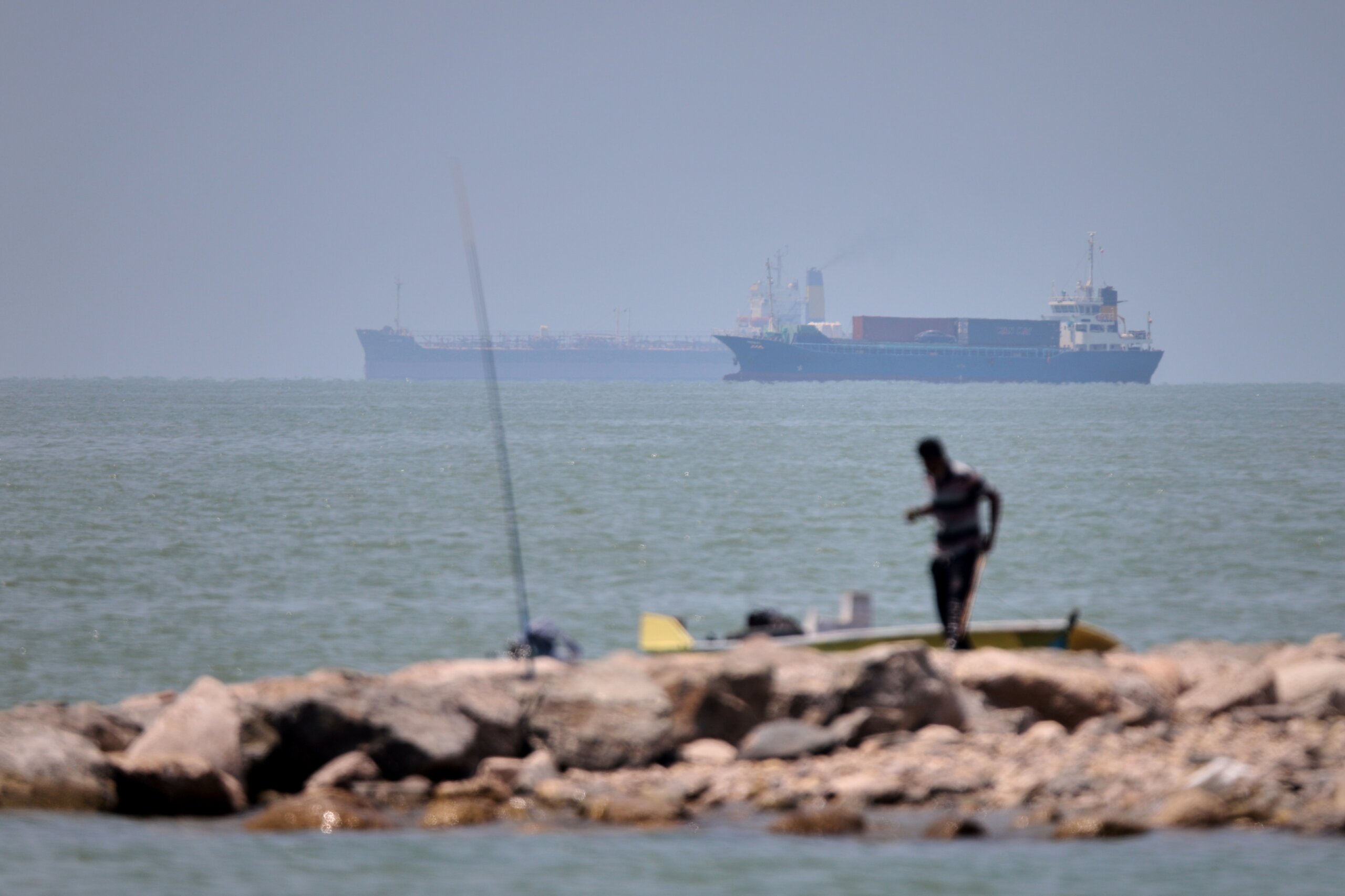
DUBAI, United Arab Emirates (AP) — Iran's paramilitary Revolutionary Guard launched drone and missile attacks Sunday targeting Bahrain and Kuwait in response to U.S. airstrikes that hit the Islamic Republic, and threatened a “complete halt” could come to negotiations to end the war if Washington continues its attacks. Efforts to reopen the Strait of Hormuz, the narrow mouth of the Persian Gulf that once carried a fifth of the world's oil and natural gas, without Iran's direct oversight sparked the crossfire now gripping the region. A multinational maritime body overseen by the U.S. Navy said Saturday that it would expand a route near Oman in the Strait of Hormuz to allow for both inbound and outbound traffic — setting up a new flashpoint with Tehran. Iran insists it alone must govern the strait after the war, upending decades of the world considering that the strait was international waters free for all, despite its sitting in Iran and Oman's territorial waters. Tehran has twice attacked vessels going through the Oman route, backed by a United Nations agency, in recent days. Early Sunday, the U.S. military’s Central Command said it struck Iranian military “surveillance infrastructure, communication systems, air defense sites, drone storage facilities and minelayer capabilities” following an attack on a ship at sea early Saturday morning. That ship, the Panamanian-flagged tanker Kiku, carried crude oil for the state-run energy company of Qatar, a key negotiator between Iran and the United States.
Read Next Story