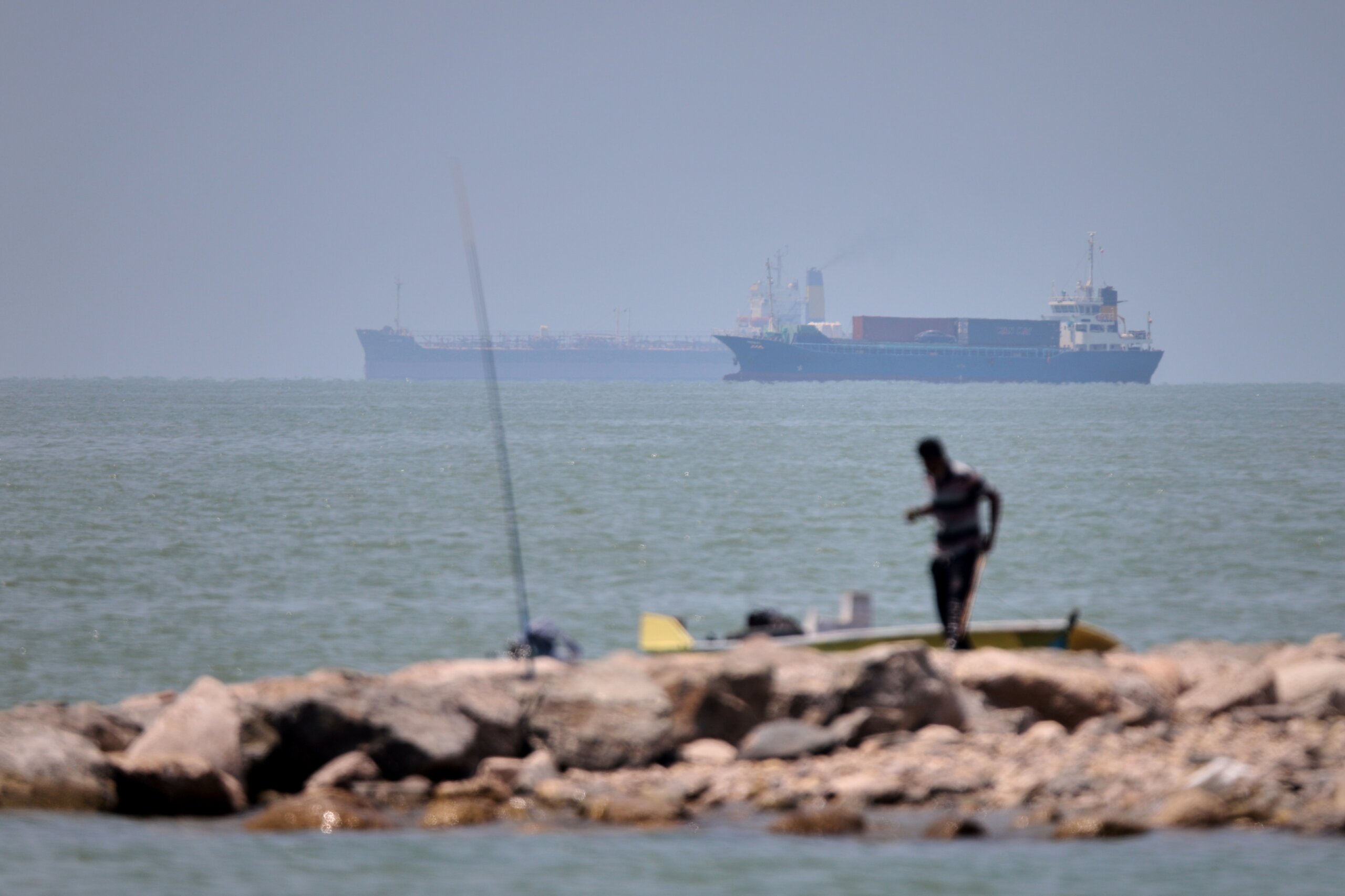
UNITED NATIONS (AP) — Bahrain has significantly watered down a proposed U.N. resolution on reopening the Strait of Hormuz amid opposition from China and Russia about allowing countries to use force to secure the critical waterway Iran has largely cut off to global shipping.
The final draft of the proposal, obtained Thursday by The Associated Press, authorizes defensive — but not offensive — action to ensure vessels can safely transit the strait. One-fifth of the world’s oil typically passes through the waterway, where Iran’s stranglehold during the war has sent energy prices soaring.
Bahrain’s initial draft would have allowed countries “to use all necessary means” — U.N. language that would include possible military action — “in the Strait of Hormuz, the Gulf and the Gulf of Oman” to secure passage and deter attempts to interfere with navigation.
Russia, China and France, all veto-wielding countries on the 15-member Security Council, had expressed opposition to approving the use of force. The final draft eliminates any reference to allowing offensive military action.
The Security Council originally scheduled a vote on the resolution for Friday, which is a U.N. holiday for Good Friday. But it later canceled that meeting, and U.N. diplomats, who spoke on condition of anonymity to preview the new timing before it has been announced, said the vote was now expected to be held Saturday.
The three countries’ views on the changes are not known, so the vote will be closely watched, and the delay will give diplomats more time to avoid a veto.
The proposal now authorizes countries “to use all defensive means necessary and commensurate with the circumstances in the Strait of Hormuz and adjacent waters” to secure passage and deter attempts to interfere with international navigation “for a period of at least six months.”
It says countries acting alone on in “multinational naval partnerships” can take defensive means provided advance notification is given to the Security Council.
It comes after U.S. President Donald Trump said in an address Wednesday that America and Israel will continue to bomb Iran “extremely hard” over the next two to three weeks but gave no definitive end date for the conflict. Iran has kept up retailatory attacks in the region and its chokehold on the strait has been a pain point for Trump and the world as rising energy prices roil the global economy.
Before Bahrain released its final draft, Russia’s U.N. Ambassador Vassily Nebenzia said the proposal “does not solve the puzzle.” He said what would do so is ending the hostilities.
China’s U.N. Ambassador Fu Cong opposed the original draft’s authorization for the use of force, calling it “unlawful and indiscriminate.” Speaking to the council earlier Thursday, he warned that it “would inevitably lead to further escalation of the situation and lead to serious consequences.” He urged the council “to proceed with caution” and actively work for de-escalation and dialogue.
France’s U.N. Ambassador Jérôme Bonnafont also called for de-escalation, telling the council that “defensive measures that avoid any broad use of force need to be promoted.” He later indicated that the new draft focusing on defense might be acceptable.
The Security Council adopted a Bahrain-sponsored resolution on March 11 condemning Iran’s “egregious attacks” on Gulf nations and called for Tehran to immediately halt its strikes, which followed the U.S. and Israel launching the war on Feb. 28.
That resolution, adopted by a vote of 13-0 with Russia and China abstaining, also condemned Iran’s actions in the Strait of Hormuz as a threat to international peace and security and called for an immediate end to all actions blocking shipping.
___
Associated Press writer Farnoush Amiri contributed to this report.