
Islamic State-linked rebels kill at least 43 in attack in eastern Congo

GOMA, Congo (AP) — Rebels affiliated with the Islamic State group killed at least 43 people in eastern Congo, officials said Thursday.

Fighters with the Allied Democratic Forces, or ADF, killed the civilians Wednesday night in Bafwakoa village. The Ugandan Islamist group operates on both sides of the porous border.

“They set fire to houses in the village,” Samuel Banapia, a member of civil society in the area, said by phone.

Congo’s military in a statement said 43 had been killed, while local officials said the toll was at least 56, with several people missing and at least two taken hostage.

Congo’s army has struggled to contain the ADF as it battles several other rebel groups in the east. The most prominent is the Rwandan-backed M23 which last year seized major cities in the east.

“The ADF avoids direct combat with the army and all its partners. That’s why they attack the population in a way that sabotages peace efforts and acts of revenge against the population, thus reprisals against our people,” Lt. Jules Ngongo, a spokesperson for Congo’s military in the east, said by phone.

The number of ADF fighters in Congo is unclear, but they are a significant presence in the region and regularly attack civilians. The group originated in the late 1990s in Uganda and became affiliated with IS in 2019. Muslims make up about 10% of the Congolese population, most of them in the east.

In recent years, ADF attacks have intensified near the border with Uganda and spread toward Goma, eastern Congo’s main city, as well as neighboring Ituri province. Last year, the ADF killed 66 people and abducted several more in a neighboring area.

Iran attacks Bahrain and Kuwait following US strikes, threatens to end talks to end the war

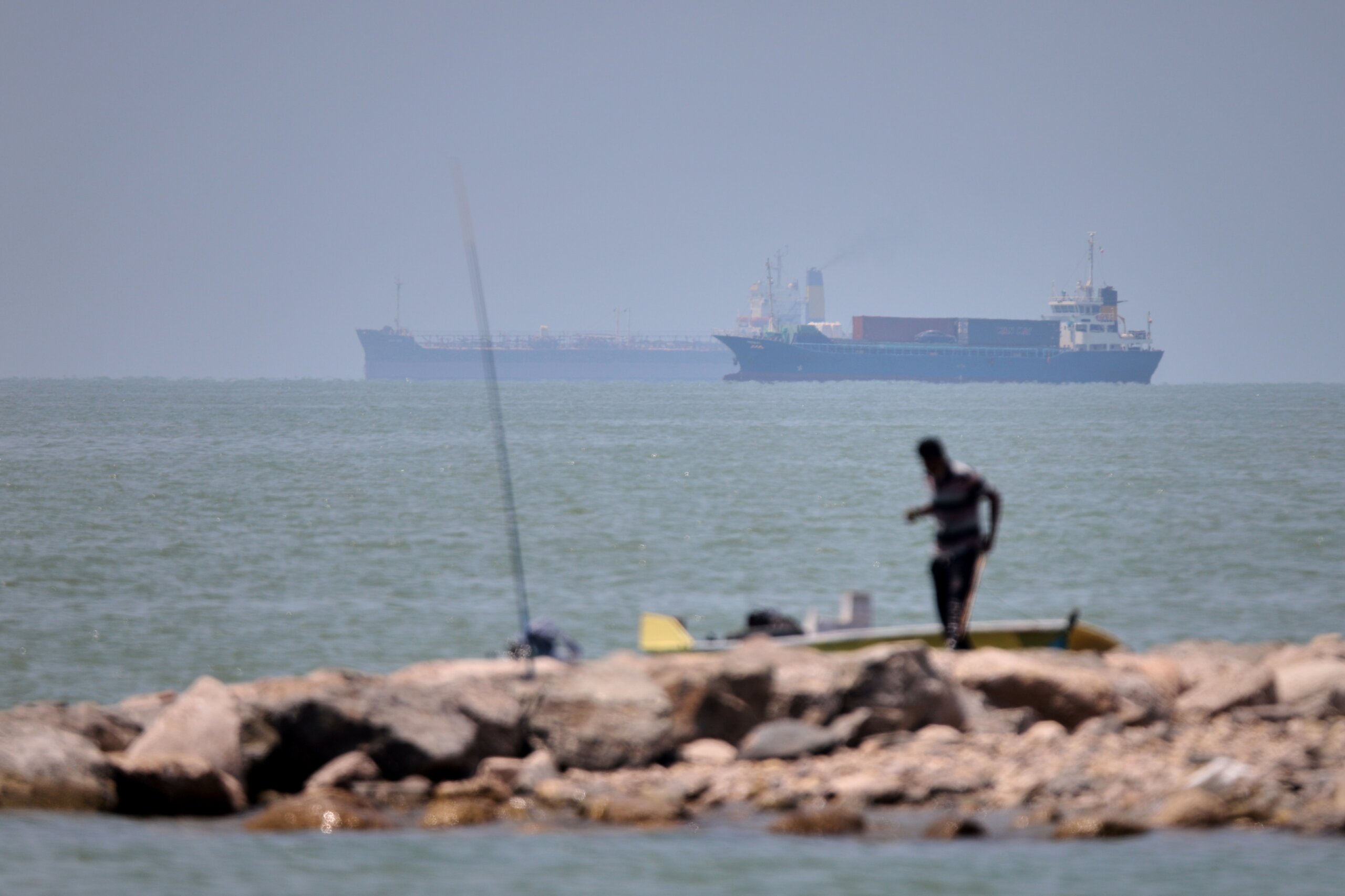
DUBAI, United Arab Emirates (AP) — Iran's paramilitary Revolutionary Guard launched drone and missile attacks Sunday targeting Bahrain and Kuwait in response to U.S. airstrikes that hit the Islamic Republic, and threatened a “complete halt” could come to negotiations to end the war if Washington continues its attacks. Efforts to reopen the Strait of Hormuz, the narrow mouth of the Persian Gulf that once carried a fifth of the world's oil and natural gas, without Iran's direct oversight sparked the crossfire now gripping the region. A multinational maritime body overseen by the U.S. Navy said Saturday that it would expand a route near Oman in the Strait of Hormuz to allow for both inbound and outbound traffic — setting up a new flashpoint with Tehran. Iran insists it alone must govern the strait after the war, upending decades of the world considering that the strait was international waters free for all, despite its sitting in Iran and Oman's territorial waters. Tehran has twice attacked vessels going through the Oman route, backed by a United Nations agency, in recent days. Early Sunday, the U.S. military’s Central Command said it struck Iranian military “surveillance infrastructure, communication systems, air defense sites, drone storage facilities and minelayer capabilities” following an attack on a ship at sea early Saturday morning. That ship, the Panamanian-flagged tanker Kiku, carried crude oil for the state-run energy company of Qatar, a key negotiator between Iran and the United States.
Read Next Story