
First foreign troop in new gang suppression force lands in Haiti to replace previous mission

PORT-AU-PRINCE, Haiti (AP) — The first foreign troop tied to a new gang-suppression force backed by the United Nations has arrived in Haiti to help quell ongoing violence, according to a statement issued Wednesday.

A team from the central African country of Chad are in Port-au-Prince, Haiti’s capital, as is Jack Christofides, the force’s special representative, who was deployed at the request of the Haitian government, according to an official statement posted on the new force’s X account.

No other details were provided, and a spokesperson for the force did not return a message seeking additional information.

The Chadian team arrived after U.N. officials met with Haitian Prime Minister Alix Didier Fils-Aimé to talk about the partnership with the U.N. Support Office in Haiti, which is providing the new force with living and office space, medical care, rations, water, power, fuel, ground mobility, aviation and other critical assistance.

The U.N. Security Council in late September approved a plan to authorize a 5,550-member force expected to transform a Kenya-led multinational force in Haiti that remained understaffed and underfunded while it was in operation, with some 1,000 personnel out of the 2,500 envisioned.

The gang-suppression force will have the power to arrest suspected gang members, which the previous force did not have.

Gangs control an estimated 90% of Haiti’s capital and swaths of land in the country’s central region.

More than 5,500 people were reported killed across Haiti and more than 2,600 injured from March 1, 2025 to Jan. 15, 2026, according to the latest U.N. statistics. Gang violence also has displaced more than 1.4 million people in a country of nearly 12 million.
Iran attacks Bahrain and Kuwait following US strikes, threatens to end talks to end the war

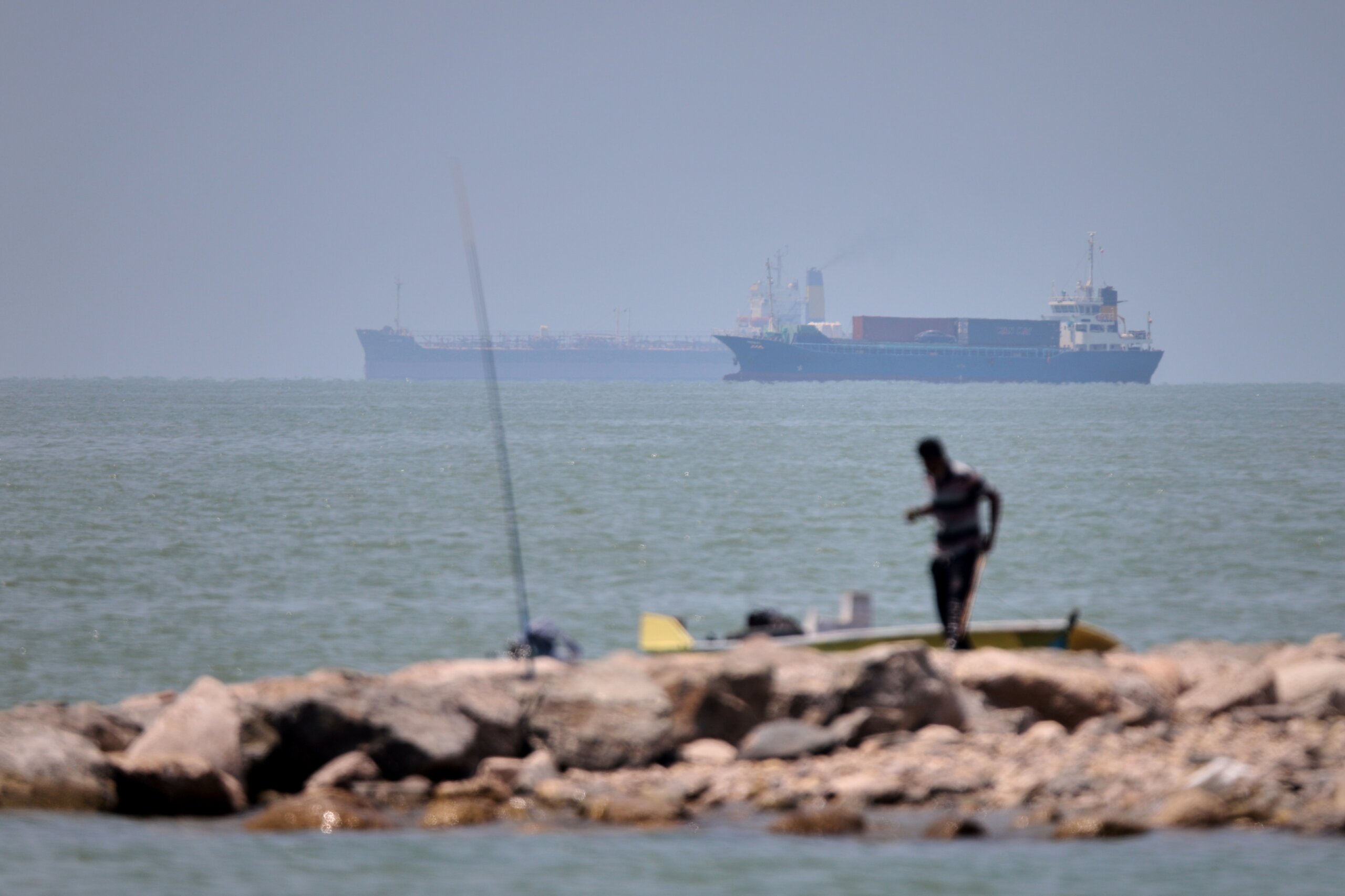
DUBAI, United Arab Emirates (AP) — Iran's paramilitary Revolutionary Guard launched drone and missile attacks Sunday targeting Bahrain and Kuwait in response to U.S. airstrikes that hit the Islamic Republic, and threatened a “complete halt” could come to negotiations to end the war if Washington continues its attacks. Efforts to reopen the Strait of Hormuz, the narrow mouth of the Persian Gulf that once carried a fifth of the world's oil and natural gas, without Iran's direct oversight sparked the crossfire now gripping the region. A multinational maritime body overseen by the U.S. Navy said Saturday that it would expand a route near Oman in the Strait of Hormuz to allow for both inbound and outbound traffic — setting up a new flashpoint with Tehran. Iran insists it alone must govern the strait after the war, upending decades of the world considering that the strait was international waters free for all, despite its sitting in Iran and Oman's territorial waters. Tehran has twice attacked vessels going through the Oman route, backed by a United Nations agency, in recent days. Early Sunday, the U.S. military’s Central Command said it struck Iranian military “surveillance infrastructure, communication systems, air defense sites, drone storage facilities and minelayer capabilities” following an attack on a ship at sea early Saturday morning. That ship, the Panamanian-flagged tanker Kiku, carried crude oil for the state-run energy company of Qatar, a key negotiator between Iran and the United States.
Read Next Story