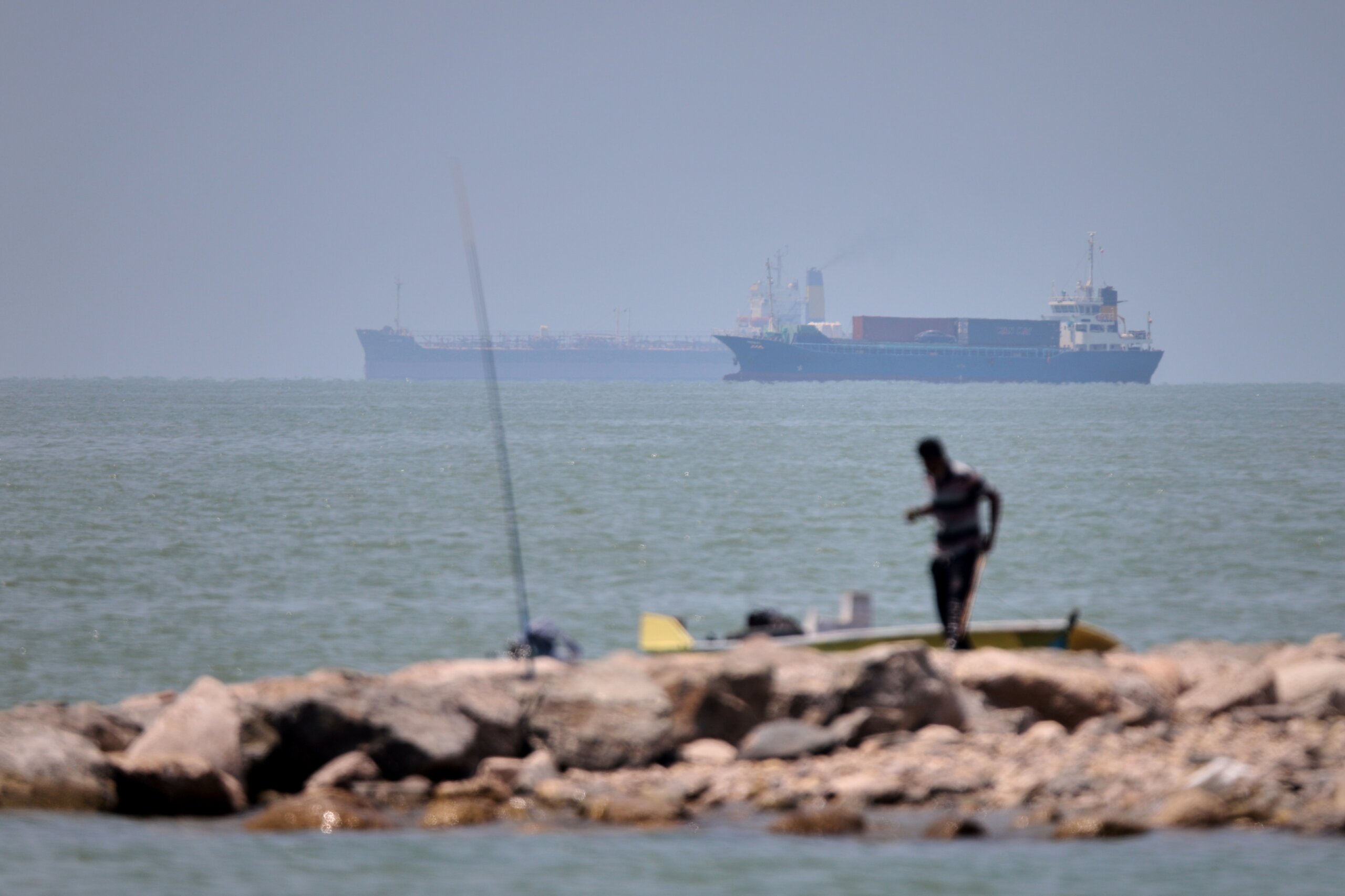
SAO PAULO (AP) — As the war in Iran rattles global oil markets, Brazil is partially shielded by a decades-old buffer against shocks that is both cheap and emits less pollution that causes climate change: Tens of millions of drivers here can choose between filling their tank with 100% sugarcane-based ethanol or a gasoline blend that contains 30% of biofuel.
Brazil’s massive dual-fuel fleet — consisting of vehicles capable of running on any combination of ethanol and gasoline — is unique in its scale. The program, launched in 1975 during the country’s military dictatorship, has successfully evolved in democratic times to reduce dependency on foreign oil.
Today, as the latest conflict involving Iran, the United States and Israel enters its fifth week, nations like India and Mexico are looking at the Brazilian model as a blueprint for energy security.
While consumers worldwide face steep price hikes, Brazilian gasoline prices rose just 5% in March — compared to 30% in the United States. Analysts partially credit the stability to a mature domestic biofuels industry that allows the country to withstand geopolitical shocks with minimal risk of fuel shortages.
“Brazil is much better prepared than most countries because it has a viable alternative of this nature,” said Evandro Gussi, president of the Brazilian Sugarcane Industry Association, UNICA.
The timing is particularly fortunate as Brazil’s next sugarcane harvest, beginning in the first half of April, is expected to produce a record 30 billion liters of ethanol — 4 billion more than last year. “That increase alone is equivalent to the total amount of gasoline Brazil imported in all of last year,” Gussi noted.
Despite being a major producer and exporter of crude oil, Brazil still relies on imports to meet its domestic demand for refined fuels. The country currently sources petroleum from the U.S., Saudi Arabia, Russia and neighboring Guyana.
However, ethanol has become the backbone of the daily commute. In 2025, ethanol accounted for 37.1 billion liters of sales, according to state-run Energy Research Company. Though it slightly trails diesel and gasoline in total energy share, its presence at every gas station provides Brazilians with a psychological and economic safety net.
Investment in research
The success of Brazil’s biofuels economy is rooted in the state of Sao Paulo, the country’s industrial and agricultural powerhouse.
Production here is a mix of high-tech, export-oriented “mega-farms” and smaller family operations like farm Bom Retiro, founded in 1958, whose few dozen workers are now preparing to crop their 40-square-kilometer land (almost 10,000 acres).
Brazil’s technology in biofuels is also fostered by years of state-sponsored research. One of them lies outside Sao Paulo, the Science Development Center for Ethanol at the Unicamp university in Campinas. Coordinator Luis Cortez says Brazil’s program holds unique advantages unmatched by other nations.
“We have flexibility in ethanol production, in vehicle engines and from the federal government, which sets the percentage of ethanol in the fuel blend,” said Cortez. “We have flexibility at three levels.”
Ultimately, he argues, that investment in research ends up making a difference at gas stations.
When burned, biofuels generally emit less carbon dioxide, a greenhouse gas that heats the planet, compared to diesel, oil and gas. Whether biofuels are overall more sustainable is an open question, as land use changes and the methods needed to create them can cancel out any gains in reducing tailpipe and other emissions.
The diesel problem
According to the Brazilian Association of Fuel Importers, gasoline refined by the state-run Petrobras — which includes a biofuel blend — is currently 46% cheaper than imported fuel, or 1.16 Brazilian reals ($0.22) less per liter. Similarly, Petrobras diesel is priced at refineries at 63% below import levels.
While the closing of the Strait of Hormuz has not yet caused dramatic shifts in Brazil’s gasoline market, the country is struggling with rising diesel prices. This is because diesel is primarily made of imported crude oil and has a smaller percentage of biofuels.
Unlike the sugarcane-ethanol success story, Brazil’s biodiesel, which is mostly made from soybeans, only makes up 14% of the diesel blend. That figure might rise to the same 30% used in gasoline blends only by 2030, if research and technological developments allow, which means the conflict has brought immediate impact.
Brazil’s diesel prices surged by more than 20% in March, prompting President Luiz Inácio Lula da Silva to propose import subsidies through May. Government estimates show that the country has to buy between 20% and 30% of its diesel every month, most of it coming from Russia.
Brazil’s authorities say the country imported almost 17 billion liters of diesel last year.
For the 80-year-old leader Lula seeking reelection this October, stabilizing diesel prices is critical to prevent truck driver strikes and keep food inflation in check.
Gussi, the president of UNICA, said that since the latest Iran war several heads of state have approached him to discuss Brazil’s biofuels industry. Among them is Mexican President Claudia Sheinbaum, who said earlier this month she is interested in Petrobras’ technology in producing ethanol from agave, a very popular plant in her country.
“The best news, even in the midst of a situation like the one we are experiencing, is that this solution has a significant level of replicability,” Gussi said.
___
AP journalist Thiago Mostazo contributed to this report from Campinas, Brazil.
___
Follow AP’s coverage of Latin America and the Caribbean at https://apnews.com/hub/latin-america