
Philippine president declares national energy emergency to respond to impact of Middle East war

MANILA, Philippines (AP) — Philippine President Ferdinand Marcos Jr. on Tuesday declared a state of national energy emergency to respond to the impact of the Middle East war, which his administration said posed “an imminent danger of a critically low energy supply.”

Under the declaration, which will initially last for a year, Marcos will lead a contingency committee that will ensure the availability and orderly distribution of fuel, food, medicines, agricultural products and other basic goods.

Authorities were ordered to take action against the hoarding, profiteering and manipulation of the supply of petroleum products. The Department of Migrant Workers, meanwhile, was asked to brace for the possible rescue and evacuation of Filipinos in the Middle East.

The government has started to provide 5,000 pesos ($83) each to large numbers of motorcycle taxi drivers and other public transport workers nationwide to help them cope with soaring gasoline and diesel prices. Free bus rides have also been provided to students and workers in selected cities.

About 2.4 million Filipinos live and work in the Middle East, including about 31,000 in Israel and 800 in Iran. Most have opted, however, to stay and work in the region, with only several hundreds being flown home so far with government help since the Middle East hostilities began.

A Filipina caregiver, Mary Ann de Vera, was killed in Tel Aviv, Israel, in an Iranian missile strike on Feb. 28 while helping bring her elderly charge to a bomb shelter, Philippine officials said.
Iran attacks Bahrain and Kuwait following US strikes, threatens to end talks to end the war

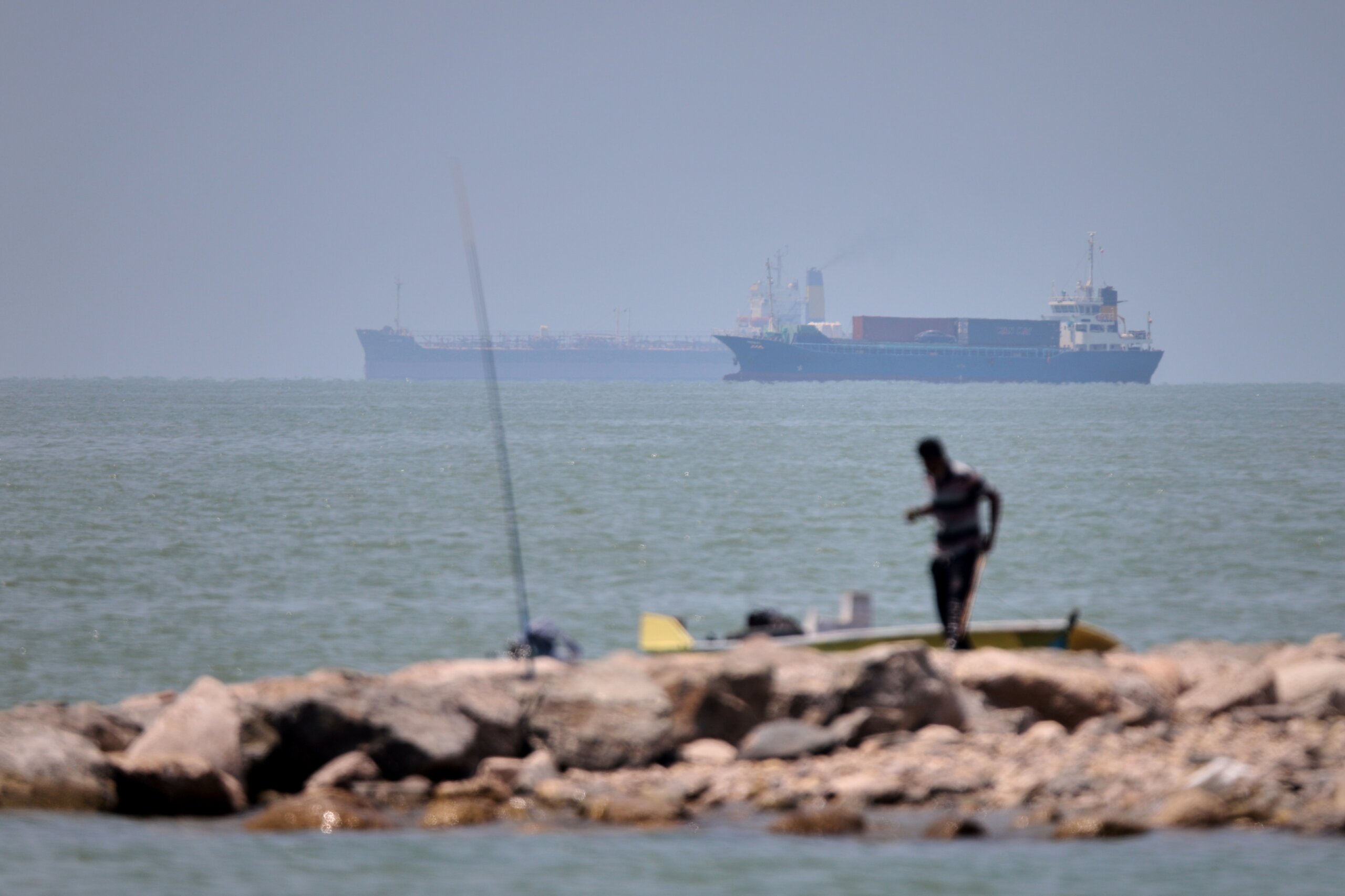
DUBAI, United Arab Emirates (AP) — Iran's paramilitary Revolutionary Guard launched drone and missile attacks Sunday targeting Bahrain and Kuwait in response to U.S. airstrikes that hit the Islamic Republic, and threatened a “complete halt” could come to negotiations to end the war if Washington continues its attacks. Efforts to reopen the Strait of Hormuz, the narrow mouth of the Persian Gulf that once carried a fifth of the world's oil and natural gas, without Iran's direct oversight sparked the crossfire now gripping the region. A multinational maritime body overseen by the U.S. Navy said Saturday that it would expand a route near Oman in the Strait of Hormuz to allow for both inbound and outbound traffic — setting up a new flashpoint with Tehran. Iran insists it alone must govern the strait after the war, upending decades of the world considering that the strait was international waters free for all, despite its sitting in Iran and Oman's territorial waters. Tehran has twice attacked vessels going through the Oman route, backed by a United Nations agency, in recent days. Early Sunday, the U.S. military’s Central Command said it struck Iranian military “surveillance infrastructure, communication systems, air defense sites, drone storage facilities and minelayer capabilities” following an attack on a ship at sea early Saturday morning. That ship, the Panamanian-flagged tanker Kiku, carried crude oil for the state-run energy company of Qatar, a key negotiator between Iran and the United States.
Read Next Story