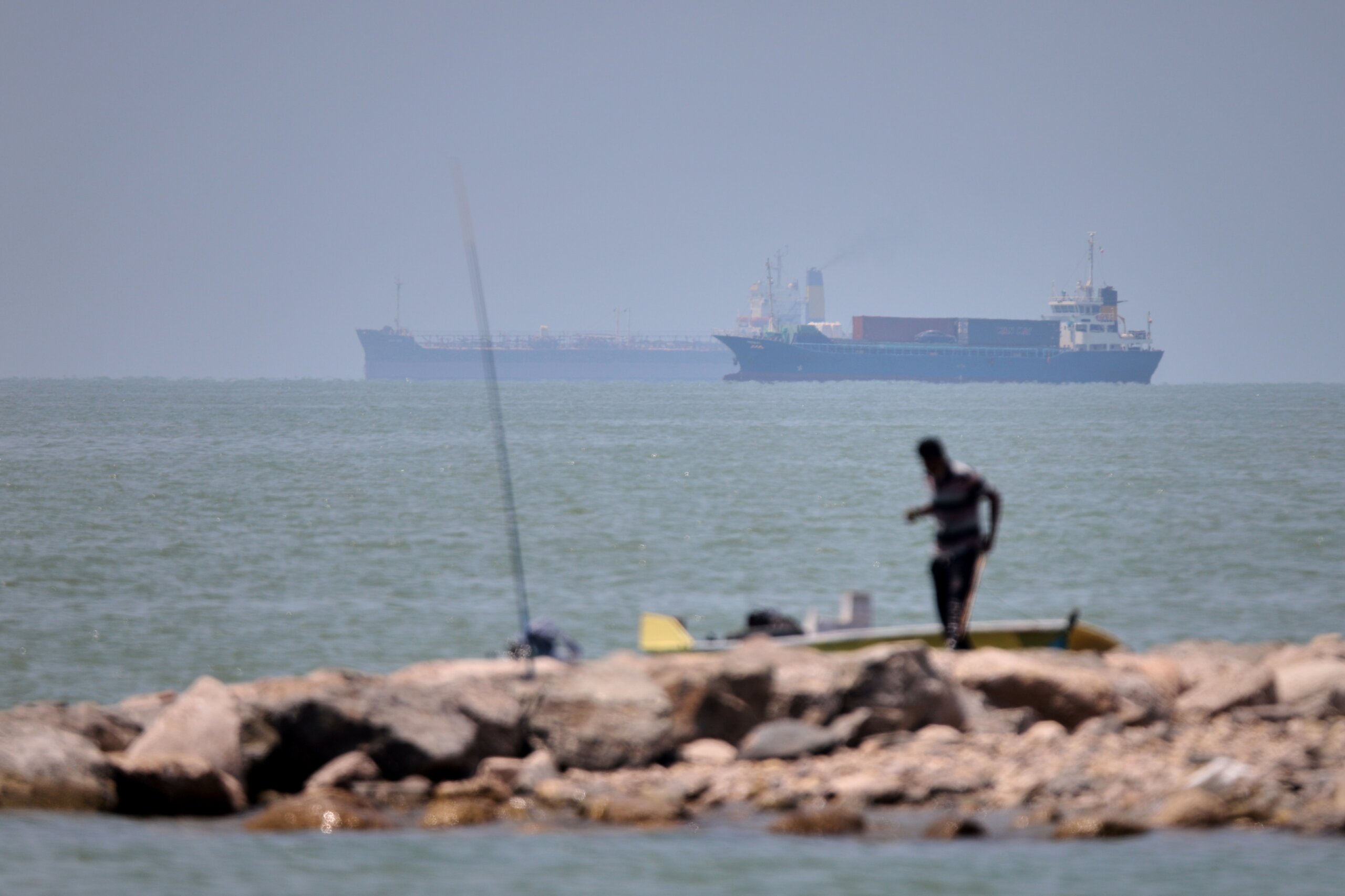
UNITED NATIONS (AP) — A U.N. Security Council resolution calling for countries to use “all necessary means” to keep the Strait of Hormuz open is facing some opposition for raising the possibility of U.N.-backed military action against Iran, according to three council diplomats.
Bahrain put forward the proposal, which was obtained by The Associated Press on Tuesday, as world powers grapple with how to release Iran’s chokehold on the crucial waterway, which has sent fuel prices skyrocketing and threatened the world economy.
The draft resolution would authorize countries or naval partnerships to use military action to secure passage and “to repress, neutralize and deter attempts to close, obstruct or otherwise interfere with international navigation through the Strait of Hormuz.” It also demands that Iran “immediately cease all attacks against merchant and commercial vessels” and stop impeding freedom of navigation in and around the vital waterway, which is impacting international trade, energy security and the global economy.
One of the diplomats said the draft was being reworked Tuesday after a number of countries raised concerns about the resolution being placed under Chapter Seven of the U.N. Charter, which allows the council to authorize actions ranging from sanctions to the use of force.
Bahrain, the Arab representative on the U.N.’s most powerful body, is one of numerous countries in the region to be targeted by Iranian drones or missiles since the U.S. and Israel began striking Iran on Feb. 28. It’s unclear if the U.S., which holds the council presidency this month, has thrown its support behind the measure, but U.S. envoy Mike Waltz has previously stated America’s preference for regional leadership on this issue.
China and Russia — both veto-wielding members of the 15-member council — are among the countries that are opposed to the current text, according to one of the diplomats.
Another council diplomat said France introduced a separate resolution on Monday that made no mention of Iran and would not be placed under Chapter Seven. Instead, the text urges all parties to refrain from further escalation and return to the path of diplomacy. The French mission to the U.N. did not respond to requests for comment.
The diplomats spoke on the condition of anonymity to disclose private negotiations.
It is unlikely, given the disagreements, that either draft would be put to a vote this week. A separate Bahrain resolution condemning Iranian strikes on its territory received near unanimous support from the council two weeks ago, with China and Russia abstaining from the vote.
During the conflict, Iran has effectively closed the Strait of Hormuz, which connects the Persian Gulf to the rest of the world, while saying it allows safe passage for vessels from countries other than its enemies. Roughly one-fifth of global oil supply passes through the strait, but attacks on ships have stopped nearly all tanker traffic.
The U.S. first tried its hand at a diplomatic solution to the Strait of Hormuz problem last week when President Donald Trump called for a new international coalition to send warships to the strait. But America’s closest allies turned him down, resulting in Trump saying the U.S. could manage on its own.
On Friday he suggested other countries would have to take over as the U.S. eyes an exit from the war. Hours later he indicated the waterway would somehow “open itself.”