Madagascar’s president orders lie detector tests for candidates applying to be government ministers

ANTANANARIVO, Madagascar (AP) — Anyone applying to become a minister in Madagascar’s new government will be subjected to lie detector tests to root out those who are corrupt, the country’s military leader said Thursday.

President Michael Randrianirina, who took power in a coup in the Indian Ocean island in October, said Madagascar had acquired a polygraph machine and a specialist to operate it to vet new government ministers.

“We will know who is corrupt and who can help us,” Randrianirina said. “We are not looking for someone who is 100% clean, but someone who is more than 60% clean.”

Randrianirina, a colonel in an elite army unit, ousted President Andry Rajoelina after a weekslong uprising last year by mainly young Madagascans frustrated with the lack of government services and opportunities in a nation of around 32 million that is beset by poverty.

Randrianirina fired his entire Cabinet and dissolved the government last week. He appointed a new prime minister on Sunday.

“After taking the polygraph test, candidates who fail will not proceed to an interview,” Randrianirina told reporters. “Those who pass the polygraph test will have an interview with me and the prime minister.”

Randrianirina has promised to hold new elections within two years of him taking power.

___

AP Africa news: https://apnews.com/hub/africa
Iran attacks Bahrain and Kuwait following US strikes, threatens to end talks to end the war

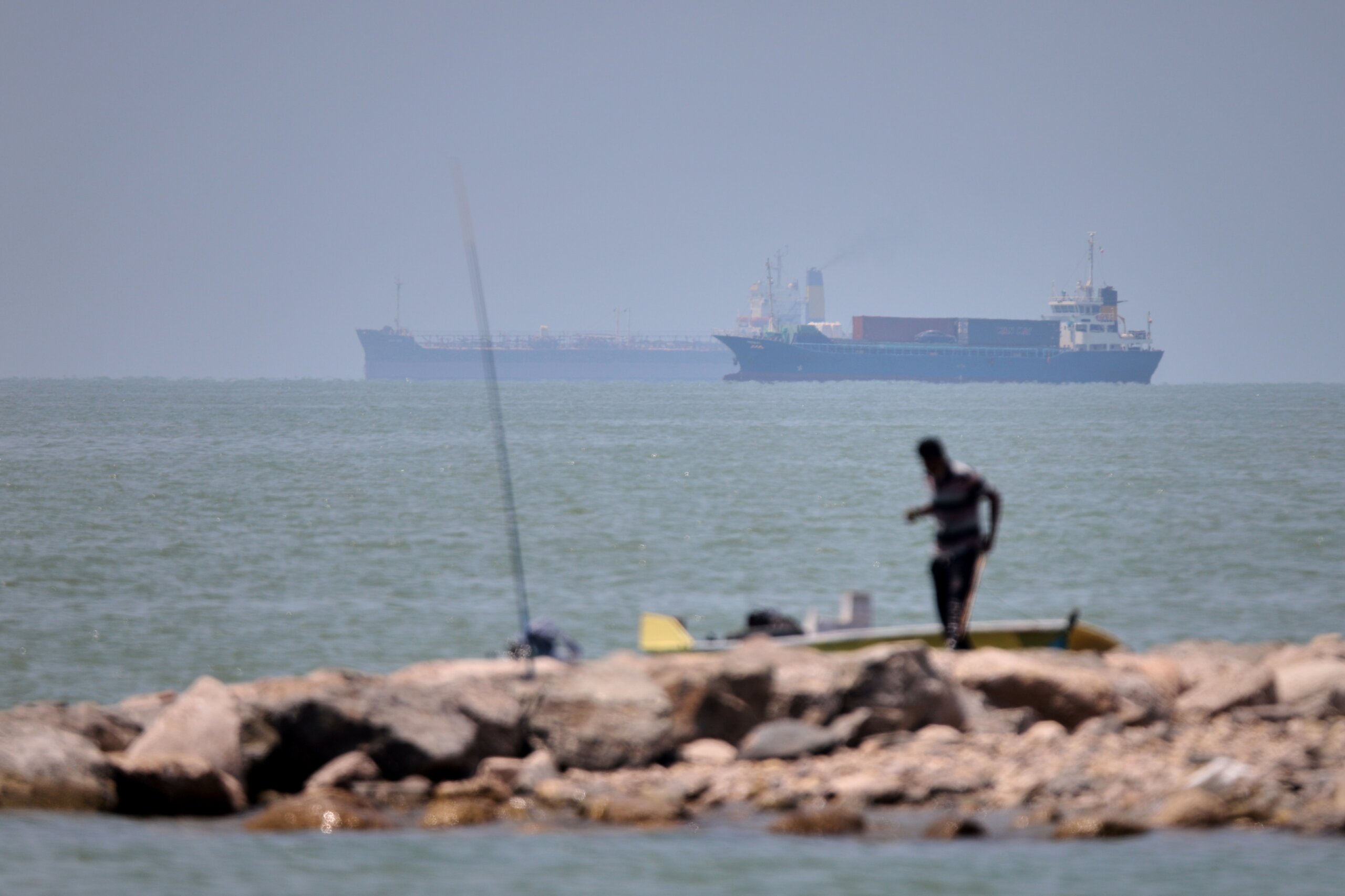
DUBAI, United Arab Emirates (AP) — Iran's paramilitary Revolutionary Guard launched drone and missile attacks Sunday targeting Bahrain and Kuwait in response to U.S. airstrikes that hit the Islamic Republic, and threatened a “complete halt” could come to negotiations to end the war if Washington continues its attacks. Efforts to reopen the Strait of Hormuz, the narrow mouth of the Persian Gulf that once carried a fifth of the world's oil and natural gas, without Iran's direct oversight sparked the crossfire now gripping the region. A multinational maritime body overseen by the U.S. Navy said Saturday that it would expand a route near Oman in the Strait of Hormuz to allow for both inbound and outbound traffic — setting up a new flashpoint with Tehran. Iran insists it alone must govern the strait after the war, upending decades of the world considering that the strait was international waters free for all, despite its sitting in Iran and Oman's territorial waters. Tehran has twice attacked vessels going through the Oman route, backed by a United Nations agency, in recent days. Early Sunday, the U.S. military’s Central Command said it struck Iranian military “surveillance infrastructure, communication systems, air defense sites, drone storage facilities and minelayer capabilities” following an attack on a ship at sea early Saturday morning. That ship, the Panamanian-flagged tanker Kiku, carried crude oil for the state-run energy company of Qatar, a key negotiator between Iran and the United States.
Read Next Story