WASHINGTON (AP) — President Donald Trump is delaying a diplomatic trip to China that had been planned for months but began to unravel as he pressured Beijing and other world powers to use their military might to protect the Strait of Hormuz.
Trump said Tuesday while meeting with Irish Prime Minister Micheál Martin in the Oval Office that he would be going to China in five or six weeks’ time instead of at the end of the month. He said he would be “resetting” his visit with Chinese President Xi Jinping.
“We’re working with China — they were fine with it,” Trump said. “I look forward to seeing President Xi. He looks forward to seeing me, I think.”
Trump’s visit to China is seen as an opportunity to build on a fragile trade truce between the two superpowers, but it has become tangled in his effort to find an endgame to the war in Iran. Soon after pressing China and other nations to send warships to secure access to Middle Eastern oil over the weekend, Trump indicated his travel plans depended on Beijing’s response, though he added Tuesday that the U.S. didn’t need help from the allies who rebuffed his request.
In a Sunday interview with the Financial Times, Trump said he wanted to know whether Beijing would help secure the strait before he departed for the late-March summit. On Monday, he told reporters that he had requested a delay of about a month because of the demands of the war.
“I think it’s important that I be here,” Trump said. “And so it could be that we delay a little bit. Not much.”
Treasury Secretary Scott Bessent, who met with Chinese Vice Premier He Lifeng in Paris this week for a new round of talks meant to pave the way for Trump’s trip, said any changes to the schedule would be because of logistics, not because Trump was trying to pressure Beijing.
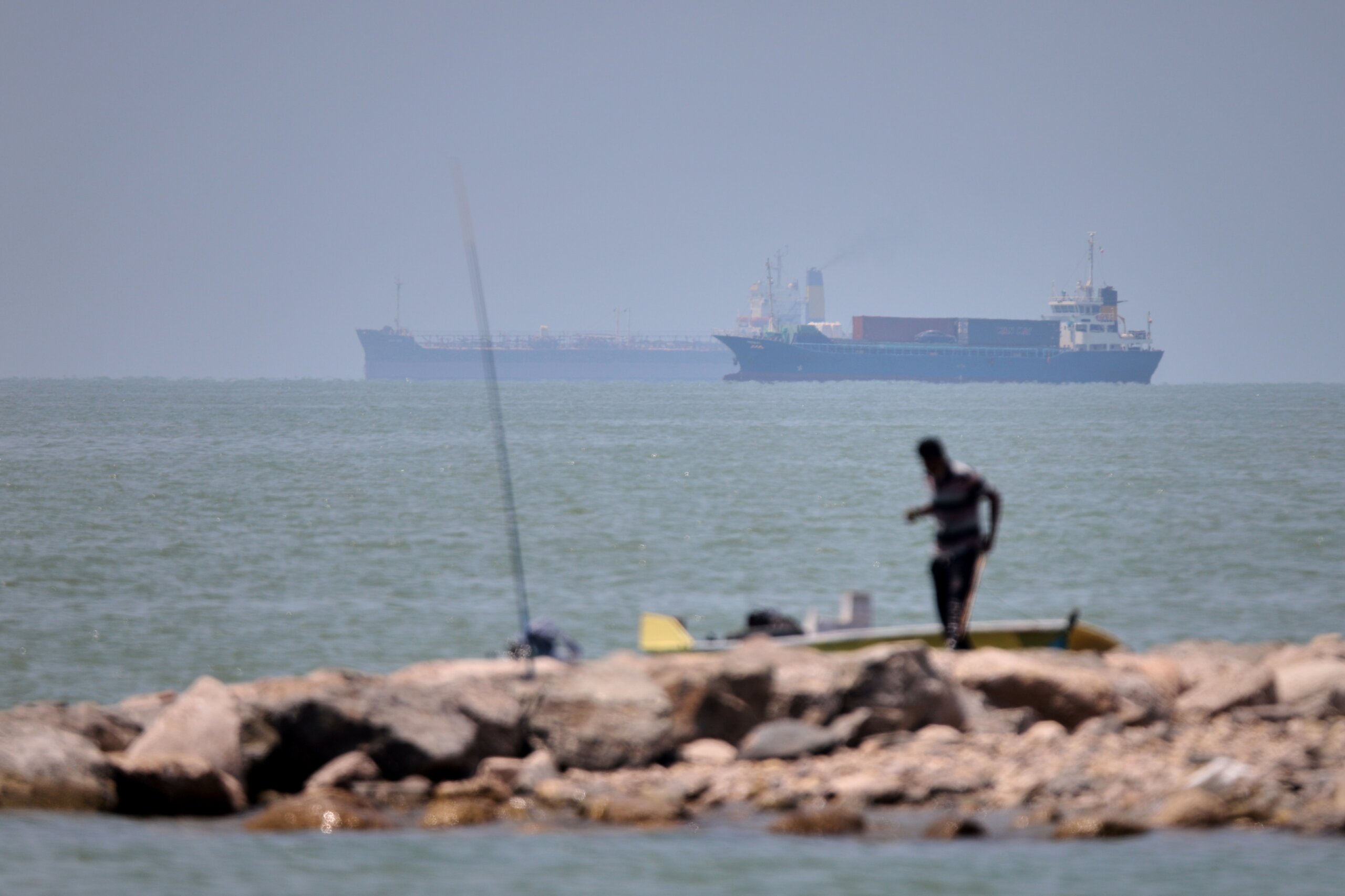
Trump is urging other nations that rely on Middle Eastern oil to help police the Strait of Hormuz, a waterway through which about one-fifth of the world’s traded oil usually flows. He has singled out China, noting that it gets much of its oil from the strait while the U.S. gets a minimal amount. He also made appeals to Japan, South Korea, Britain and France. There have been no takers so far, and China has been noncommittal.
“We strongly encourage other nations whose economies depend on the strait far more than ours,” Trump said at the White House on Monday. “We want them to come and help us with the strait.”
Trump is framing the war as a favor to the world being carried out by the U.S. and Israel, saying it’s now time for others to do their share to protect the strait. Some world leaders have directly rebuffed the notion and objected to the U.S.’ military approach.
Trump’s trip to China carries major geopolitical consequences as the two nations seek stability in the wake of a trade war that led to soaring tariffs before both sides eased off. Trump and Xi agreed to a one-year trade truce last fall, and Trump later agreed to a state visit to Beijing. He also went to China in 2017, during his first term.
China’s foreign minister said last week that the country looks forward to a “landmark year” in its relationship with the U.S. He added that China’s attitude “has always been positive and open, and the key is for the U.S. side to meet us halfway.”
Trump’s priorities have shifted as the war sends oil prices skyrocketing during a tough midterm year in which affordability was already a chief concern for American voters. In addition to postponing his China trip, he has given Russia a boost by lifting sanctions on its oil, and he tapped into the nation’s oil reserves, something he previously objected to doing.