
2 dead after 2 boats carrying students capsize off US base construction site in southern Japan

TOKYO (AP) — Two boats carrying 21 people capsized Monday off Henoko, a controversial relocation site for a U.S. military base off Japan’s southern island of Okinawa, throwing all into the water and leaving two of them dead, officials said.

The Japan Coast Guard said 18 of them were students from a Kyoto high school on two boats, 10 on Heiwa Maru and eight on the smaller Fukutsu, to observe the Henoko area as part of their peace education program.

Coast guard rescuers pulled all 21 people out of the water, but a 17-year-old female student and the captain of Fukutsu were later pronounced dead, officials said. Two people were injured but their conditions are not life threatening.

Coast guard officials said the cause of the accident is under investigation.

The boats were about a kilometer (half a mile) east of Henoko when they capsized. A wave advisory was in place during the accident, but the water was not very rough and there was no sign the boats collided, officials said.

Persistent protests and lawsuits between Okinawa and Tokyo have held up the relocation plan of the U.S. Marine Corps Air Station Futenma from a crowded neighborhood on the island for nearly 30 years.

Henoko is a popular destination for activists opposing the relocation, but the students were not protesting, officials said.

Okinawa is home to about half of the 50,000 American troops stationed in Japan under the bilateral security pact. Many Okinawans complain about risks of accident, noise, pollution and crime associated with U.S. bases.
Iran attacks Bahrain and Kuwait following US strikes, threatens to end talks to end the war

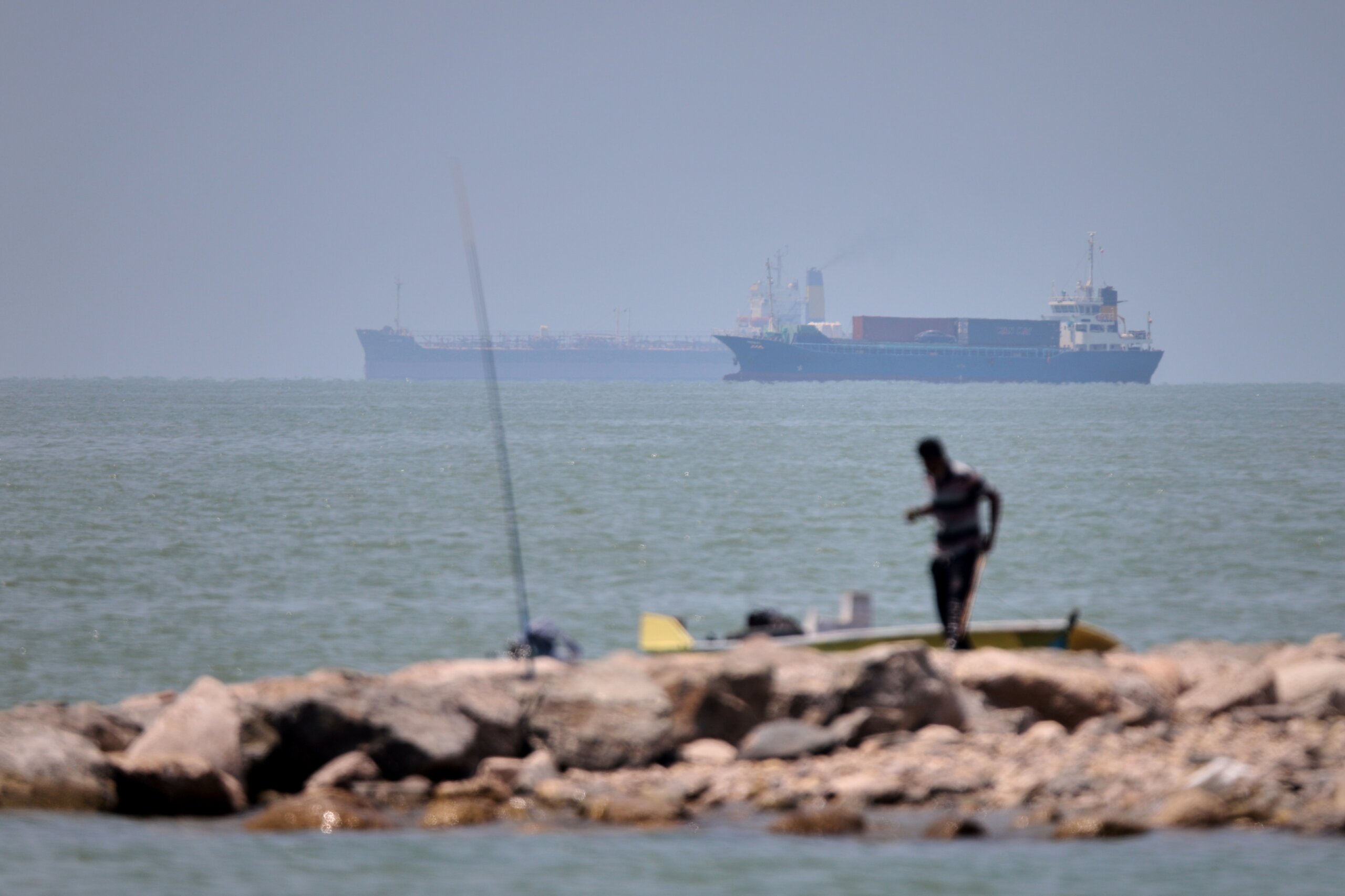
DUBAI, United Arab Emirates (AP) — Iran's paramilitary Revolutionary Guard launched drone and missile attacks Sunday targeting Bahrain and Kuwait in response to U.S. airstrikes that hit the Islamic Republic, and threatened a “complete halt” could come to negotiations to end the war if Washington continues its attacks. Efforts to reopen the Strait of Hormuz, the narrow mouth of the Persian Gulf that once carried a fifth of the world's oil and natural gas, without Iran's direct oversight sparked the crossfire now gripping the region. A multinational maritime body overseen by the U.S. Navy said Saturday that it would expand a route near Oman in the Strait of Hormuz to allow for both inbound and outbound traffic — setting up a new flashpoint with Tehran. Iran insists it alone must govern the strait after the war, upending decades of the world considering that the strait was international waters free for all, despite its sitting in Iran and Oman's territorial waters. Tehran has twice attacked vessels going through the Oman route, backed by a United Nations agency, in recent days. Early Sunday, the U.S. military’s Central Command said it struck Iranian military “surveillance infrastructure, communication systems, air defense sites, drone storage facilities and minelayer capabilities” following an attack on a ship at sea early Saturday morning. That ship, the Panamanian-flagged tanker Kiku, carried crude oil for the state-run energy company of Qatar, a key negotiator between Iran and the United States.
Read Next Story