Cuban political activist Yoani Sánchez says police not allowing her to leave her home

HAVANA (AP) — Cuban activist Yoani Sánchez said on Sunday that an alleged policeman dressed in civilian clothes is stopping her from leaving her home in Havana.

The accusation comes in the wake of protest in the city of Moron, where a group partially destroyed the local headquarters of the ruling communist party as the island struggles with energy blackouts and food shortages.

Sánchez confronted the man in a video published a video on Facebook and argued he was violating her rights. She also said two women who do not live in her building were roaming around since the officer arrived.

“This is in the lower levels of my building and I have come across this civilian dressed in plain clothes who has not identified himself, has his face covered, seems very afraid of being seen, and claims that he will not let me leave,” Sánchez said.

“I am a citizen who has not committed any crimes, is not being judged in a court, does not have a restraining order or house arrest. So, why won’t you let me leave?” the activist said.

In January, Sánchez said she was detained by agents wearing badges of the Cuban Department of State Security while she was heading to a reception at the residence of the chief of mission of the United States.

___

Follow AP’s coverage of Latin America and the Caribbean at https://apnews.com/hub/latin-america
Iran attacks Bahrain and Kuwait following US strikes, threatens to end talks to end the war

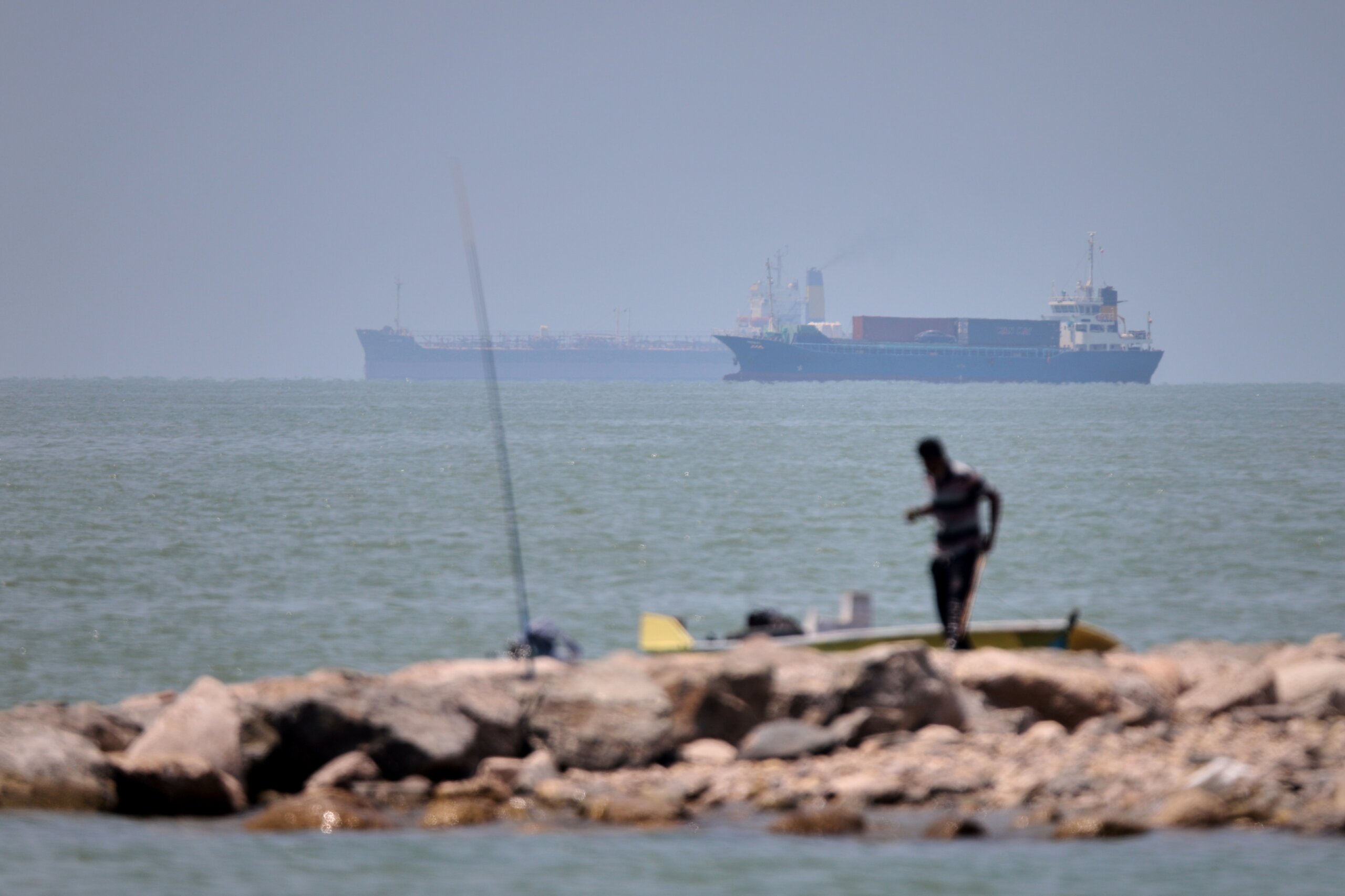
DUBAI, United Arab Emirates (AP) — Iran's paramilitary Revolutionary Guard launched drone and missile attacks Sunday targeting Bahrain and Kuwait in response to U.S. airstrikes that hit the Islamic Republic, and threatened a “complete halt” could come to negotiations to end the war if Washington continues its attacks. Efforts to reopen the Strait of Hormuz, the narrow mouth of the Persian Gulf that once carried a fifth of the world's oil and natural gas, without Iran's direct oversight sparked the crossfire now gripping the region. A multinational maritime body overseen by the U.S. Navy said Saturday that it would expand a route near Oman in the Strait of Hormuz to allow for both inbound and outbound traffic — setting up a new flashpoint with Tehran. Iran insists it alone must govern the strait after the war, upending decades of the world considering that the strait was international waters free for all, despite its sitting in Iran and Oman's territorial waters. Tehran has twice attacked vessels going through the Oman route, backed by a United Nations agency, in recent days. Early Sunday, the U.S. military’s Central Command said it struck Iranian military “surveillance infrastructure, communication systems, air defense sites, drone storage facilities and minelayer capabilities” following an attack on a ship at sea early Saturday morning. That ship, the Panamanian-flagged tanker Kiku, carried crude oil for the state-run energy company of Qatar, a key negotiator between Iran and the United States.
Read Next Story