
Carney announces billions for defense and infrastructure in Canada’s North

YELLOWKNIFE, Northwest Territories (AP) — Canadian Prime Minister Mark Carney said Thursday his government will spend billions on forward operating locations and infrastructure in the North to assert sovereignty over the increasingly contested region.

Carney announced he is putting an additional $32 billion Canadian (US$24 billion) into military forward operating locations Yellowknife, Inuvik, Iqaluit and Goose Bay.

“In this new era, we cannot rely on other nations for our security and prosperity,” Carney said.

The additional funds comes as U.S. President Donald Trump called earlier this year for the U.S. to take control of Greenland, the Inuit self-governing territory of the kingdom of Denmark. Trump has also talked about making Canada the 51st state.

The prime minister made the announcement in Yellowknife, the capital city of Canada’s Northwest Territories, before he takes off for his planned visit to Norway where he will observe a NATO exercise.

The announcement includes $2.7 billion Canadian (US$1.9 billion) for four new remote operating hubs across the North to assist with rapid deployment.

Carney is also announcing funds to support a variety of road and port projects in the North.

This includes money for the Mackenzie Valley Highway, which will connect Yellowknife and Inuvik.

Increasing international tensions, global warming and the changing world economy have put the Arctic at the heart of the debate over global trade and security.
Iran attacks Bahrain and Kuwait following US strikes, threatens to end talks to end the war

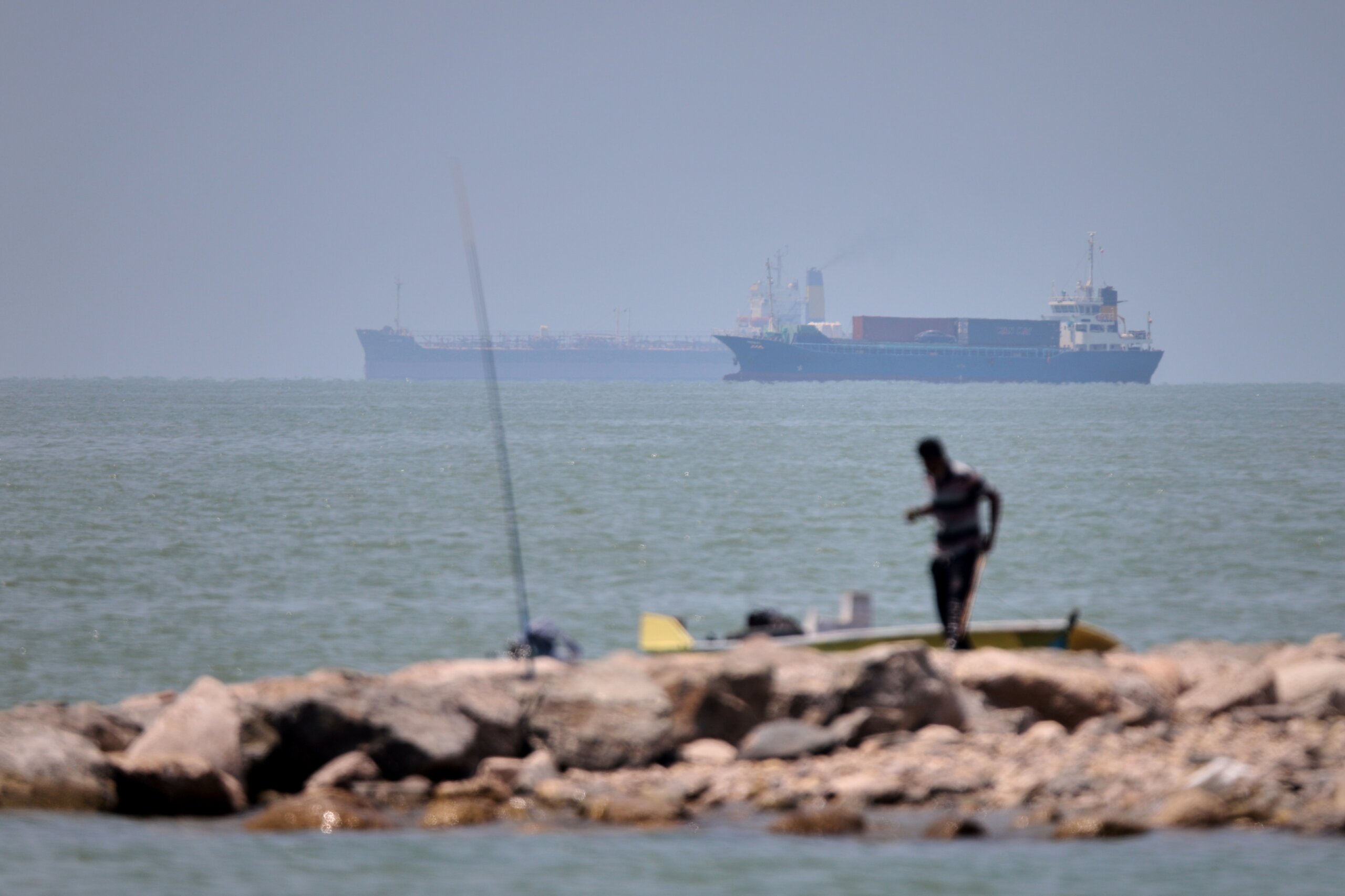
DUBAI, United Arab Emirates (AP) — Iran's paramilitary Revolutionary Guard launched drone and missile attacks Sunday targeting Bahrain and Kuwait in response to U.S. airstrikes that hit the Islamic Republic, and threatened a “complete halt” could come to negotiations to end the war if Washington continues its attacks. Efforts to reopen the Strait of Hormuz, the narrow mouth of the Persian Gulf that once carried a fifth of the world's oil and natural gas, without Iran's direct oversight sparked the crossfire now gripping the region. A multinational maritime body overseen by the U.S. Navy said Saturday that it would expand a route near Oman in the Strait of Hormuz to allow for both inbound and outbound traffic — setting up a new flashpoint with Tehran. Iran insists it alone must govern the strait after the war, upending decades of the world considering that the strait was international waters free for all, despite its sitting in Iran and Oman's territorial waters. Tehran has twice attacked vessels going through the Oman route, backed by a United Nations agency, in recent days. Early Sunday, the U.S. military’s Central Command said it struck Iranian military “surveillance infrastructure, communication systems, air defense sites, drone storage facilities and minelayer capabilities” following an attack on a ship at sea early Saturday morning. That ship, the Panamanian-flagged tanker Kiku, carried crude oil for the state-run energy company of Qatar, a key negotiator between Iran and the United States.
Read Next Story