
UK prosecutors charge a former Syrian military member with 3 murders as crimes against humanity

LONDON (AP) — A former member of the Syrian military was charged in Britain with three counts of murder as a crime against humanity for attacks on civilians in Damascus in 2011, British prosecutors said Monday.

The Crown Prosecution Services said it marks the first time they have brought those charges in the U.K. under the International Criminal Court Act of 2001.

The 58-year-old who was a member of the Syrian Air Force Intelligence department also faces three counts of torture and one count of conduct ancillary to murder. He is due to appear Tuesday in Westminster Magistrates’ Court.

“The charges are extremely serious and show that we fully support the U.K.’s ‘no safe haven’ policy in relation (to) alleged war criminals,” Metropolitan Police Cmdr. Commander Helen Flanagan said. “Where we are presented with allegations of war crimes and crimes against humanity that fall within our jurisdiction, then, as we have shown here, we will not hesitate to investigate those rigorously and robustly.”

The man, who now lives in the U.K., was part of a group that was assigned to suppress demonstrations in the Damascus suburbs, prosecutors said. Two of the killings occurred on April 22, 2011 and one in June 2011, according to the charges.

Authorities have not named the defendant because his lawyer is seeking a court order to protect his identity.

British prosecutors can charge offenders with some international offenses, including crimes against humanity and torture, even if they were committed outside the country.
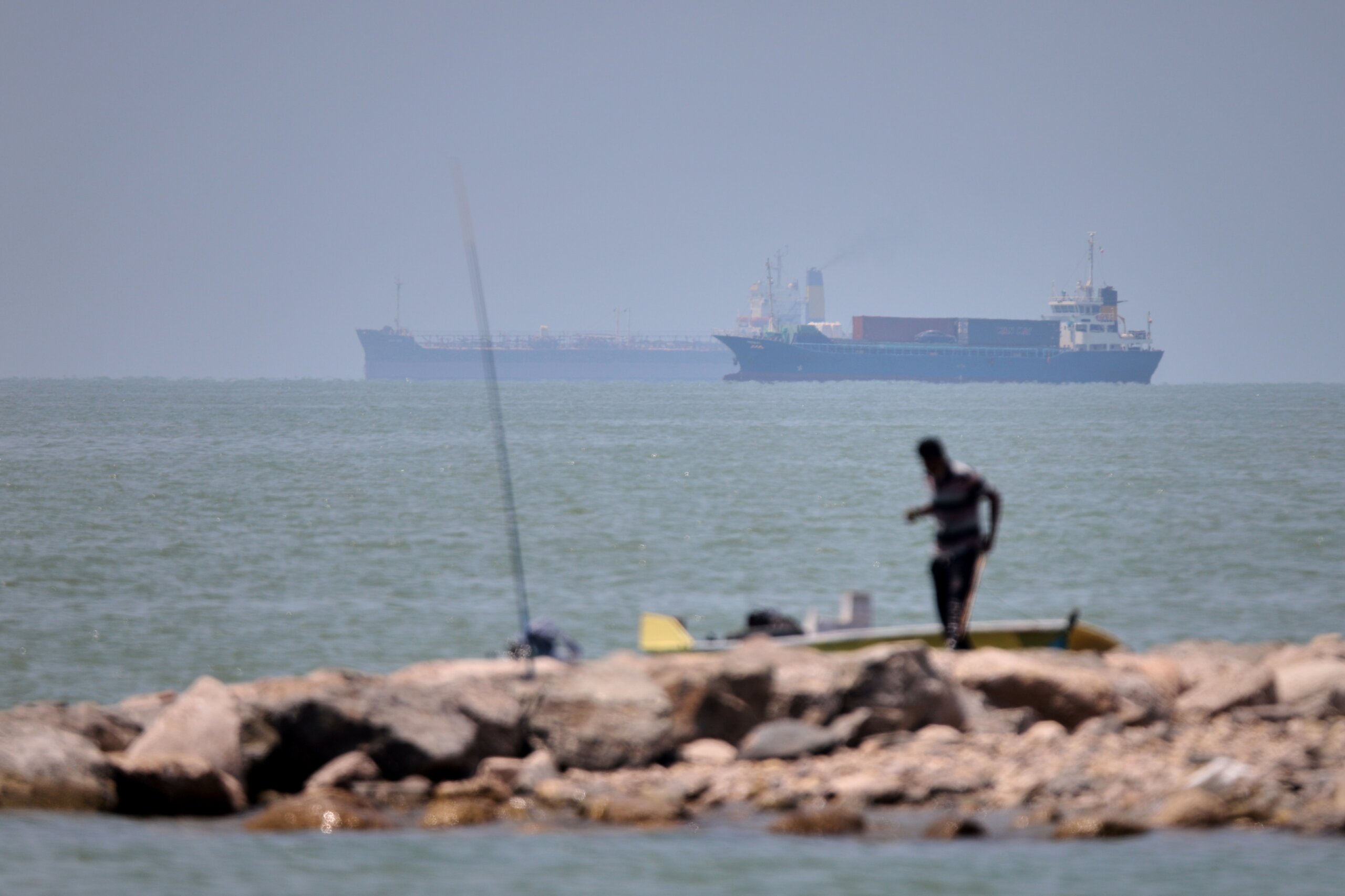

Iran attacks Bahrain and Kuwait following US strikes, threatens to end talks to end the war

DUBAI, United Arab Emirates (AP) — Iran's paramilitary Revolutionary Guard launched drone and missile attacks Sunday targeting Bahrain and Kuwait in response to U.S. airstrikes that hit the Islamic Republic, and threatened a “complete halt” could come to negotiations to end the war if Washington continues its attacks. Efforts to reopen the Strait of Hormuz, the narrow mouth of the Persian Gulf that once carried a fifth of the world's oil and natural gas, without Iran's direct oversight sparked the crossfire now gripping the region. A multinational maritime body overseen by the U.S. Navy said Saturday that it would expand a route near Oman in the Strait of Hormuz to allow for both inbound and outbound traffic — setting up a new flashpoint with Tehran. Iran insists it alone must govern the strait after the war, upending decades of the world considering that the strait was international waters free for all, despite its sitting in Iran and Oman's territorial waters. Tehran has twice attacked vessels going through the Oman route, backed by a United Nations agency, in recent days. Early Sunday, the U.S. military’s Central Command said it struck Iranian military “surveillance infrastructure, communication systems, air defense sites, drone storage facilities and minelayer capabilities” following an attack on a ship at sea early Saturday morning. That ship, the Panamanian-flagged tanker Kiku, carried crude oil for the state-run energy company of Qatar, a key negotiator between Iran and the United States.
Read Next Story