
Family sues ChatGPT-maker OpenAI over school shooting in Canada

VANCOUVER, British Columbia (AP) — The parents of a girl critically wounded in a school shooting in Canada alleged in a civil lawsuit Monday that ChatGPT-maker OpenAI knew the shooter was planning a mass attack.

OpenAI has said it considered but didn’t alert police about the activities of the person who months later committed one of Canada’s worst school shootings in Tumbler Ridge, British Columbia, on Feb. 10.

OpenAI came forward to police after Jesse Van Roostselaar killed eight people and then herself last month, saying the attacker’s ChatGPT account had been closed but that she evaded the ban by having a second account.

The legal claim filed in the British Columbia Supreme Court alleged that OpenAI had “specific knowledge of the shooter utilizing ChatGPT to plan a mass casualty event like the Tumbler Ridge mass shooting.”

The lawsuit said OpenAI’s chatbot ChatGPT was used by the shooter as a trusted confidante, collaborator and ally, and it behaves willingly to assist users such as the shooter to plan a mass casualty event.

A spokeswoman from OpenAI didn’t immediately respond to a message seeking comment on the lawsuit.

The lawsuit said that as a result of the company’s conduct Maya Gebala was shot three times at close range, with one bullet hitting her head, another her neck and the third grazing her cheek. It said she has a catastrophic brain injury that will leave her with permanent cognitive and physical disabilities.
Iran attacks Bahrain and Kuwait following US strikes, threatens to end talks to end the war

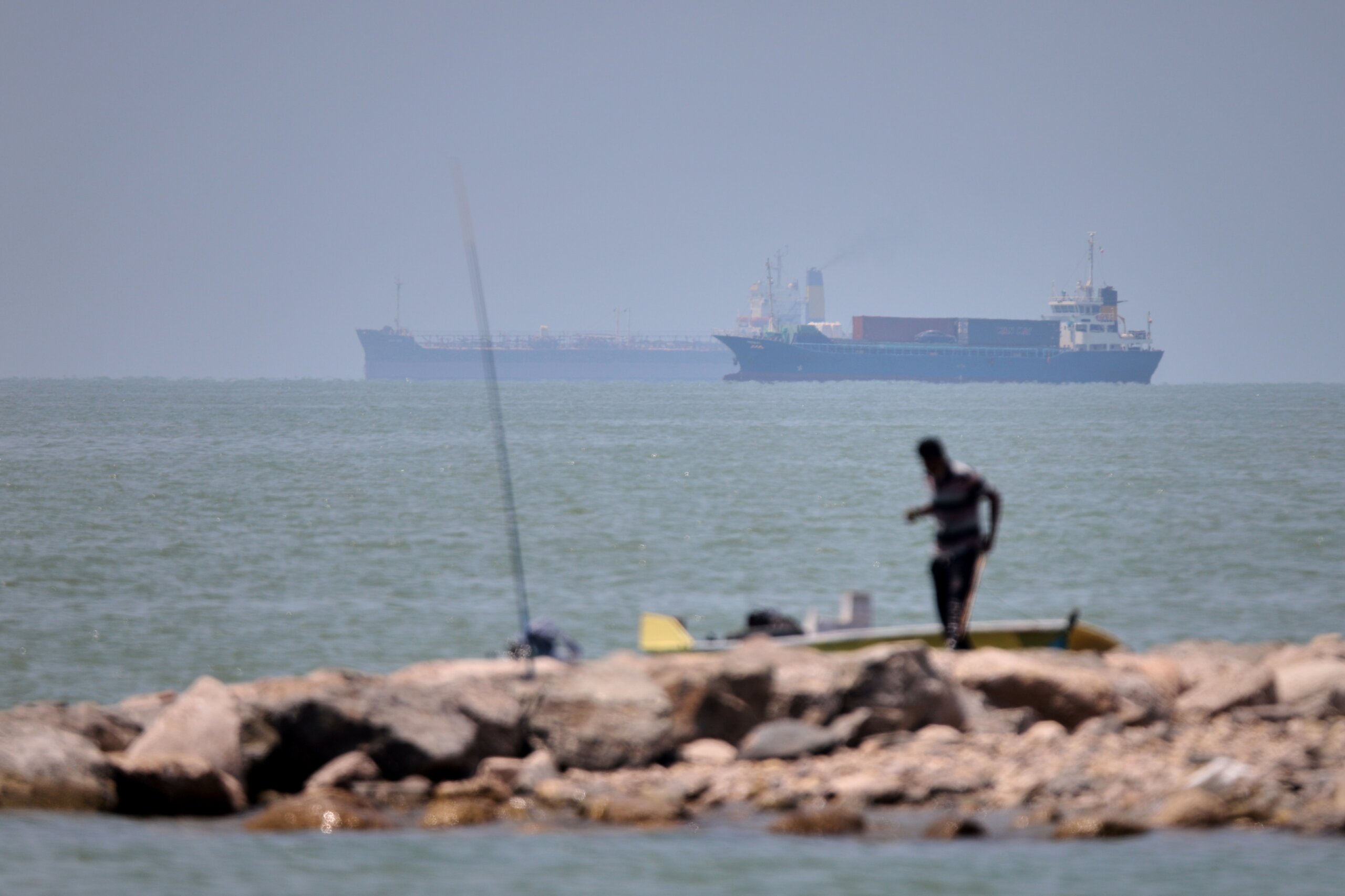
DUBAI, United Arab Emirates (AP) — Iran's paramilitary Revolutionary Guard launched drone and missile attacks Sunday targeting Bahrain and Kuwait in response to U.S. airstrikes that hit the Islamic Republic, and threatened a “complete halt” could come to negotiations to end the war if Washington continues its attacks. Efforts to reopen the Strait of Hormuz, the narrow mouth of the Persian Gulf that once carried a fifth of the world's oil and natural gas, without Iran's direct oversight sparked the crossfire now gripping the region. A multinational maritime body overseen by the U.S. Navy said Saturday that it would expand a route near Oman in the Strait of Hormuz to allow for both inbound and outbound traffic — setting up a new flashpoint with Tehran. Iran insists it alone must govern the strait after the war, upending decades of the world considering that the strait was international waters free for all, despite its sitting in Iran and Oman's territorial waters. Tehran has twice attacked vessels going through the Oman route, backed by a United Nations agency, in recent days. Early Sunday, the U.S. military’s Central Command said it struck Iranian military “surveillance infrastructure, communication systems, air defense sites, drone storage facilities and minelayer capabilities” following an attack on a ship at sea early Saturday morning. That ship, the Panamanian-flagged tanker Kiku, carried crude oil for the state-run energy company of Qatar, a key negotiator between Iran and the United States.
Read Next Story