
Cuba says crews repaired a large power plant that caused a massive outage

HAVANA (AP) — Cuban officials said they expect to restart a large thermoelectric plant on Saturday after it shut down earlier in the week, sparking a massive blackout.

Felix Estrada Rodríguez, a top engineer at Cuba’s Electric Union, told state-owned Canal Caribe that the Antonio Guiteras plant should be operating by Saturday afternoon.

Crews have repaired a broken boiler at the plant that caused the outage on Wednesday, leaving millions without power in the island’s western region.

Estrada Rodríguez said it was a slow process that had to be done safely.

“It is a confined space with a high temperature,” he said.

Cuba’s Electric Union said in a statement Saturday that only 1,000 megawatts of power were available, less than half of the island’s current demand. It did not say how many customers remained without power.

The blackout, the second such outage to affect western Cuba in three months, was blamed on a crumbling electric grid and a lack of fuel.

Cuba, which imports most of its oil from Venezuela, recently implemented austere fuel-saving measures after the U.S. attacked the South American country and arrested its leader, leading to a halt in critical oil shipments.

Just weeks after the attack on Venezuela in early January, U.S. President Donald Trump warned that he would impose tariffs on any country that sells or supplies oil to Cuba.
Iran attacks Bahrain and Kuwait following US strikes, threatens to end talks to end the war

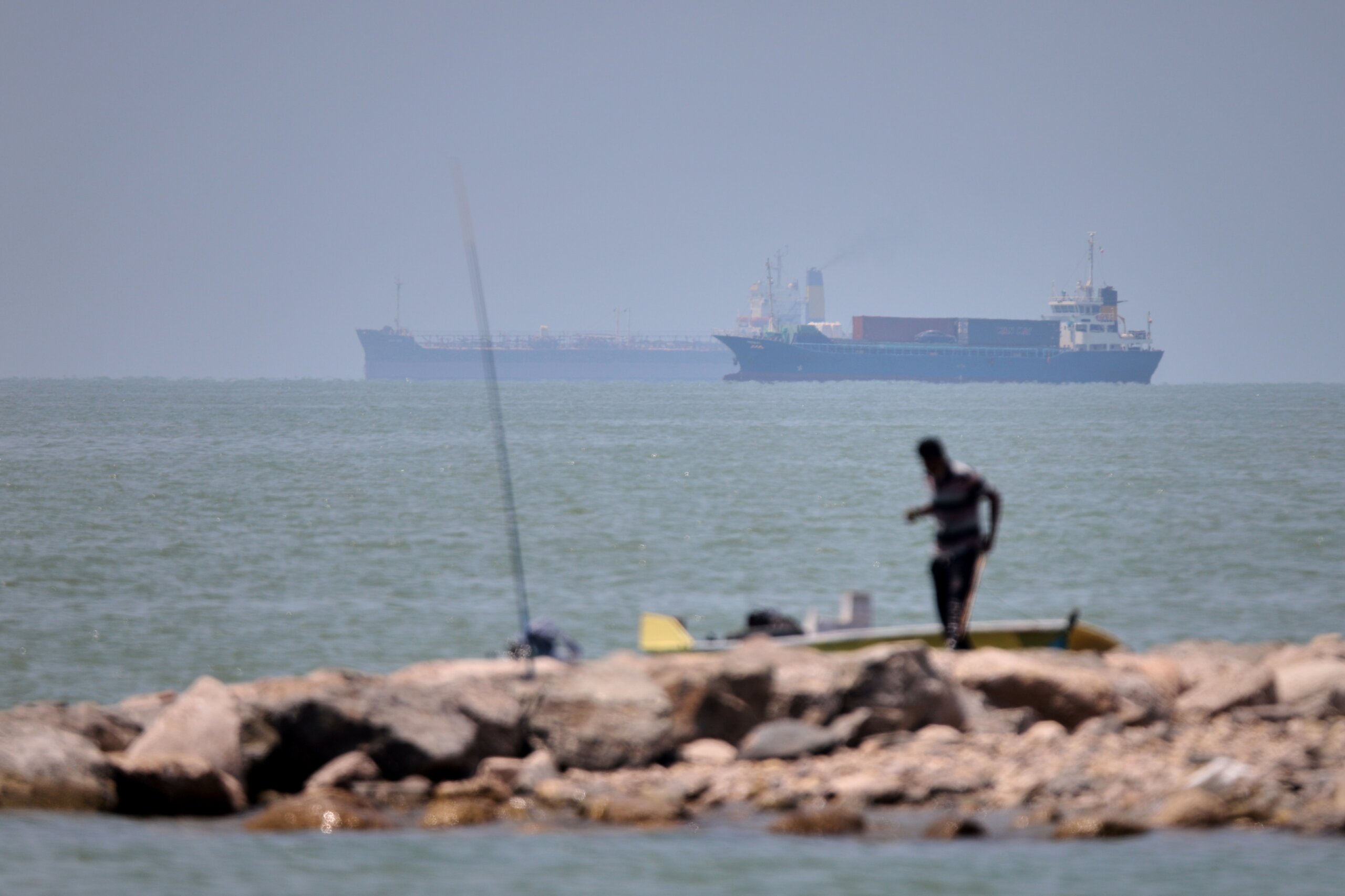
DUBAI, United Arab Emirates (AP) — Iran's paramilitary Revolutionary Guard launched drone and missile attacks Sunday targeting Bahrain and Kuwait in response to U.S. airstrikes that hit the Islamic Republic, and threatened a “complete halt” could come to negotiations to end the war if Washington continues its attacks. Efforts to reopen the Strait of Hormuz, the narrow mouth of the Persian Gulf that once carried a fifth of the world's oil and natural gas, without Iran's direct oversight sparked the crossfire now gripping the region. A multinational maritime body overseen by the U.S. Navy said Saturday that it would expand a route near Oman in the Strait of Hormuz to allow for both inbound and outbound traffic — setting up a new flashpoint with Tehran. Iran insists it alone must govern the strait after the war, upending decades of the world considering that the strait was international waters free for all, despite its sitting in Iran and Oman's territorial waters. Tehran has twice attacked vessels going through the Oman route, backed by a United Nations agency, in recent days. Early Sunday, the U.S. military’s Central Command said it struck Iranian military “surveillance infrastructure, communication systems, air defense sites, drone storage facilities and minelayer capabilities” following an attack on a ship at sea early Saturday morning. That ship, the Panamanian-flagged tanker Kiku, carried crude oil for the state-run energy company of Qatar, a key negotiator between Iran and the United States.
Read Next Story