
China’s Xi calls for political loyalty in the military as anti-corruption purge widens

BEIJING (AP) — China’s President Xi Jinping on Saturday said political loyalty in the military must be ensured and called for resolutely pushing forward the fight against corruption as a military purge widened.

“There must be no one in the military who harbors disloyalty to the (ruling Communist) Party,” Xi said in remarks published by the official Xinhua News Agency.

Xi was speaking at a plenary meeting of the delegation of China’s People’s Liberation Army and People’s Armed Police Force as China holds its annual “two sessions” meetings of its top legislature and its top political advisory body.

An anti-corruption campaign launched by Xi shows no sign of letting up after more than a decade. The military has been targeted in recent years, including the removal of its top general last month, as Xi seeks to reform and modernize the armed forces.

Analysts say the campaign is also a way for Xi, who is in his 14th year in power, to remove potential rivals and ensure absolute loyalty among his subordinates.

The National People’s Congress last week dismissed nine military officers, including two under the Central Military Commission, the military’s highest body, as well as others from the army, the navy, the air force and the rocket force. Three generals were this week removed from China’s top political advisory body.

“There must be no hiding place for corrupt individuals,” Xi was cited by Xinhua as saying on Saturday. “The fight against corruption must be resolutely pushed forward.”

Chinese leaders this week also pledged a 7% defense budget growth for this year to about 1.9 trillion yuan ($270 billion), slightly lower than the about 7.2% annual increase over the last three years.
Iran attacks Bahrain and Kuwait following US strikes, threatens to end talks to end the war

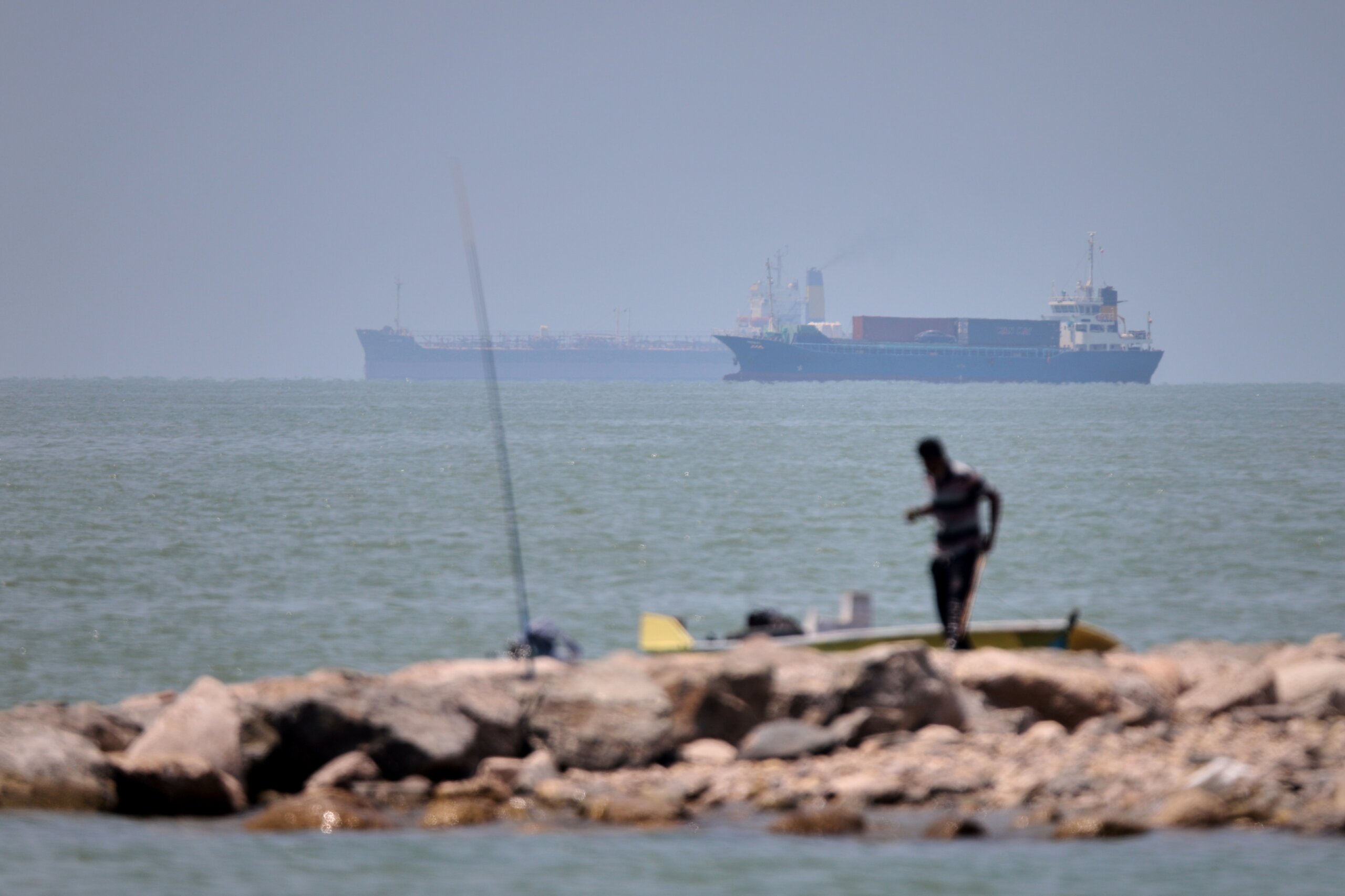
DUBAI, United Arab Emirates (AP) — Iran's paramilitary Revolutionary Guard launched drone and missile attacks Sunday targeting Bahrain and Kuwait in response to U.S. airstrikes that hit the Islamic Republic, and threatened a “complete halt” could come to negotiations to end the war if Washington continues its attacks. Efforts to reopen the Strait of Hormuz, the narrow mouth of the Persian Gulf that once carried a fifth of the world's oil and natural gas, without Iran's direct oversight sparked the crossfire now gripping the region. A multinational maritime body overseen by the U.S. Navy said Saturday that it would expand a route near Oman in the Strait of Hormuz to allow for both inbound and outbound traffic — setting up a new flashpoint with Tehran. Iran insists it alone must govern the strait after the war, upending decades of the world considering that the strait was international waters free for all, despite its sitting in Iran and Oman's territorial waters. Tehran has twice attacked vessels going through the Oman route, backed by a United Nations agency, in recent days. Early Sunday, the U.S. military’s Central Command said it struck Iranian military “surveillance infrastructure, communication systems, air defense sites, drone storage facilities and minelayer capabilities” following an attack on a ship at sea early Saturday morning. That ship, the Panamanian-flagged tanker Kiku, carried crude oil for the state-run energy company of Qatar, a key negotiator between Iran and the United States.
Read Next Story