
Japan says a second Japanese person is detained in Iran and demands their early release

TOKYO (AP) — A second Japanese national has been detained in Iran, Japan’s Foreign Ministry said Friday and demanded the early release of both people.

The ministry confirmed the second person had been detained before the Feb. 28 military strikes on Iran by the United States and Israel.

The ministry said the detainee is safe and in good health but gave no other details such as the timing of the detention or whether it is related to the detention of a Japanese journalist reported last month.

Japanese officials had confirmed the first person’s detention though they refused to give the detainee’s identity.

Foreign Minister Toshimitsu Motegi told a parliamentary panel Friday that officials were able to contact the two after the Feb. 28 strikes and confirmed their safety. The government is “doing everything to support them, their families and others involved,” Motegi said.

Motegi said he insisted on the importance of their protection and early release when he met with the Iranian ambassador this week.

The Committee to Protect Journalists has named the first detainee as Shinnosuke Kawashima, the Tehran bureau chief of Japanese public broadcaster NHK. Its report quoted an unidentified source who spoke on condition of anonymity due to fear of retribution.

CPJ said Kawashima was arrested Jan. 20 by the Islamic Revolutionary Guard Corps and was transferred Feb. 23 to Evin Prison.

The organization demanded the immediate release of Kawashima and other journalists detained for their work.
Iran attacks Bahrain and Kuwait following US strikes, threatens to end talks to end the war

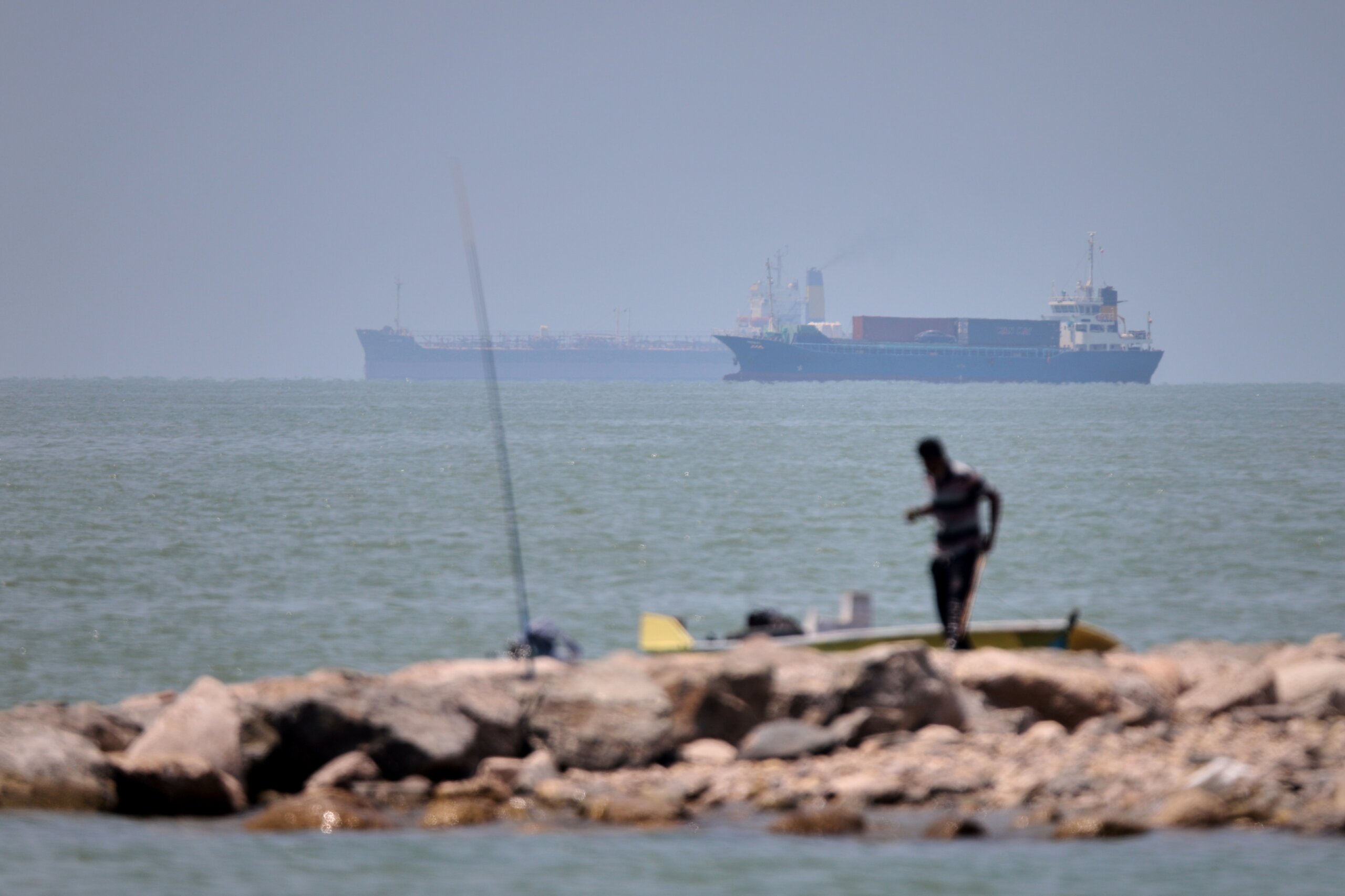
DUBAI, United Arab Emirates (AP) — Iran's paramilitary Revolutionary Guard launched drone and missile attacks Sunday targeting Bahrain and Kuwait in response to U.S. airstrikes that hit the Islamic Republic, and threatened a “complete halt” could come to negotiations to end the war if Washington continues its attacks. Efforts to reopen the Strait of Hormuz, the narrow mouth of the Persian Gulf that once carried a fifth of the world's oil and natural gas, without Iran's direct oversight sparked the crossfire now gripping the region. A multinational maritime body overseen by the U.S. Navy said Saturday that it would expand a route near Oman in the Strait of Hormuz to allow for both inbound and outbound traffic — setting up a new flashpoint with Tehran. Iran insists it alone must govern the strait after the war, upending decades of the world considering that the strait was international waters free for all, despite its sitting in Iran and Oman's territorial waters. Tehran has twice attacked vessels going through the Oman route, backed by a United Nations agency, in recent days. Early Sunday, the U.S. military’s Central Command said it struck Iranian military “surveillance infrastructure, communication systems, air defense sites, drone storage facilities and minelayer capabilities” following an attack on a ship at sea early Saturday morning. That ship, the Panamanian-flagged tanker Kiku, carried crude oil for the state-run energy company of Qatar, a key negotiator between Iran and the United States.
Read Next Story