
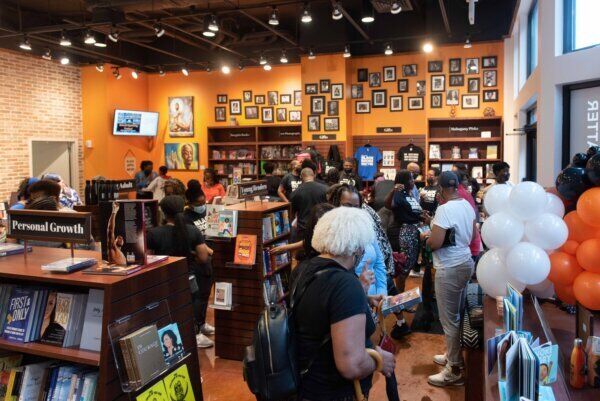
MahoganyBooks, a husband and wife venture launched in 2007 online to showcase books written for, by and about people of color, is looking for a new home for its original bookstore after losing its space at the Anacostia Arts Center in D.C.
The Center, at 1231 Marion Barry Avenue SE, closed in August for renovations.
MahoganyBooks still has locations at National Harbor and Reagan National Airport.
The Anacostia Arts Center is undergoing an 18-month renovation. Bookstore co-owner Ramunda Young did not identify a potential future location.
“As the Art Center closes for renovations we are looking for a location that better fits the needs of our business and customers,” Young said.
Finding a space for an independently owned, niche bookstore may be a challenge. Co-owner Derrick Young said they are looking for a middle ground where property owners and developers understand the value MahoganyBooks brings to the community, and are open to conversations with landlords who share their vision and will invest in a space.
Mahogany Books has one of the largest online inventories of books for, by and about people of the African diaspora, and was started in a one-bedroom apartment in Alexandria, Virginia. The Anacostia Art Center store opened in 2014. Its bookstores have hosted a wide range of African American authors, including well-known names such as President Barack Obama, Spike Lee and Marion Barry.