Listen to WTOP online and on the radio at 103.5 FM or 107.7 FM for our team coverage.
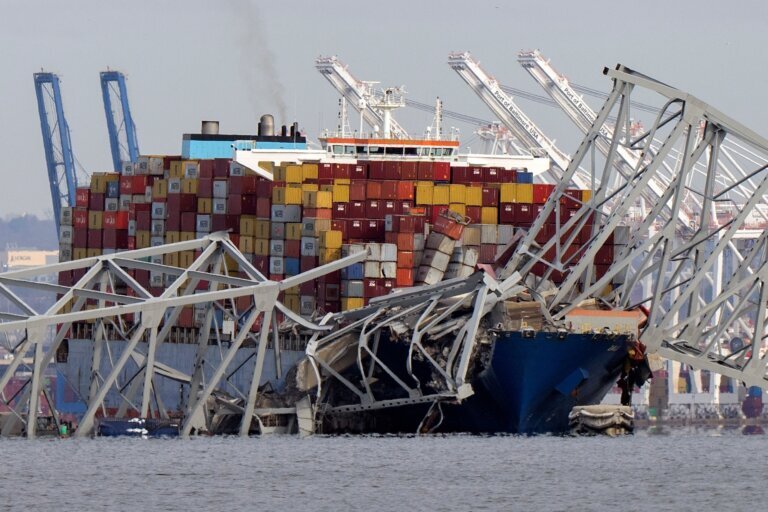
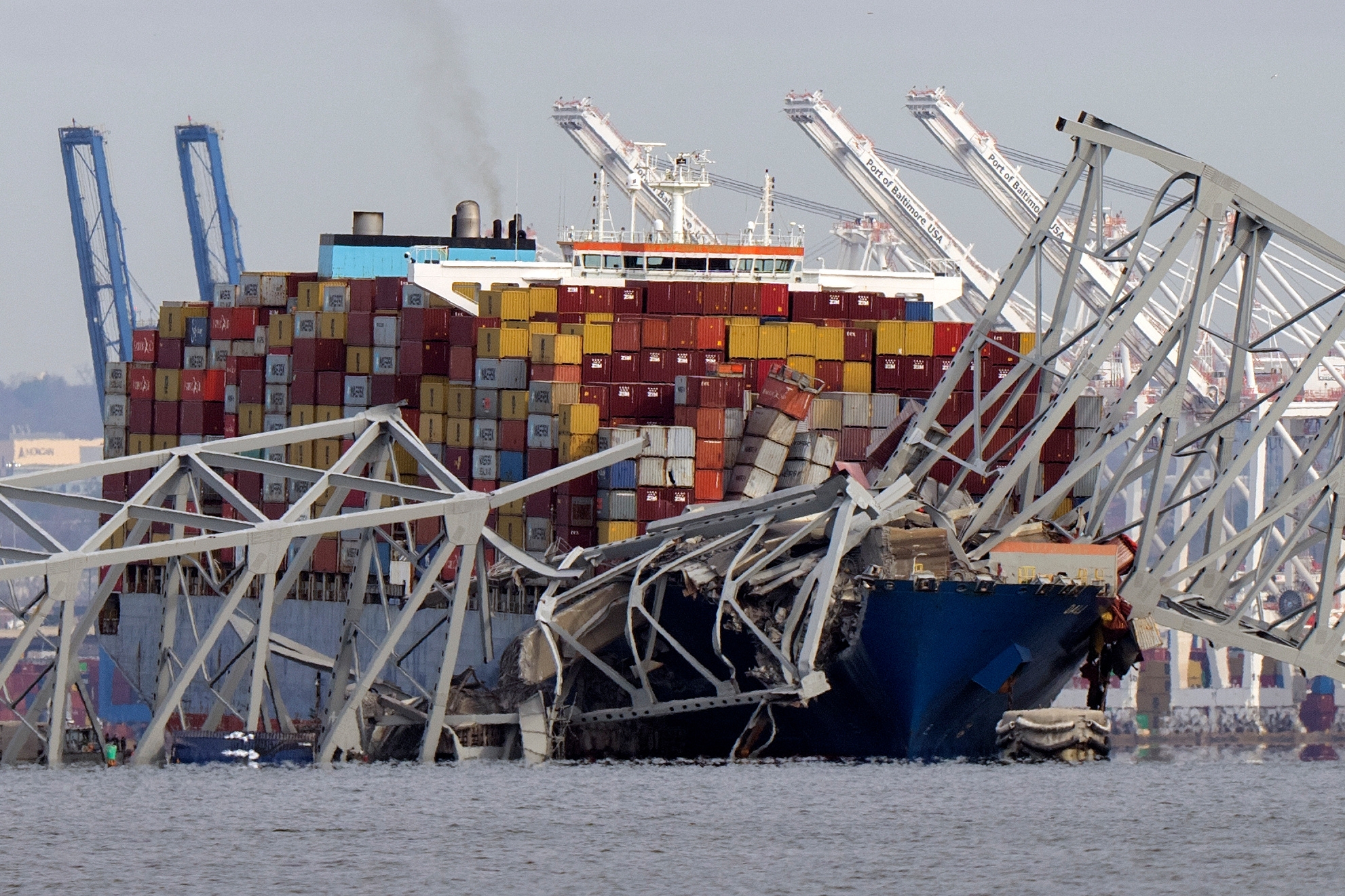
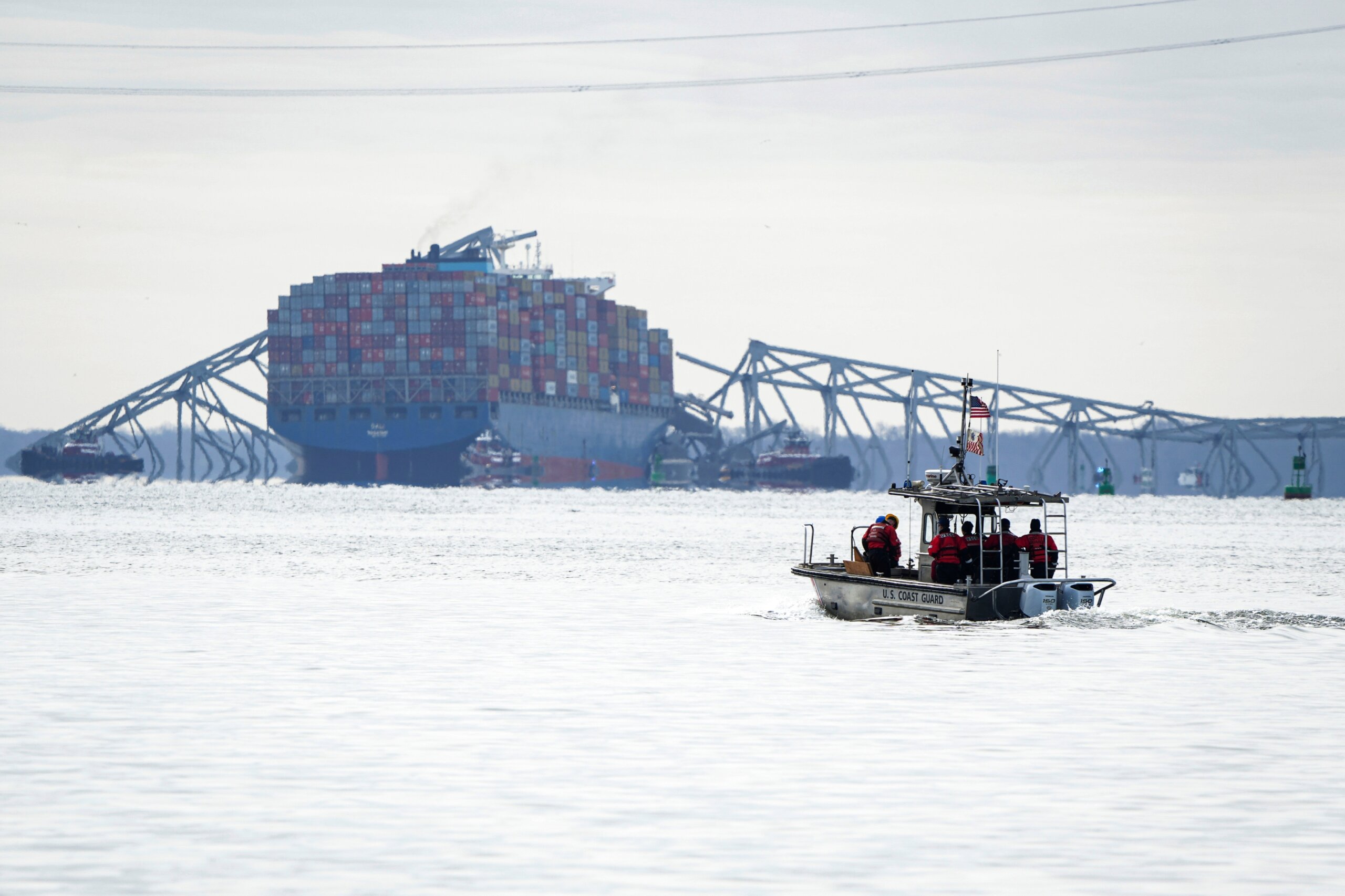
Throughout the day on Tuesday, dozens of people kept ignoring the “no parking” signs that line Dundalk Avenue to get out of their cars and look beyond the Port of Baltimore toward the Francis Scott Key Bridge — or at least where the Key Bridge is supposed to be.
From there you can see some of it, but the great arching bridge that’s part of the skyline in Baltimore is missing, and even those who heard the crash as it happened overnight had to show up to stare, seeing what they never believed they had heard.
- Full Key Bridge collapse coverage
- Biden: Federal government should pay to rebuild Key Bridge after collapse
- Photos of the collapse
- How did container ship strike bring down Baltimore’s Key Bridge? An expert weighs in
“I was up and I just heard this great big noise and rumbling sound, and I thought it was something going on down my road, so I got up out of my chair and walked outside and there was nothing,” said Frank Wolfe, who lives in Dundalk.
Only when he woke up later on in the morning did he put two and two together.
“It was just a big rumbling sound and you could feel the vibration on the ground from it last night,” Wolfe said. “It was just a weird thing to hear that early in the morning.”
He estimated it only lasted a few seconds, but another person staring out at the skyline, John Myers, also admitted the sound was unusual only for that hour of the day.
“It sounded a little different, but it sounded like most of the stuff you hear from the shipyard,” Myers said. “Weird bang, bangs, just normal bangs you don’t hear at night, especially coming from the shipyard” is how he described it.
Myers didn’t feel it, but Josh Rebeiro said he did. He was doing some work inside a home nearby at the time of the crash and initially thought it was a tornado or a car crash.
“It was just bang,” he said.
There’s an acknowledgment that the impact of the bridge collapse is going to be felt close to home, but also far away.
“This bridge here, it gets around 30,000 to 40,000 vehicles across it per day,” Wolfe said. “This is a major route.”
“I know there’s a lot of people that counted on the bridge … to get to where they need to go from Point A to Point B with no hassle,” Myers added. “That’s gone.”
He also said a lot of problems will be coming to the port, which handles over 52 million tons of cargo and hundreds of thousands of vehicle import and export.
In fact, being the closest oceanic port to the Midwest means Baltimore sees more vehicles enter and leave through its waters than any other port in the country.
“It’s probably going to take a long time to find another way to get everything into the community. Nobody’s coming in or out right now,” Myers said. “I don’t think I even understand the gravity of how much it’s going to affect everything. I’m thinking locally and I know it’s going to be more than that. I just don’t know how much.”