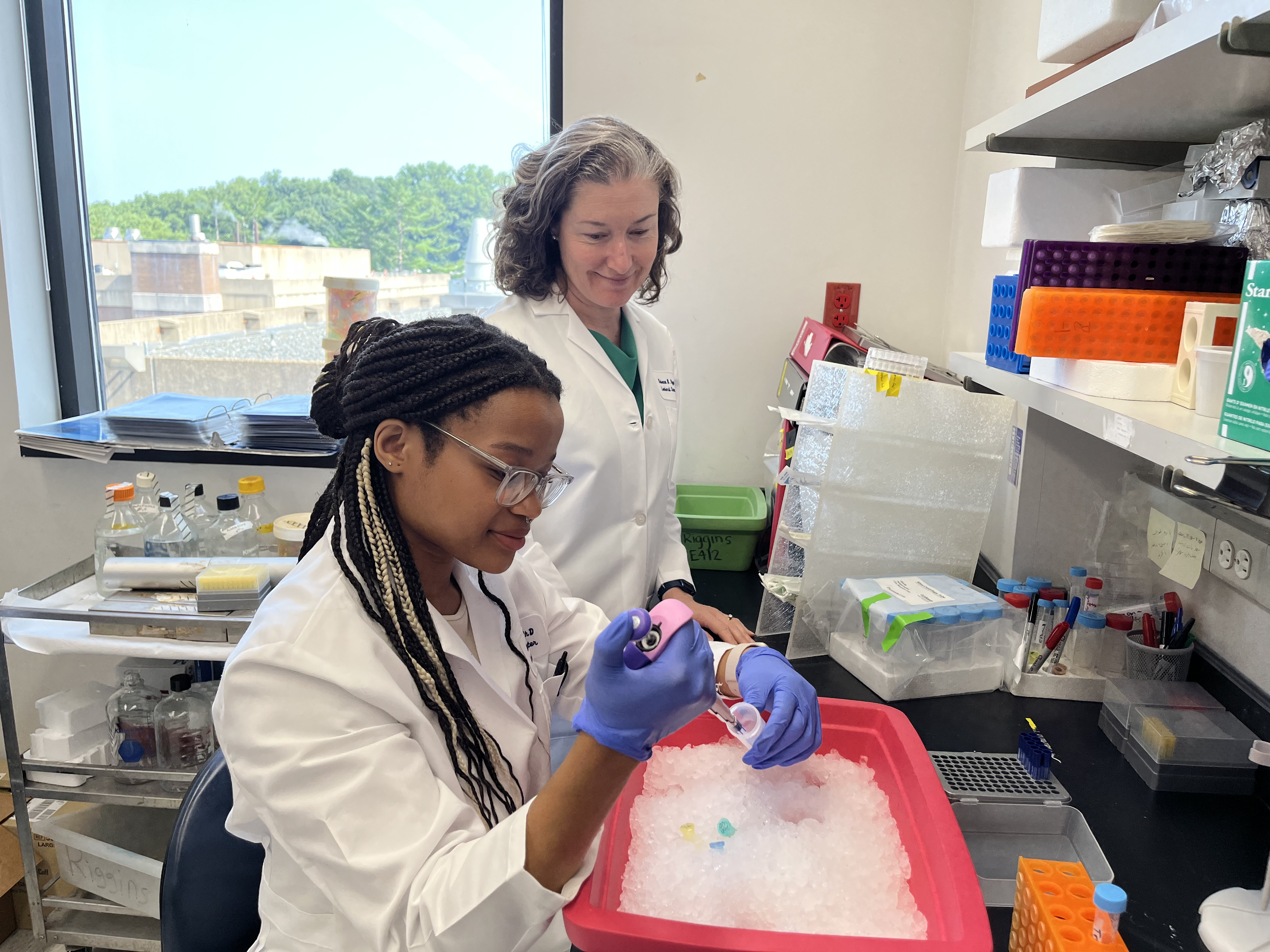
For the last several weeks, a handful of students from around the country have been getting paid to learn at Georgetown University Medical Center’s Lombardi Comprehensive Cancer Center.
For the third straight summer, students from schools are participating in the American Cancer Society’s Diversity in Cancer Research Internship program.
Nine students from across the nation, including from the D.C. region, participated, getting hands-on experience and mentorship from leading scientists in the field.
In a lot of places, a prestigious internship for undergraduate students might not pay at all. But thanks to a grant from the American Cancer Society, this one does, with the expectation that it’ll pay off even more in the years to come.
“Representation is incredibly important for research, for clinical care, for community outreach and engagement,” said Dr. Rebecca Riggins, associate professor and associate director of Education and Training at the Lombardi Comprehensive Cancer Center.
Diversity is important in bringing innovation, she said.
“When we aren’t a diverse group of people tackling this major challenge in health care, we’re not bringing the innovative insights that we need to make the progress that we want to see in this space is quite simply that,” Riggins said.
Working with Riggins again this summer is Theresa Abalum, who was born in Nigeria but grew up in Baltimore City, Maryland. She’s a junior at Towson University. Over the summer, she’s been studying certain cancer treatments and their impact on breast cancer cells.
“Cancer research, or science research in general, should be very diverse,” Abalum said. “It shouldn’t be overpowered by one demographic of people.”
Abalum knows the impact diversity can have.
“You’re more likely to relate with your patients,” said Abalum, especially if the health care provider shares a language or culture.
Riggins sees the value in that too.
“I think shared lived experience is a really important factor in building trust, in building relationships,” Riggins said. “And that is not just important in that clinical care space, but that’s also important in innovative, basic and translational research.”
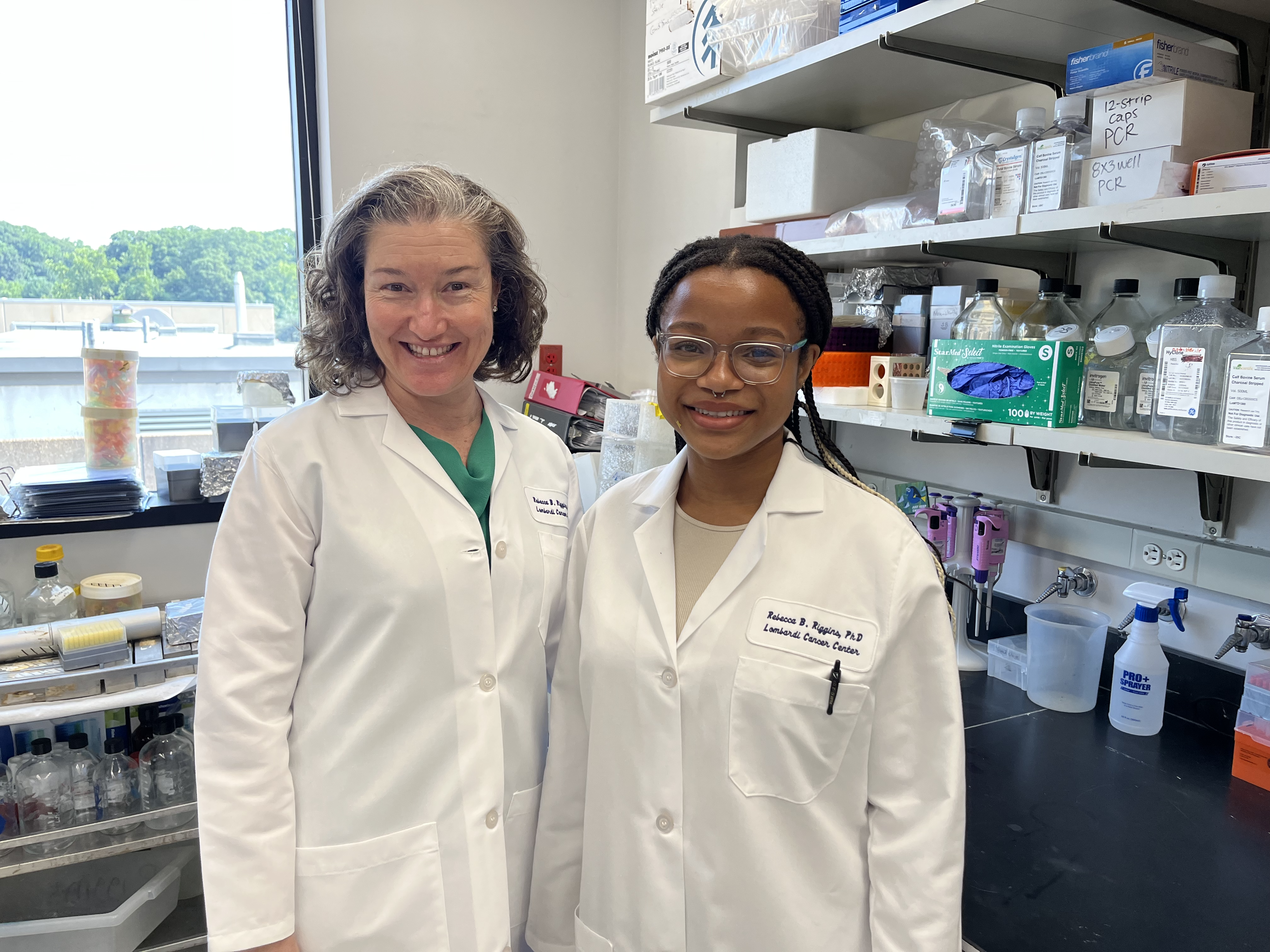
Abalum’s project is making a valuable contribution to Riggins’ lab, as well.
“My lab studies breast cancer. One of the major drivers of how we make treatment decisions, clinically, is a protein called the estrogen receptor. It’s a target of drugs that are used to slow or stop the growth of the cancer,” said Riggins.
“We don’t always know everything about how it’s controlled. (Abalum’s) project is asking a very specific question about how certain metabolic enzymes might control the expression and the activity of the estrogen receptor, which could potentially have clinical or treatment implications in the future.”
More importantly for Abalum is learning how to be a resilient scientist, even when mistakes might get made.
Riggins said that she has tried to make clear that any mistakes made by undergraduate students have likely been repeated numerous times before.
“Science is hard. We make mistakes all the time; our hypotheses are wrong every day,” Riggins said, adding that it’s important to have conversations, be resilient and show students that, “Mistakes happen.”