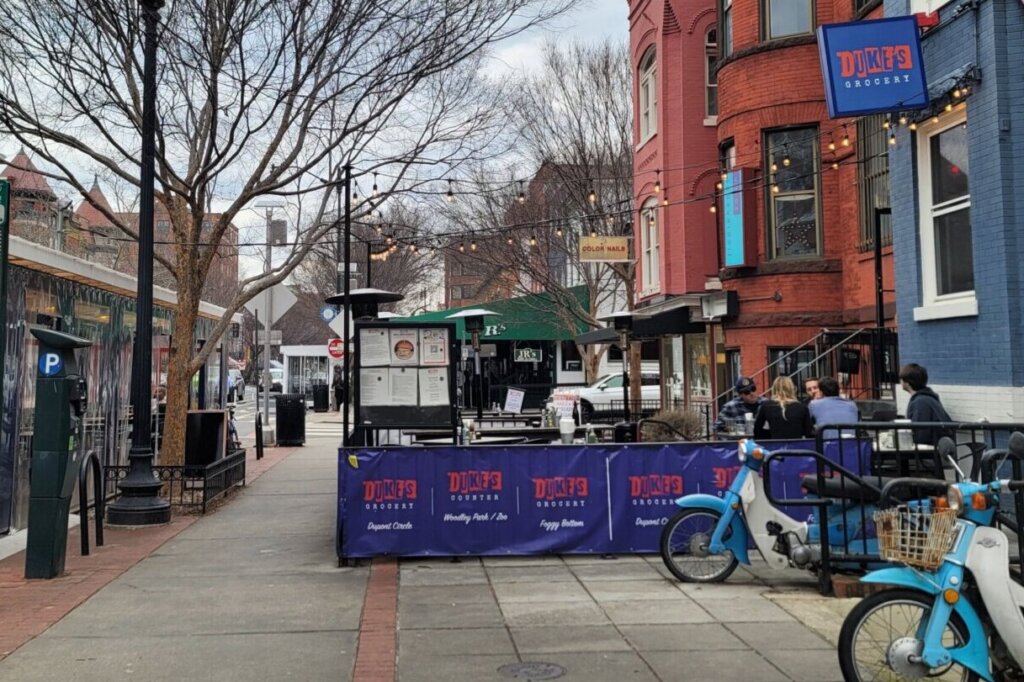
Duke’s Grocery, whose popular menu includes monster burgers and fish and chips, will close its original Dupont Circle location on Feb. 13 for renovations expected to last several months.
The original Duke’s, at 1513 17th Street, NW, opened in September 2013.
“This historic row house has been consistently busy for over nine years straight, so it’s a good time for a refresh and show it some love,” said Angie Duran, director of operations for Duke’s.
Duke’s, perhaps best known for its award-winning double patty, Gouda and chili sauce Proper Burger, leans into its East London-inspired theme too, with “sarnies,” (a British term for sandwiches).
It has grown during its first decade; there’s a Duke’s Grocery location in Foggy Bottom, and a sister restaurant, Duke’s Counter in Cleveland Park.
Its largest restaurant to date, another Duke’s Grocery, is set to open in Navy Yard soon.
Its owners also operate Gogi Yogi Korean BBQ in D.C.’s Shaw neighborhood, and Chesapeake Crab Shack and Bar also in Shaw, which reopens for the season in March.
One location even Duke’s most die-hard fans may not know about is inside the British Embassy on Massachusetts Avenue, NW. It opened an outpost there last year, serving its British-inspired food to embassy staff and visitors.