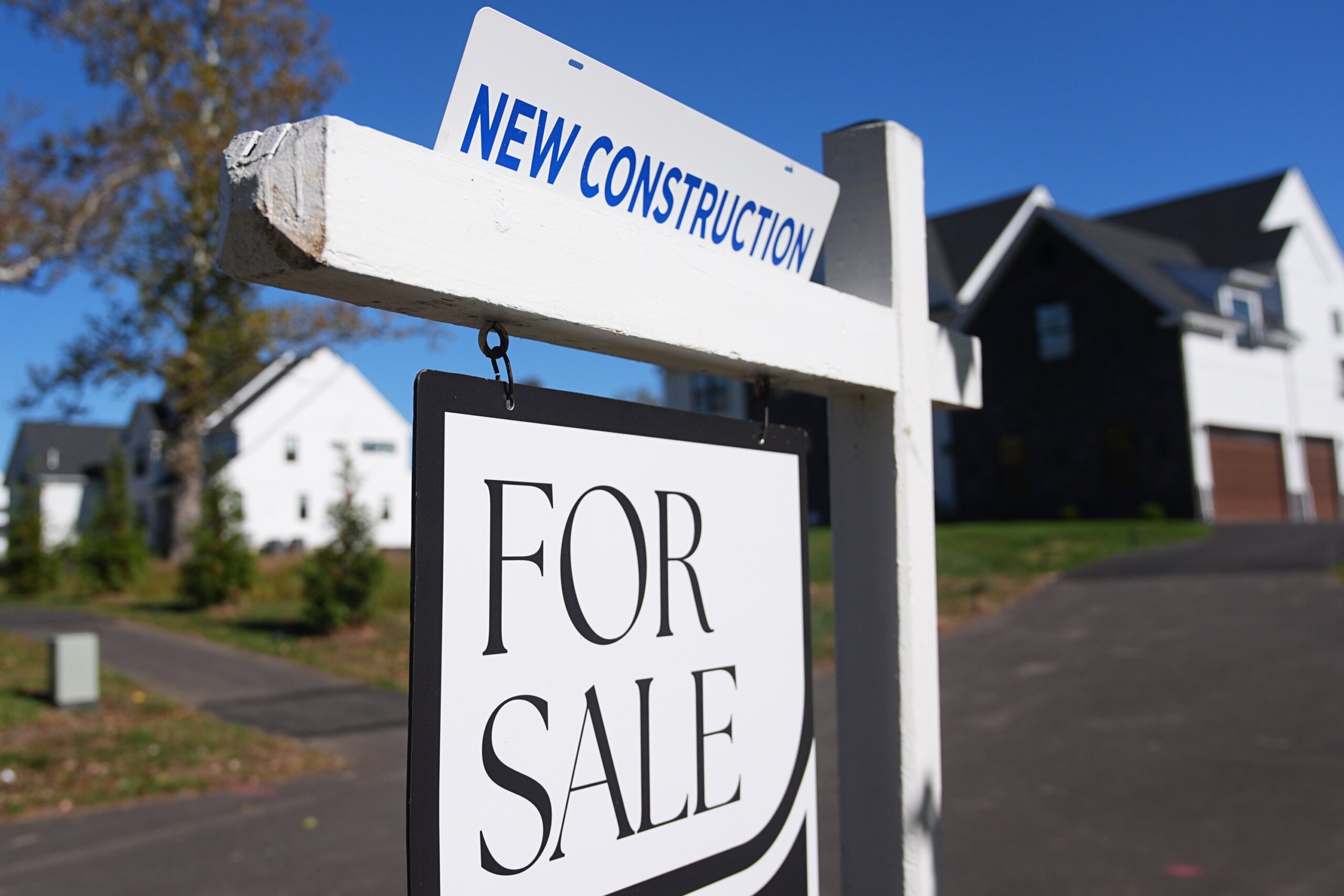
Mortgage rates have ticked down recently, but are still up dramatically from a year ago thanks to the surge in long-term bond yields as the Federal Reserve hiked interest rates.
While that’s already had a negative impact on the housing market, we’ll get more details this week about how much worse the damage has become.
A long list of housing data is on tap. On Tuesday the US Census Bureau will report housing starts and building permits figures for November, followed by Friday’s release of new home sales data for the same month. In between that will be the November existing home sales numbers from the National Association of Realtors on Wednesday, as well as weekly data on mortgage rates and applications on Thursday.
For the past few months, existing and new home sales have been steadily declining because of the spike in rates and the fact that home prices remain stubbornly high for first-time buyers. Housing starts and building permits have been choppier on a month-to-month basis, but those figures are both down from a year ago.
Still, there are some promising signs that the worst could soon be over. Shares of Lennar, one of the largest homebuilders in the US, rallied after reporting earnings last week. Revenue topped forecasts and the company’s guidance for the number of homes it expected to deliver next year was a little higher than analysts’ estimates as well.
Lennar investors “may be looking ahead to 2023, perhaps crossing the valley from recession to potential recovery,” according to CFRA Research analyst Kenneth Leon.
Housing market was frothy, but not a bubble
Others in the industry are cautiously optimistic as well.
According to data from Amherst Group, an investment firm that buys single-family homes to rent out, it’s important to put the recent slide in prices in context.
Amherst said home prices are still up about 40% from pre-pandemic levels. So even a further drop of about 15% would merely bring them to mid-2021 levels. In other words, this isn’t like the mid-2000s real estate bubble bursting.
It’s also worth noting that the job market is still strong and wages are growing. What’s more, many consumers still have decent levels of excess savings thanks to pandemic era government stimulus.
That all amounts to a few good reasons why the housing market could avoid a severe and prolonged slump.
“The U.S. housing market is still supported by a tight labor market, the lock-in effect of low fixed mortgage rates for existing homeowners, tight mortgage underwriting, low leverage in the mortgage sector, and low housing supply,” said Brandywine fixed-income analyst Tracy Chen in a report this month.
“We believe we can avoid a severe housing downturn like the one in the Global Financial Crisis,” Chen added.
Others point out that even though housing sales may remain weak due to high home prices and still elevated mortgage rates, the good news is that most existing homeowners are still paying their monthly mortgage on time.
Again, that’s a stark contrast from 2008 when many people with subprime loans or borrowers with poor credit histories were unable to keep up with their mortgage payments.
“Housing is not bringing down the economy. Yes, the housing market has been impacted. But mortgage delinquencies are still low,” said Gene Goldman, chief investment officer at Cetera Investment Management.