Scientists in the United Kingdom say they have proven the authenticity of several Roman coins previously dismissed as forgeries — providing evidence that an emperor disregarded as fake might in fact have been real.
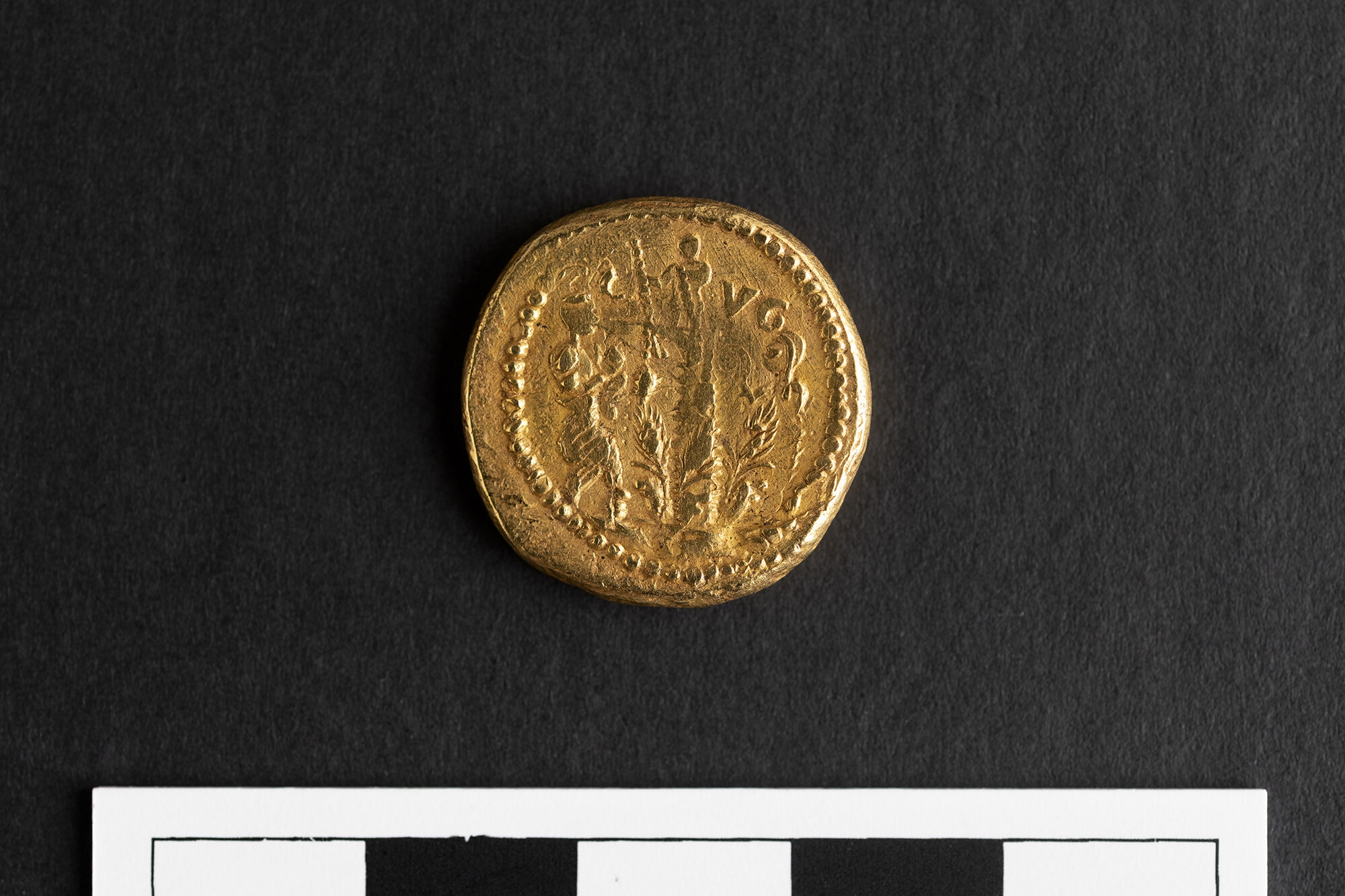
A coin featuring a portrait and the name of the Roman emperor Sponsian was among a hoard of coins allegedly unearthed in Transylvania in present-day Romania in 1713, according to a study published in the journal PLOS ONE on Wednesday.
However, there were no other historical records to support that a Roman emperor named Sponsian ever existed, according to a press release. And, at the time, “Sponsian” was not a name known to have existed in ancient Rome.
Their manufacture and style, including puzzling inscriptions, differed from the general style of authentic mid-3rd century Roman coins, according to the study. As a result, they were dismissed as poorly-crafted fakes.
Now, researchers at University College London (UCL) and the University of Glasgow in the UK say they have discovered features indicative of authenticity.
They used powerful microscopes in visible and ultraviolet light, plus scanning electron microscopy and spectroscopy — studying how light at different wavelengths is absorbed or reflected — to examine the coins.
In total they analyzed four coins from the hoard found in 1713, one of which features Sponsian. All four are on display in The Hunterian at the University of Glasgow.
A pattern of wear and tear was identified on the Sponsian coin, suggesting it had been in active circulation. Researchers also found earthen deposits, meaning it was likely buried in soil for a long time before being dug up and exposed to air.
“Scientific analysis of these ultra-rare coins rescues the emperor Sponsian from obscurity,” said lead study author Paul N. Pearson, a professorial research associate at UCL’s Earth Sciences department, in the press release.
“Our evidence suggests he ruled Roman Dacia, an isolated gold mining outpost, at a time when the empire was beset by civil wars and the borderlands were overrun by plundering invaders,” he added.
Leader of Dacia
The province of Dacia, which was cut off from the rest of the Roman empire in around 260 AD, was a region prized for its gold mines and mineral resources, according to UCL.
Sponsian never controlled an official mint or ruled Rome, said the researchers, but possibly became a local commander-in-chief who took charge during a period of chaos and civil war to protect the population of Dacia.
The Sponsian coinage series was used to pay senior soldiers and officials, who kept them as a store of wealth, proposed the researchers.
From the findings, it “would appear to be that Sponsian should be rehabilitated as a historical personage,” the study concluded.
The researchers added that while “nothing can be known about him for certain,” the coins analyzed “provide clues as to his possible place in history.”
‘Unscientific and unfounded’
Not everyone is convinced, however.
Despite the study’s findings, some experts, including in the field of numismatics — the study or collection of currency — still believe the coin to be fake.
“Like everyone in the numismatic world, I strongly believe this coin to be a modern forgery,” Jerome Mairat, curator of the Heberden Coin Room in the Ashmolean Museum in Oxford, England, told CNN.
“This whole theory — that the coin is genuine — is both unscientific and unfounded,” he added.
Dame Mary Beard, the acclaimed scholar of Ancient Rome and professor of classics at Cambridge University, wrote in a blog post published by the Times Literary Supplement that “there is still very powerful evidence that they are fakes,” going on to list a number of issues surrounding their crafting and design.
Pearson, however, insisted the researchers had reached “a clear-cut conclusion” about the authenticity of the coins, telling CNN in an email: “For the grand history of Rome, Sponsian is little more than a historical footnote – but a footnote that should nevertheless be reinstated!”
He said that the researchers wanted to start a conversation with Roman historians and archaeologists to try and test their hypothesis about Sponsian.
“For understanding the dying days of Roman power in the Province of Dacia, and the history of Romania, he is potentially more significant, but our results have just been published and the academic debate is just beginning.”