The number of contracts signed to buy a house or a condo in the D.C. metro was down 26.3% in August compared to the same time last year.
Closed sales — deals likely inked in June or July — were down 25.3%, further evidence of quickly slowing local housing market.
Listing service Bright MLS reports the number of in-person showings by real estate agents in August was down 27% from a year ago.
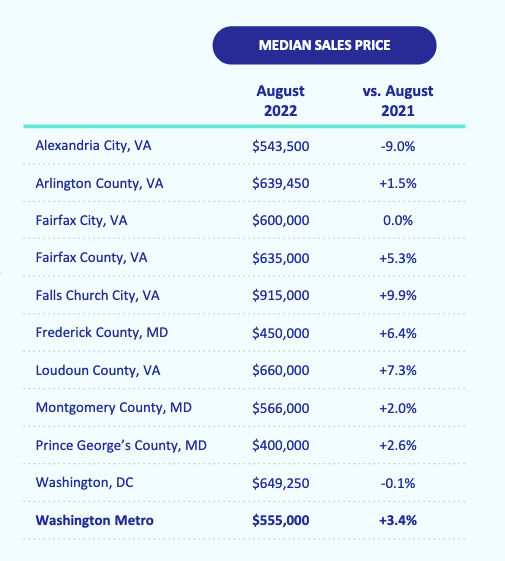
Even so, prices are still higher. The median selling price of a home in August in the D.C. region was $555,000 — up 3.4% from August 2021.
Fewer sellers entered the market heading into fall, with 5,906 new listings coming to market in August. That’s down 26% from a year earlier. Total active listings of about 7,300 homes on the market was down 5.1%.
Bright MLS gauges homebuyer interest every month with a Home Demand Index, a forward-looking gauge based on online searches and showings. It registered “steady” in August, down from “moderate” a year ago. The biggest decline in buyer demand was for higher-priced single-family homes.
“The frenetic pace of the housing market over the past two years was not sustainable,” Bright MLS said in a statement. “Cooler conditions in the Washington area housing market should be a welcome relief for prospective homebuyers who will find more options, less competition, and more opportunities for negotiating with sellers,”
Below are median selling prices in the D.C. region for August, courtesy Bright MLS: