
When the temperatures get extremely hot, you need to make sure you don’t end up with heat exhaustion or heat stroke.
You will want to make sure you are not outdoors during the hottest part of the day. Too much time outside in the heat can make you sick. Take frequent breaks, if you are outside.
Hydration is key, so drink lots of water.
And wear loose-fitting, light-colored clothing.
- Tips for dealing with your car in extreme heat
- How to keep pets safe in hot weather
- WTOP Weather
- More Health News
Signs of Heat Exhaustion
- Normal body temperature;
- May have cool, moist, pale or flushed skin;
- Heavy sweating;
- Headache;
- Nausea or vomiting;
- Dizziness;
- Exhaustion or weakness;
- Passing out.
What to do about heat exhaustion:
- Get the person out of the heat and into a cooler place.
- Apply cool, wet cloths.
- Give a half glass of cool water every 15 minutes.
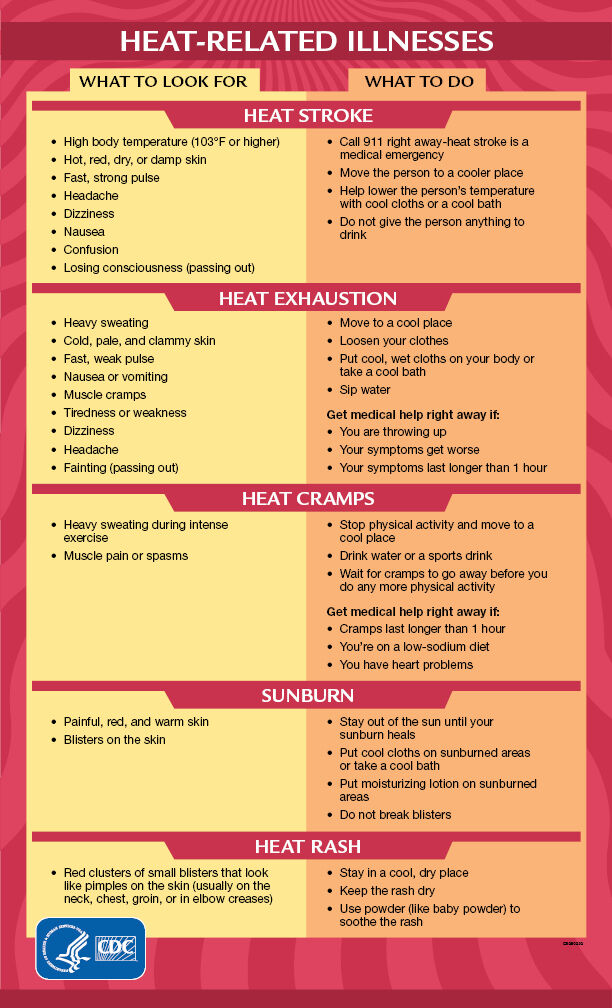
Signs of Heat Stroke
- Body temperature of 103 degrees or higher;
- Skin that’s red and hot;
- Feeling confused;
- Headache;
- Feeling dizzy;
- Confusion;
- Changes in consciousness;
- Fast, strong pulse;
- Passing out.
What to do about heat stroke:
- Help is needed fast. Call 911 right away.
- Move the person to a cooler place.
- Try lowering body temperature with cool cloths or a cool bath.
- Do not give the person anything to drink.
- Quickly cool the body.
- Watch for signals of breathing problems.
Here are a few other notes of heat-related caution:
- Don’t get sunburned. It affects the body’s ability to cool down and can make you dehydrated.
- Do not leave children or pets in cars. Cars can quickly heat up to dangerous temperatures even when the windows are cracked open.
- Cover windows with drapes or shades to help keep your environment cool indoors.
