Bethesda, Maryland-based Meridian Group, whose portfolio currently includes almost two dozen commercial buildings in the D.C. area, has signed a contract With Constellation to purchase Renewable Energy Certificates for almost all of its properties.
The credits will match almost all of its electricity use in 2022, and reduce greenhouse gas emissions by the equivalent of more than 4,100 passenger vehicles, Meridian said, citing Environmental Production Agency estimates.
Renewable Energy Credits are not a direct shift to renewable energy use by buildings. They instead act as accounting mechanism to show how much of that energy is from green sources. They track wind, solar, and other renewable energy sources as they are generated and delivered through the grid and combined with non-renewable sources.
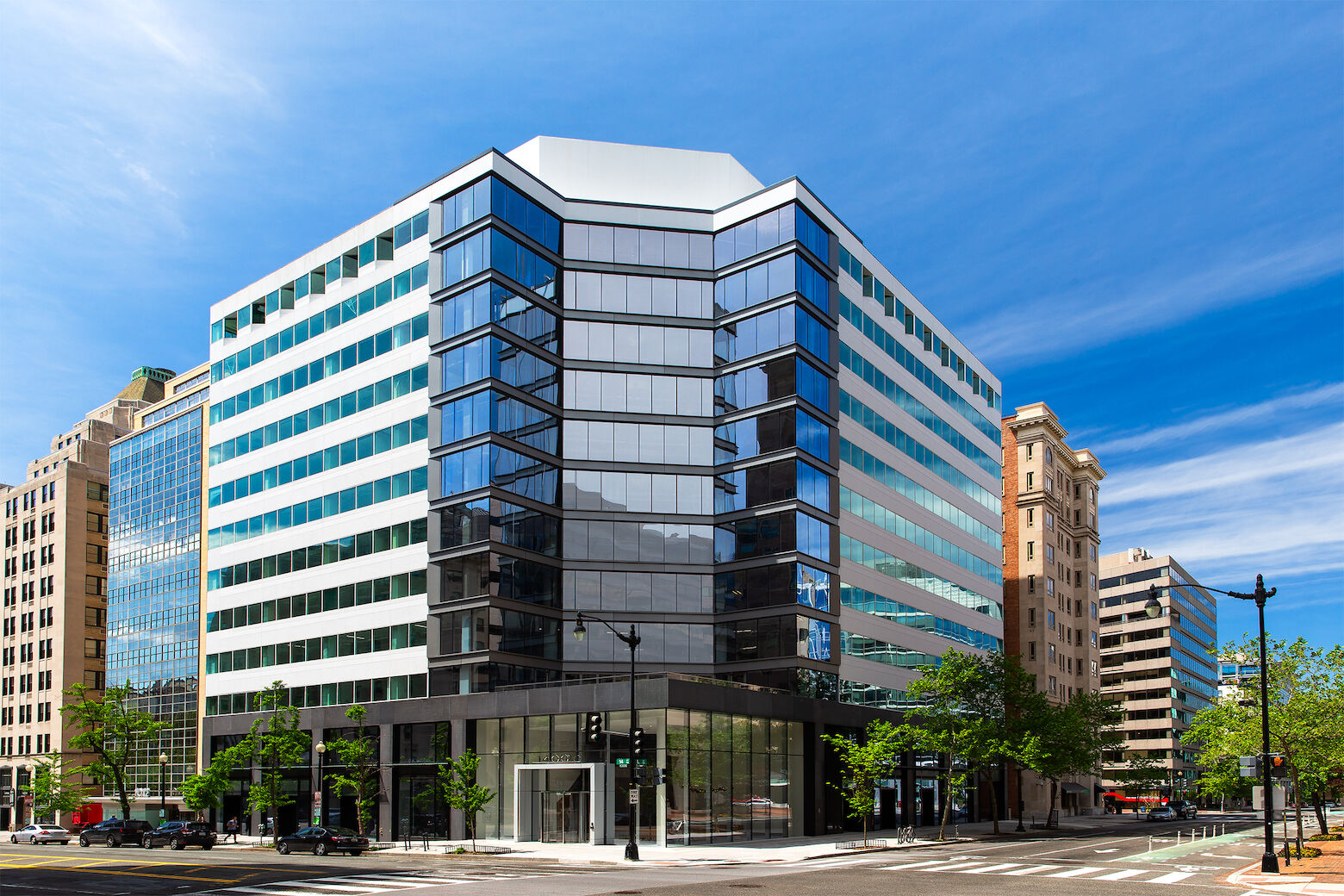
Meridian, whose high-profile buildings include the Boro and other recently-developed buildings in Tysons, and several others in D.C., Rosslyn and Ballston, said it will include the remaining two buildings not currently contracted with Constellation by 2024.
“We are proud to be leaders in taking proactive measures to reduce our environmental footprint. These efforts are more important now than ever, so we will continue finding new ways to contribute to a sustainable future,” said Stacy Lautar, director or property management at Meridian.
Baltimore-based Constellation is the largest producer of carbon-free energy in the U.S. It has set a goal of eliminating 100% of its greenhouse gas emissions by 2040.