
[hbidcpodcast podcastid=’23745714′]
Whether you’re exploring what it might be like to get into a running routine or need guidance to improve personal performance stats, there’s a new running program at the University of Maryland Charles Regional Medical Center in La Plata.
“It’s a comprehensive running evaluation and treatment program that we’re offering,” said physical therapist Amol Bakre, who founded the UM Charles Regional Rehabilitation Running Center.
Bakre is an RRCA Certified Level 1 Running Coach and Board Certified Orthopedic Clinical Specialist.
He said the center came about when physical therapists were looking for ways to fill the gap for patients who graduated rehab programs but still wanted to continue to be active.
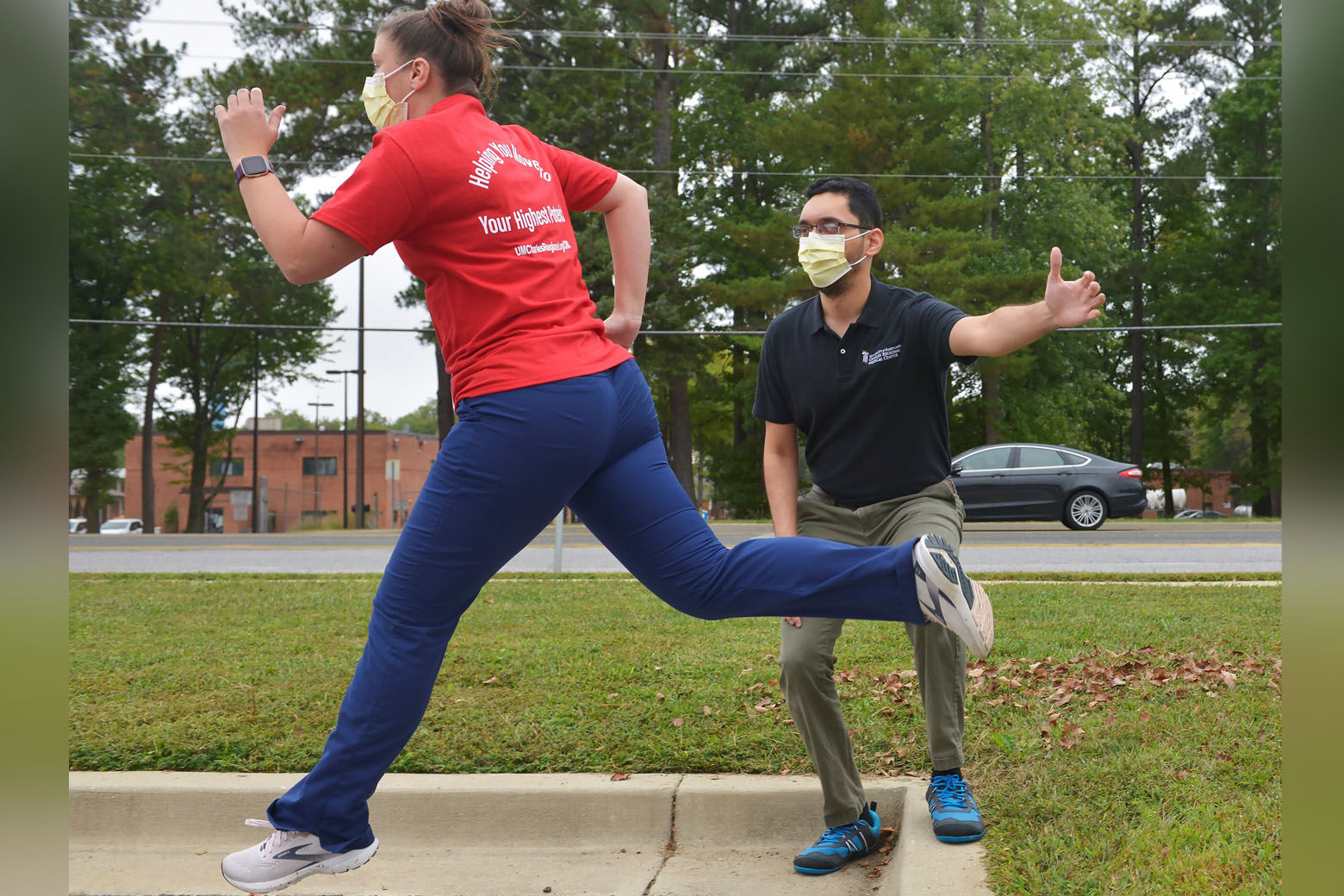
“We thought that was something a coaching platform would try to accomplish. And since we have a physical therapy platform already based here pretty solid; we thought we could use that and build up our running center on that,” Bakre said.
Because the program is managed by a physical therapist, it includes advice on everything from avoiding injuries to wearing the proper shoes.
While Bakre notes that footwear is important, he said don’t overthink it. “It’s important to know that the expensive product is not the best product,” he said.
He tells beginners there is no obligation to wear one particular brand of shoe to start running.
“Once you get comfortable in your own shoe … they are not going to hurt your feet, in the long run, which you will always know by trial and error. Then you can decide whether you want to continue with the same one, or don’t you want to change to something different? You can always speak with your coach about that,” Bakre said.
Everyone is welcome.
The program can help guide already-active runners to improving personal best records for a 5K or marathon, for example, or help someone who has never considered it before.
“Every runner is different. So there is no there is no judgment; there is no competition. You’re your own competitor; there is no hard and fast rule, whether or not you can finish your program or not. We just want to make sure that we give you a structure to work with, so that you won’t feel you’re completely unaware of how to go run,” he said.
Bakre began running when he was playing basketball, then found it a good way to get outside to be active between classes in medical school. Asked what someone might get out of taking up running or why they might enjoy it, he made three points. First, there’s a sense of accomplishment moving from place A to place B. Secondly, it can be a source of fellowship with others to go outside running and not be in a closed, confined space.
“And the third most important point is, running has a scientific basis of reducing the risk of heart diseases. It also helps you reduce the risk of developing arthritis in your knees and your hips. If you don’t have it right now, if you start running, you will be less likely to develop one in the future,” he said.
The program is customized to each individual and begins with an initial evaluation that includes what’s called a “VO2 Max” measurement. That’s an evaluation of how much oxygen a body uses while working out.
Runners receive a customized program to take home based on timelines that might last, for example, from six weeks to three or six months.
“Then we give him all inputs as needed — via phone, email — and then have him come here again at least two times in their total training plan to make sure that their goals are achieved,” Bakre said.
The program price range isn’t expected to exceed $200.
“So based on the market research, we’re looking anywhere between $100 to $200 to begin with, and that would be encompassing the entire three-visit plan along with the guidance from the running coach and the program,” Bakre said.
Thinking of getting started doesn’t have to be overly complicated.
“Do it one day at a time,” Bakre said. “When you start running, we don’t run on the first day, we take an easy jog; we walk; we enjoy the process. And slowly, eventually we build up that as a part of the core buildup and then go on from there.”
